Home / Products / Cabinet hinges
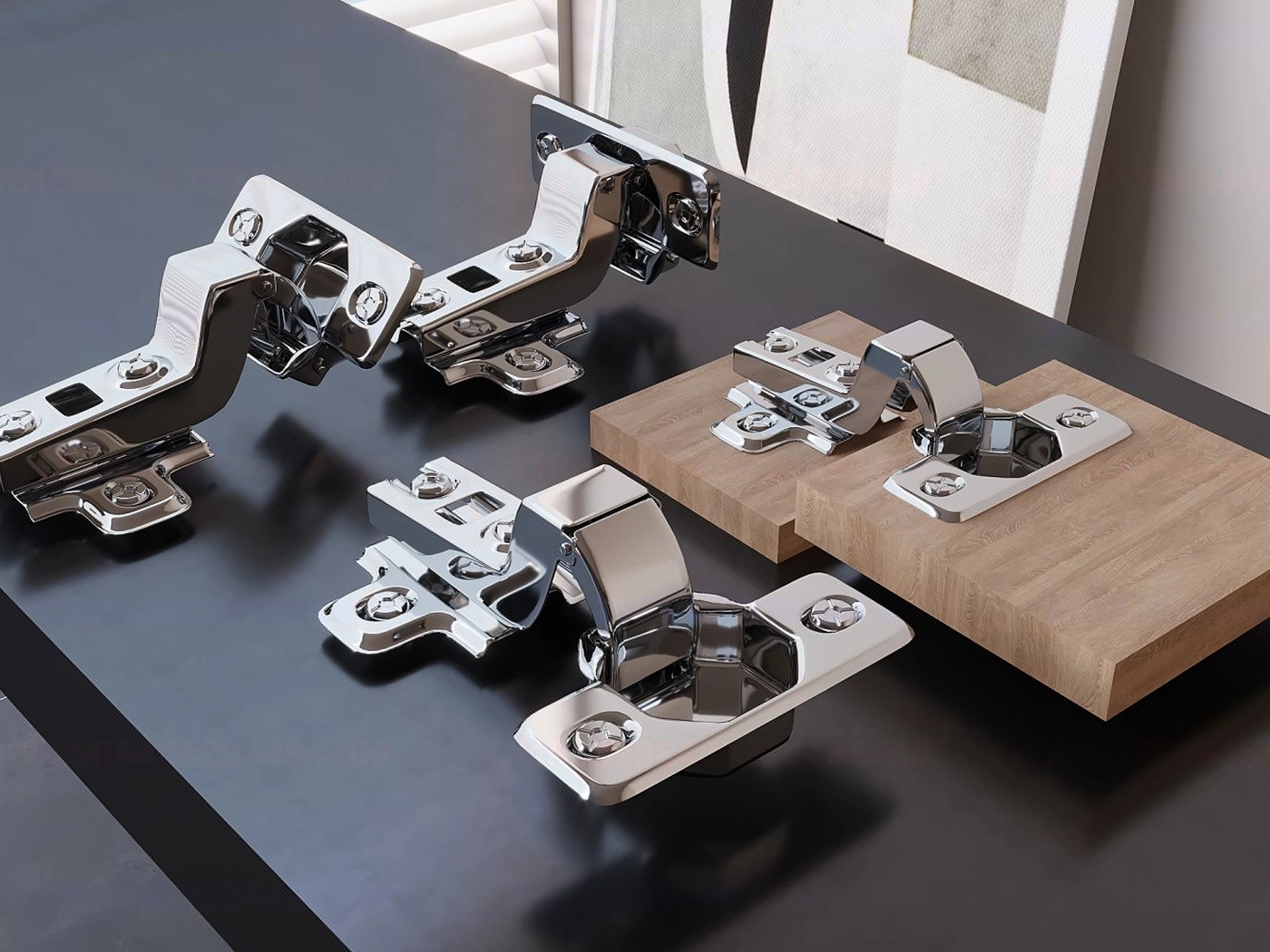
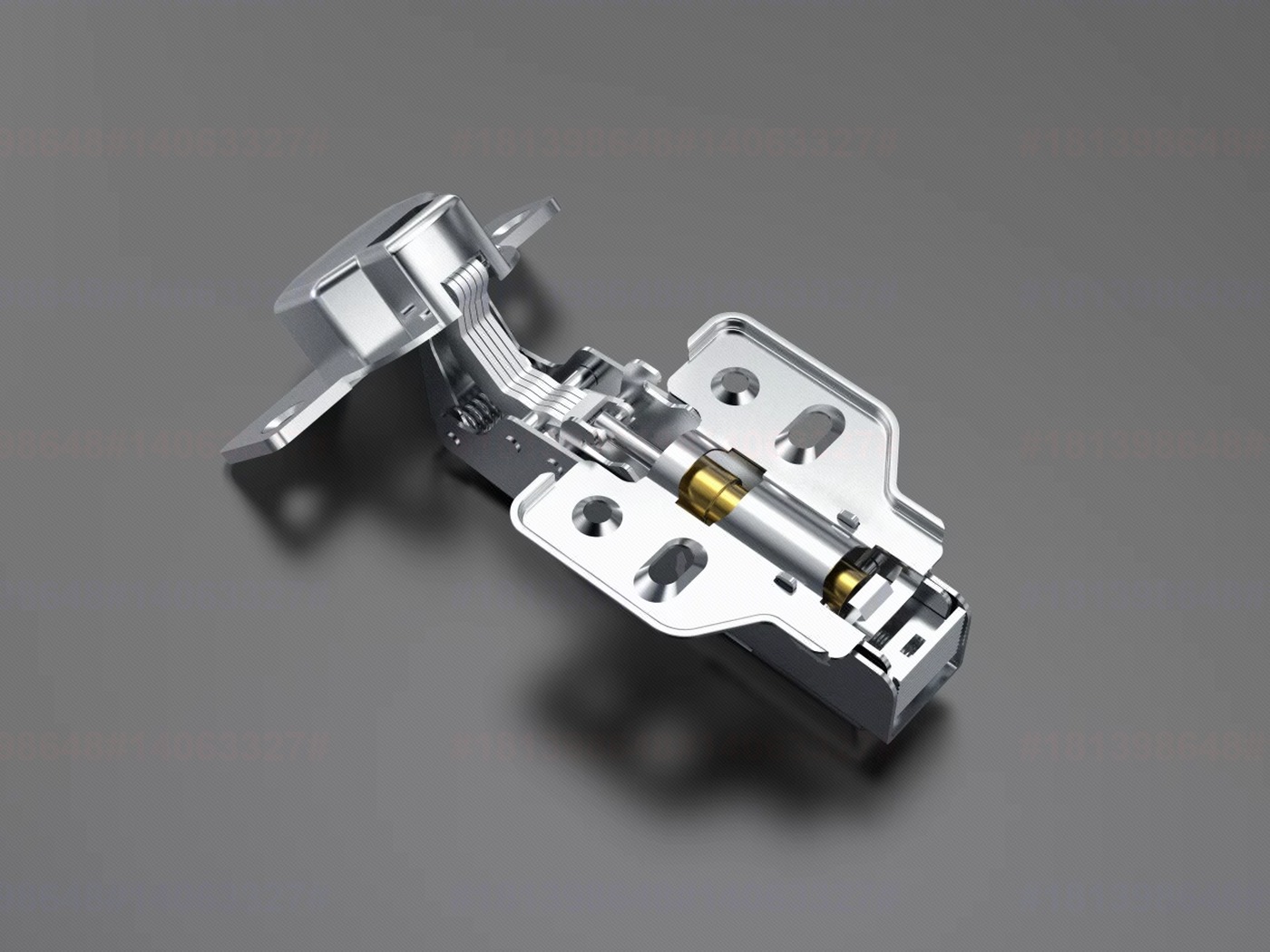
A 180° hinge is not a bigger hinge. It is the same 35 mm cup on a longer arm, so the door folds back flat against the cabinet beside it instead of standing out at 110°. Six models cover it — full overlay, half overlay and inset, in cold-rolled steel or 304 stainless, all with a hydraulic damper.
Almost everything we ship in this range is damped. Non-damped versions of the same three bends are still made — and we make them — but furniture that closes without a bang is what the market asks for now, and the price difference is small enough that it is rarely worth specifying out. If a project genuinely needs the undamped version, it is the same body and the same drilling.
A standard concealed hinge stops at about 110°. On most runs of cabinets that is enough: the door opens, you take the plate out, the door closes. It stops being enough when something is in the way of the door at 110° — the next cabinet, a return wall, the drawer bank beside it, a bar handle that meets the one opposite.
At 180° the door lies back against the cabinet beside it and the opening is the full width of the unit. That is what makes a corner cabinet usable, and what lets a single wide door serve a larder without the door fighting the room.
The cost is not in the price. It is in the geometry: the arm is longer, so the door stands further out from the carcass when it is open, and the hinge is visible at full travel where a 110° one would be tucked behind the door. Both are fine in a pantry and wrong in a closed hallway where the door is expected to sit flat against the wall.
| Situation | Hinge |
|---|---|
| Nothing within 110° of the door swing | A standard 110° hinge. There is no reason to pay for the longer arm |
| Corner unit, door must clear the return | 180° — the door folds flat and the corner is fully accessible |
| Door beside a drawer bank | 180°, so the drawers pull out with the door open rather than after it is closed |
| Two doors meeting on one divider | 180° in half overlay — both must clear each other as they open |
| Door must sit flat to a wall when open | Not this hinge — the arm holds the door off the carcass. Use a 110° and plan the swing |
The only thing that changes between the three is the bend in the arm — how far the door is carried past the carcass side. The cup, the bore and the fixing pattern are the same, which is why a change of overlay on site does not mean a change of drilling.
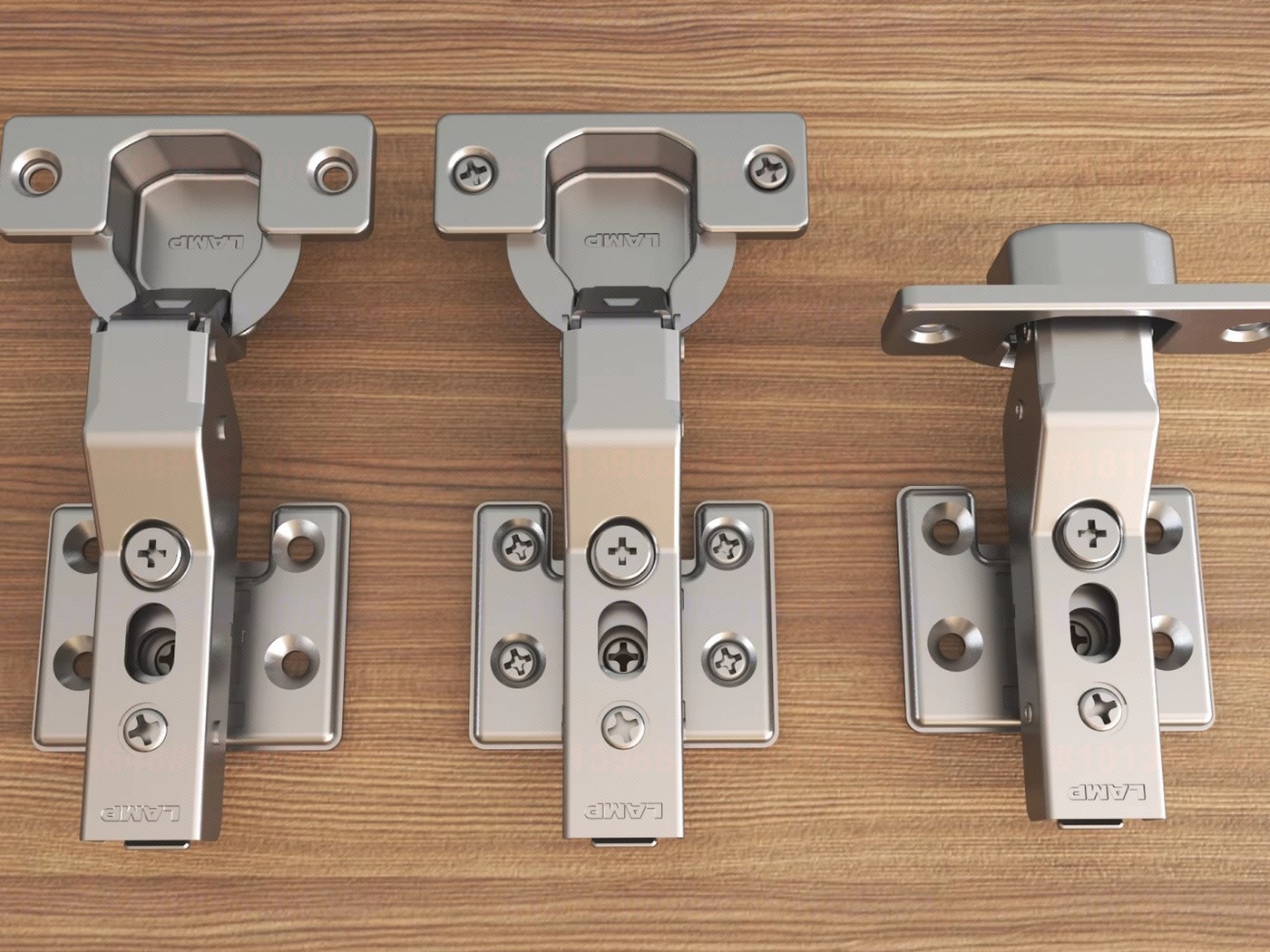
Full overlay (直弯). The door covers the side panel completely. This is the normal case: one door per opening, carcass hidden behind it, and the gap to the next unit is a shadow line rather than a panel.
Half overlay (中弯). Two doors share one divider, each covering half of it. The arm is cranked so both leaves can pass each other as they open — the reason a pair of doors needs a different hinge from a single one, even though the drilling is identical.
Inset (大弯). The door sits inside the opening, flush with the carcass frame, so the front reads as furniture rather than as a cabinet. It is the least forgiving of the three: the door has to be sized to the opening, and both faces are visible, so the gap all round has to be even.
| Bend | Door position | Typical use |
|---|---|---|
| Full overlay | Covers the whole side panel | Single doors, wardrobe and kitchen runs, the default |
| Half overlay | Covers half the shared divider | Pairs of doors on one carcass, twin-door base units |
| Inset | Sits inside the opening, flush with the frame | Face-framed furniture, panelled doors, anything where the carcass is meant to be seen |
On all three, keep 3–5 mm between the door edge and the carcass face. Under 3 mm the door rubs once the damper pulls it in; over 5 mm the gap reads as a mistake on inset work. The plate carries the adjustment, so set the plate first and use the screws to close the gap rather than moving the cup.
Everything in this series is the same body in two materials across three bends. There is no seventh variant hiding behind a different part number, and no size ladder to choose from — the 35 mm cup and the 11.3 mm depth are fixed, and it is the arm that changes.
| Material | Bend | Door position | Closing |
|---|---|---|---|
| Cold-rolled steel | Full overlay · 直弯 | Door covers the whole side panel | Hydraulic |
| Cold-rolled steel | Half overlay · 中弯 | Door covers half the shared divider | Hydraulic |
| Cold-rolled steel | Inset · 大弯 | Door sits inside the opening, flush | Hydraulic |
| 304 stainless | Full overlay · 直弯 | Door covers the whole side panel | Hydraulic |
| 304 stainless | Half overlay · 中弯 | Door covers half the shared divider | Hydraulic |
| 304 stainless | Inset · 大弯 | Door sits inside the opening, flush | Hydraulic |
The undamped version. Every one of the six is also made without the damper — same body, same cup, same drilling, a plain spring instead of the hydraulic unit. We keep it because a few markets still buy it and because it is the cheaper line, but it is no longer what most orders ask for: the damper is what stops a door banging shut in a quiet room, and on a full kitchen it is the difference between a job that feels finished and one that does not.
If you are quoting both, quote the damped version first. The undamped one is a price-down option, not a different product, and buyers who are shown it first tend to ask for it back once they hear a door close.
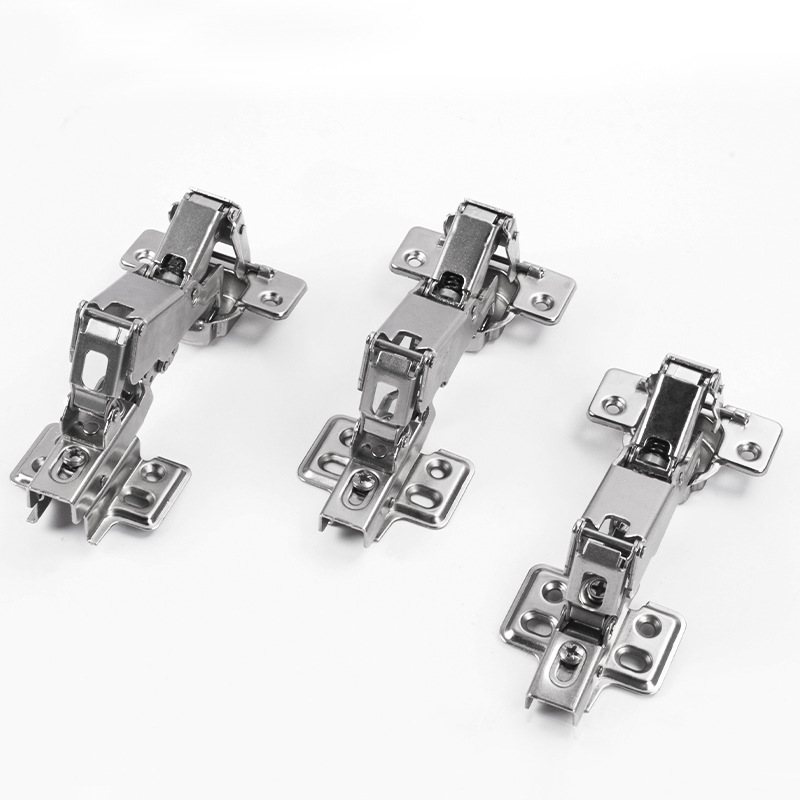
The damper. A hydraulic cartridge sits inside the cup and takes over the last part of the closing arc. The spring still closes the door — the damper only slows it, so the door travels on its own and then eases into the frame instead of hitting it. Nothing needs setting at the bench, and there is no adjustment screw for the damper: it is either working or it has failed, which is what the warranty is for.
That last point matters when you are comparing quotes. Two hinges can look identical and behave completely differently after a year of a kitchen being used properly — the cartridge is the part that decides it, and it is also the part that is easiest to leave out.
| Material | Use it for | Do not use it for |
|---|---|---|
| Cold-rolled steel, nickel plated | Dry interior joinery: bedroom, living room, office storage, shop fixtures | Bathrooms, kitchen units beside a sink or hob, anything that gets wiped with a chlorine cleaner |
| 304 stainless | Wet rooms, kitchens, laboratories, medical and food-adjacent storage, coastal buildings, boats | — but note it is 304, not 316: salt spray and strong chlorides will still mark it, just far more slowly than steel |
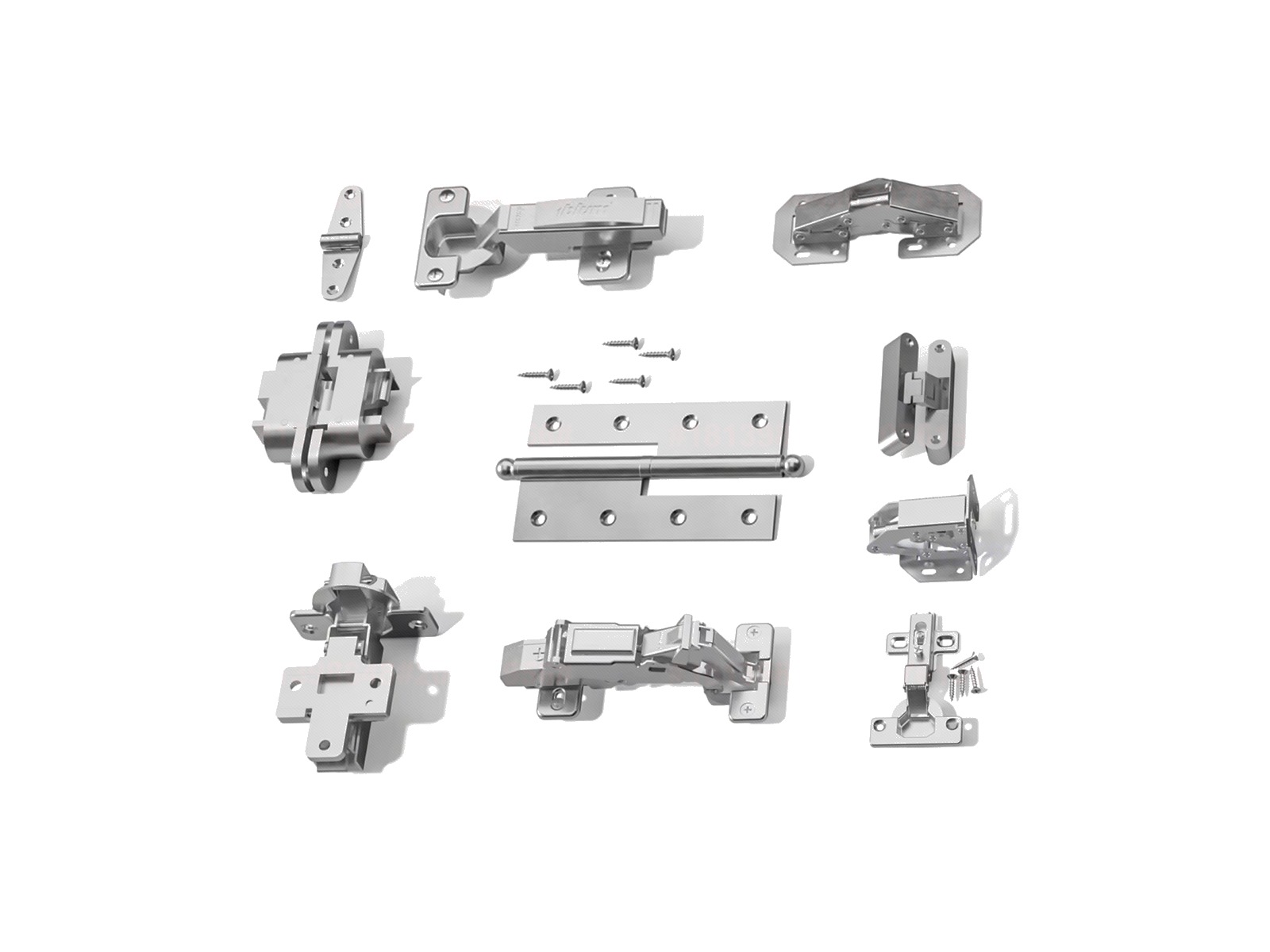
Buy the hinge and the plate together. The plate is what carries the three-way adjustment, and while the hole pattern is the common one, the clip geometry is not universal. Sending hinges to a site where the plates are already on the carcass from another brand is the one mistake in this range that cannot be fixed at the bench.
We supply them as a set, boxed together, so what arrives matches what was drilled.
Two numbers decide whether a door hangs straight for the next ten years: how many hinges it carries, and how far the cup sits from the edge. Both are standard, and getting either wrong is not something the adjustment screws can rescue.
| Door height | Hinges per door | Notes |
|---|---|---|
| Up to 900 mm | 2 | One at each end, at least 90 mm in from the top and bottom edges |
| Up to 1,600 mm | 3 | Add the third at the mid-point of the remaining span |
| Up to 2,000 mm | 4 | Space them evenly; keep the 90 mm end margins |
| Up to 2,400 mm | 5 | A wider door than 600 mm, or a heavier board, takes one more — size it to the leaf, not the table |
One bore, 35 mm, 11.3 mm deep, starting 5 mm in from the door edge. Doors from 14 to 20 mm take the same cup; below 14 mm there is not enough material left for the screws to hold, and above 20 mm the arm no longer sits where it should.
Bore it on a drill press or with a proper hinge bit. A 35 mm Forstner in a hand drill wanders, and a wandered cup cannot be adjusted back — the hinge runs out of travel long before the door lines up.
Everything is corrected at the plate, never at the cup:
1 — depth. Sets the gap between door and carcass face. Start at 3 mm.
2 — overlay. Slides the door left or right over the side panel, which is how a pair of doors is brought into line.
3 — height. Raises or drops the door on the plate to level the top and bottom gaps.
Adjust in that order. Doing height first means doing depth again afterwards.
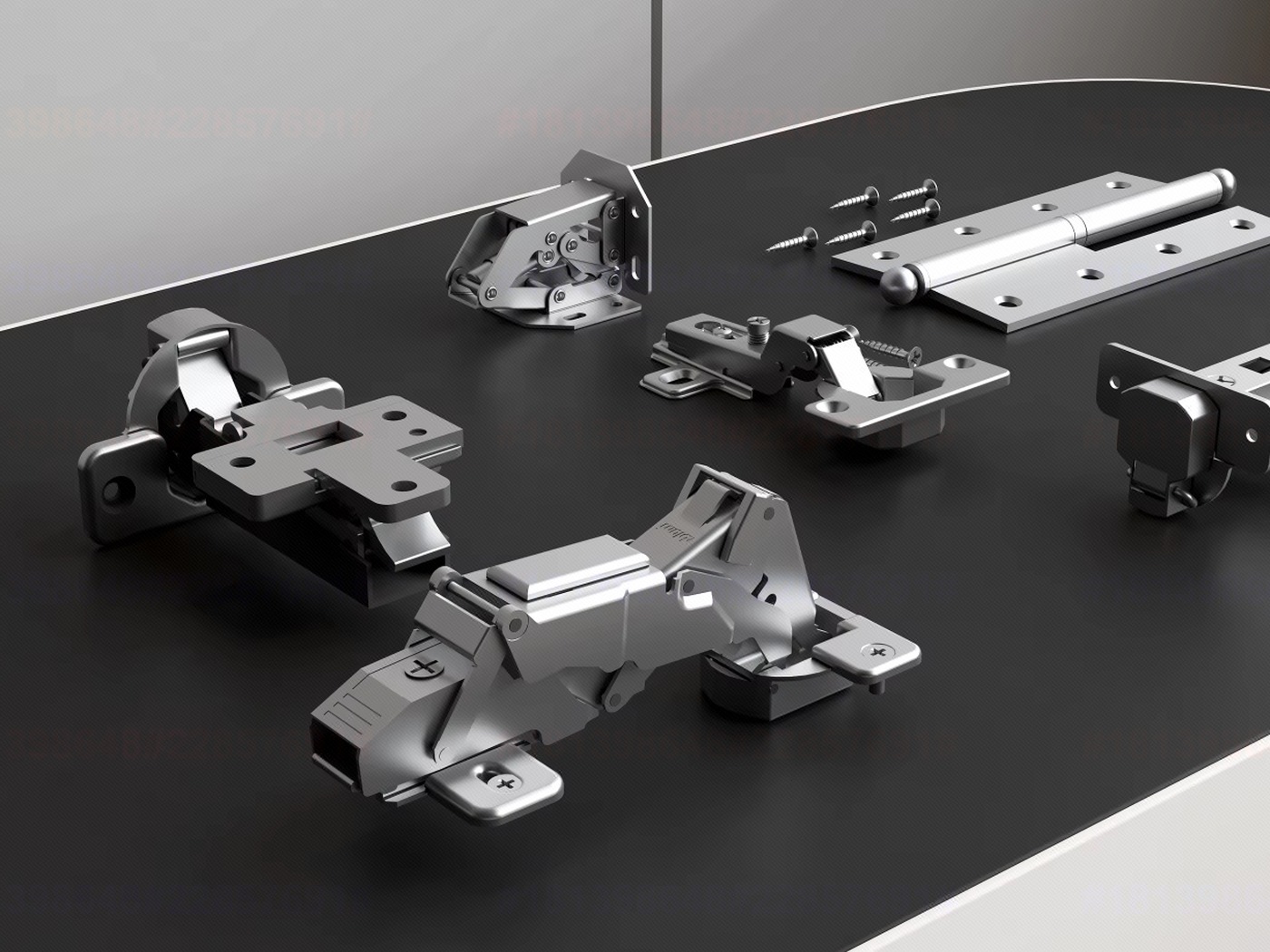
The 90 mm rule. Keep every hinge at least 90 mm in from the top and bottom edge of the door. Closer than that and the load sits on too little board: the cup pulls out at the corner, usually within the first season, and it pulls out on the door that gets used most.
| What happens | Why |
|---|---|
| Cup blows out at the edge | Bored too close to the door edge, or a hand drill that wandered. The board has nothing left to hold the screw — the hinge is fine, the door is scrap |
| Door drops in the first month | Too few hinges for the height or the weight. A 2,000 mm door on two hinges always sags; the table above exists for this |
| Damper stops working | Usually an overloaded door — a solid-timber leaf hung on a hinge rated for a chipboard one — or a household cleaner sprayed into the cup |
| Hinge will not clip to the plate | Plates from another brand already on the carcass. The hole pattern matches; the clip does not. Send the plate spacing before ordering |
| Item | Detail |
|---|---|
| Materials | Cold-rolled steel, nickel plated · 304 stainless |
| Finishes | GP gold plated, SC satin chrome, EB electrophoretic black, BN brushed natural, AB antique bronze, AC antique copper |
| Closing | Hydraulic damper as standard; undamped on request |
| Supplied with | Matching plate, fixing screws, in one box |
| MOQ | 2,000 pcs trial order, 50,000 pcs per model for bulk |
| Lead time | 30–35 days after deposit and sample approval |
| Warranty | 3 years on the body and the damper |
| OEM | Your part numbers and artwork on the box and the hinge, where the marking allows |
| Trade terms | EXW, FOB and FCA — FOB Nansha Port, Guangzhou |
What to send with an enquiry. The model you want (material and bend), the finish, the door thickness, and the quantity per model. If you are matching a carcass that is already drilled, send the plate spacing you use — it is the one dimension that turns a standard order into a return.
For a first order, ask for the sample before the container. Two hinges on a board will tell you more about the damper than any datasheet, and they cost the freight.
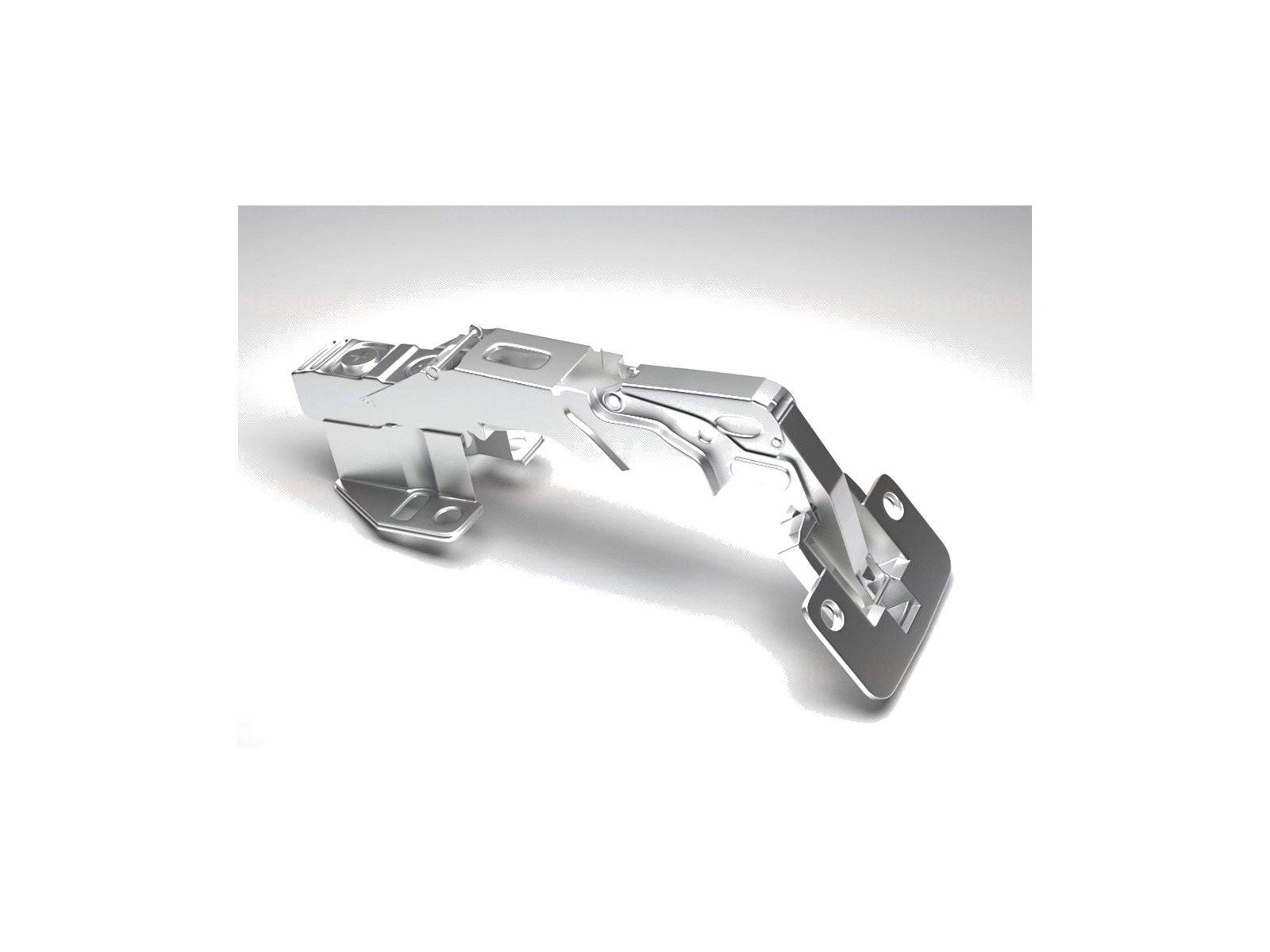
The door can be opened until it lies back alongside the cabinet, roughly in line with the door front beside it — about 180° from closed. A standard concealed hinge stops at about 110°, which is why a corner unit or a door next to a drawer bank becomes awkward with one.
Where the door sits relative to the carcass side. Full overlay (直弯) — the door covers the whole side panel. Half overlay (中弯) — two doors share one divider and each covers half of it. Inset (大弯) — the door sits inside the opening, flush with the frame. The cup and the drilling are the same for all three; only the arm changes.
Yes, in all six models, on request. It is the same body with a plain spring instead of the hydraulic unit. We quote the damped version first because that is what most orders specify now — the undamped one is a price-down option rather than a different product.
A 35 mm bore, 11.3 mm deep, starting 5 mm in from the door edge. That is the same on every model in the series, steel or stainless, and it is the drilling most European-style hinge boring machines are already set for.
14 to 20 mm. Thinner than 14 mm and there is not enough material left around the cup for the screws to hold; thicker than 20 mm and the arm sits too far out for the door to line up with the carcass.
Two up to 900 mm high, three up to 1,600 mm, four up to 2,000 mm, five up to 2,400 mm — based on a 19 mm board at 750 kg/m³ and a door up to 600 mm wide. Keep each hinge at least 90 mm in from the top and bottom edge. A wider or heavier door takes one more than the table says.
Steel for dry interior joinery — bedrooms, offices, shop fixtures. 304 for anything that sees water or cleaning chemicals: bathrooms, kitchen units beside a sink or hob, laboratories, food-adjacent storage, coastal buildings. Note that 304 is not 316: salt spray and strong chlorides will still mark it, just far more slowly.
Yes, in three directions at the plate: depth (the gap to the carcass face), overlay (side to side) and height. Set depth first, then overlay, then height — changing the depth afterwards puts the other two out again.
Not something we can promise. The hole pattern is the common one, but the clip geometry differs between brands, and a hinge that will not seat on the plate cannot be fixed at the bench. We supply hinge and plate as a matched, boxed set — and if the carcass is already drilled, send us the spacing you use before ordering.
No. They are used wherever the door needs to clear something at 110°: corner units, doors beside a drawer bank, wide larder doors, appliance housings, and doors with bar handles that would otherwise meet the one opposite.
2,000 pcs for a trial order, and 50,000 pcs per model for bulk. Models, materials and finishes can be mixed within one order, but the 50,000 is counted on each model separately — it is the run length the press is set up for. Lead time is 30–35 days after deposit and sample approval.
Yes. Boxes print to your artwork and part numbers, and the hinge can carry your mark where the cup face has room for it. Send the artwork with the order — the box is printed before the hinges are packed, not after.
The same commercial terms apply across our hinges. Full detail, including the sample and inspection steps, is on how ordering works.
2,000 pcs trial, 50,000 pcs per model for bulk. Models, sizes and finishes can be mixed in one order.
T/T 30 % deposit and 70 % against the B/L copy. 40 % deposit for your first three orders, 30 % from the fourth.
Free of charge; you pay the freight. Send your courier account or we quote it.
30–35 days after the deposit and sample approval.
EXW, FOB and FCA — FOB Nansha Port, Guangzhou.
White box, two hinges, each in its own bag. The box prints to your artwork and part numbers.
Raw material bought in one lot per order, colour checked in process, out-of-tolerance units scrapped rather than shipped.
Load plan, carton count and gross weight are calculated per order — palletised or loose, depending on the destination.
Carton counts and weights are not fixed figures. Some destinations take cartons loose and carry more pieces in the same container; others require heat-treated timber under ISPM 15, and some customers want no timber at all. Send the model, size, finish, quantity and destination port, and your account manager will work the load plan out for that case before you commit.