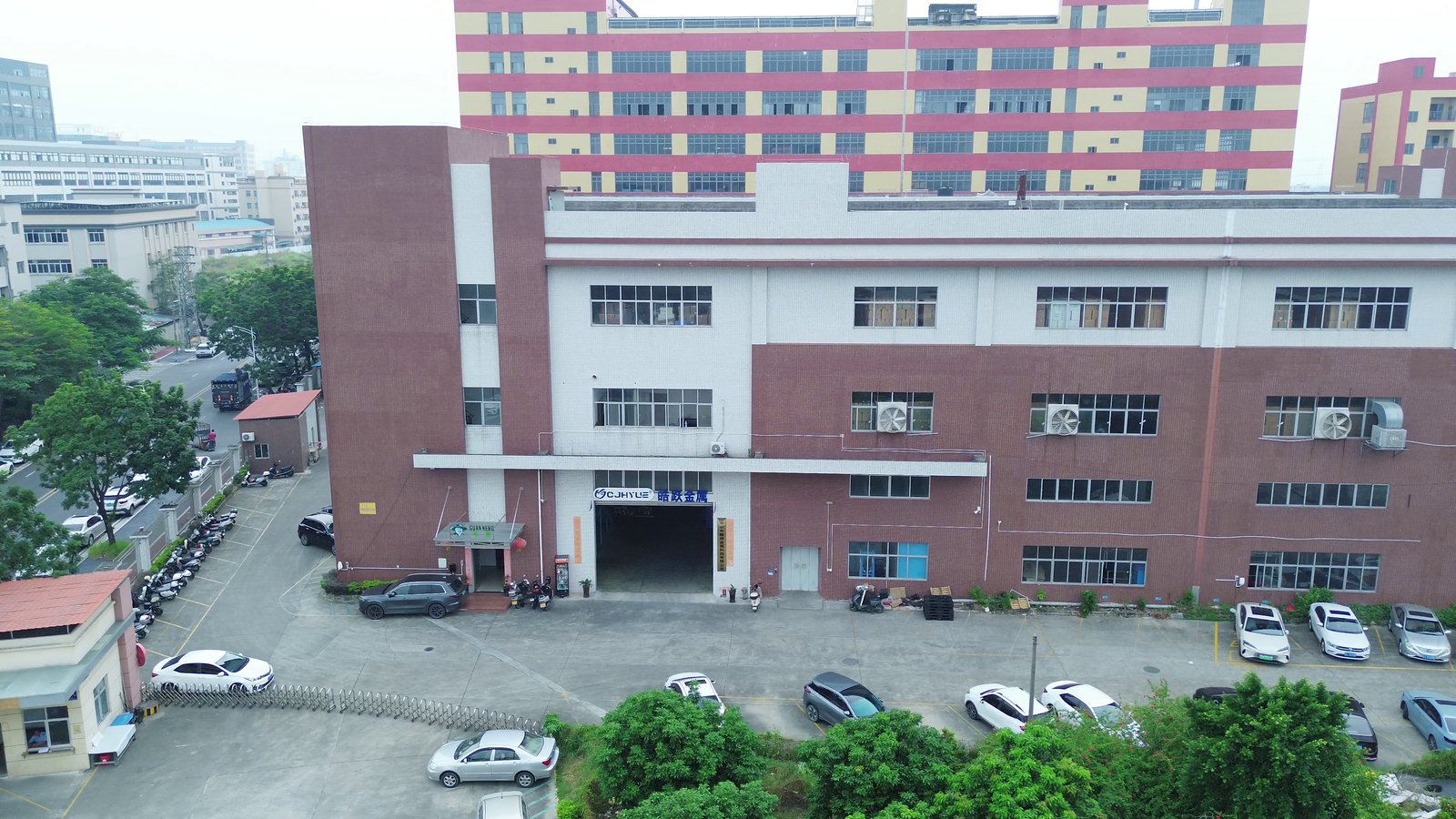
4,000 m² in Fusha Town, Zhongshan — tooling, stamping and hardware production under one roof.
Founded in 2021, Zhongshan Haoyue Metal Technology Co., Ltd. produces door and window hardware in its own 4,000 m² factory in Fusha Town, Zhongshan — one of China's hardware manufacturing hubs. Around 40 people work in tooling, stamping and production.
Production process
One order runs through ten controlled steps in our own plant in Fusha Town. Here is what happens at each stage, with photos from the shop floor.
We start from your standard, not from a catalogue. Dimensions and tolerance, strip grade, thickness, surface finish, opening angle, damping and packing are written down and confirmed with you first, and only then do we issue the die drawing — how many stations, where blanking, forming and piercing happen, how the strip is fed, and what width and thickness it is cut to. This step closes with your written approval. The approved drawing and the approved first-article sample then become the reference for every inspection downstream, so “the same as the sample” becomes something we can measure rather than something we promise.


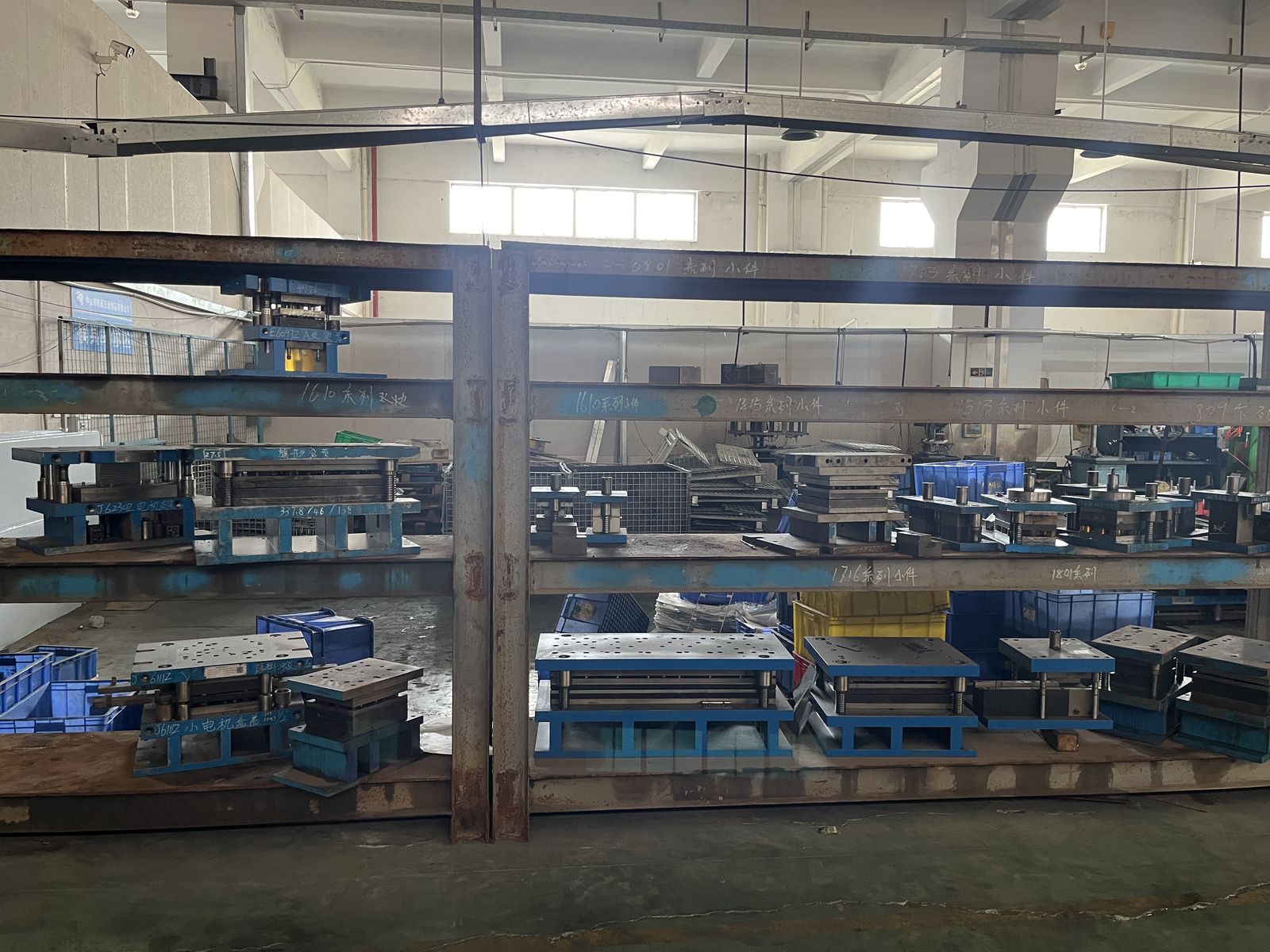
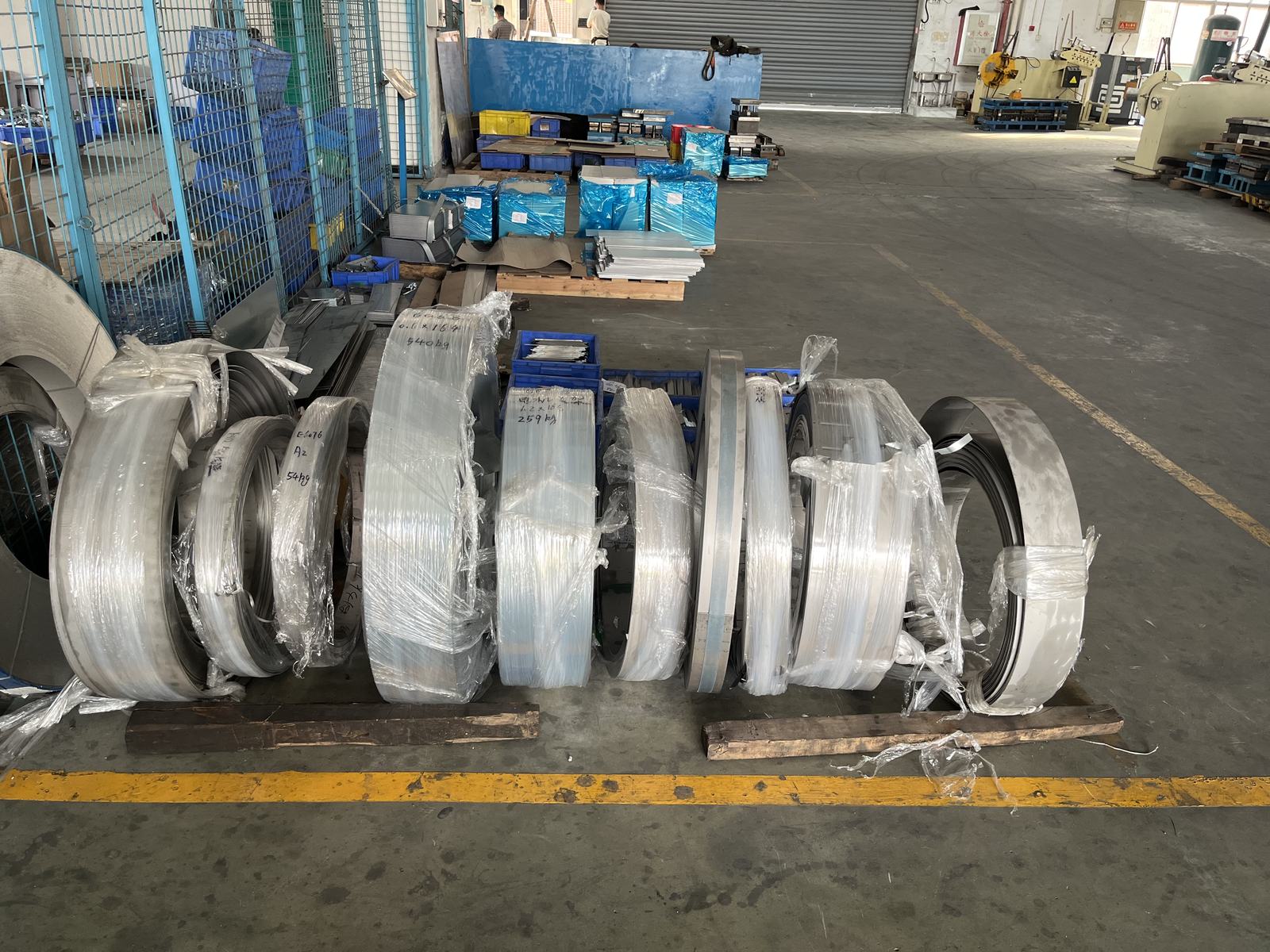
Tooling steel and production strip are bought to the grade called out on the drawing, with the mill certificate kept on file. Every die we run is cut in workshop 2: the tooling shop on the ground floor, smaller than the press shop, with a retail counter on the street side of the plant.
From the approved drawing our toolmakers cut the die in-house: die plates, pockets, slots and dowel holes on the CNC centres and vertical mills, cutting profiles on wire EDM held to micron clearance, deep ribs and sharp internal corners burned on the EDM sinker, then plates ground flat and parallel, assembled and fitted by hand. Punches and cutting edges are Daido DC53 — the improved grade, not the SKD11 most low-cost dies are cut from: 60–62 HRC after vacuum hardening and tempering, roughly twice the toughness, so edges resist chipping through long runs. Nothing leaves this workshop until the die closes cleanly on the bench.


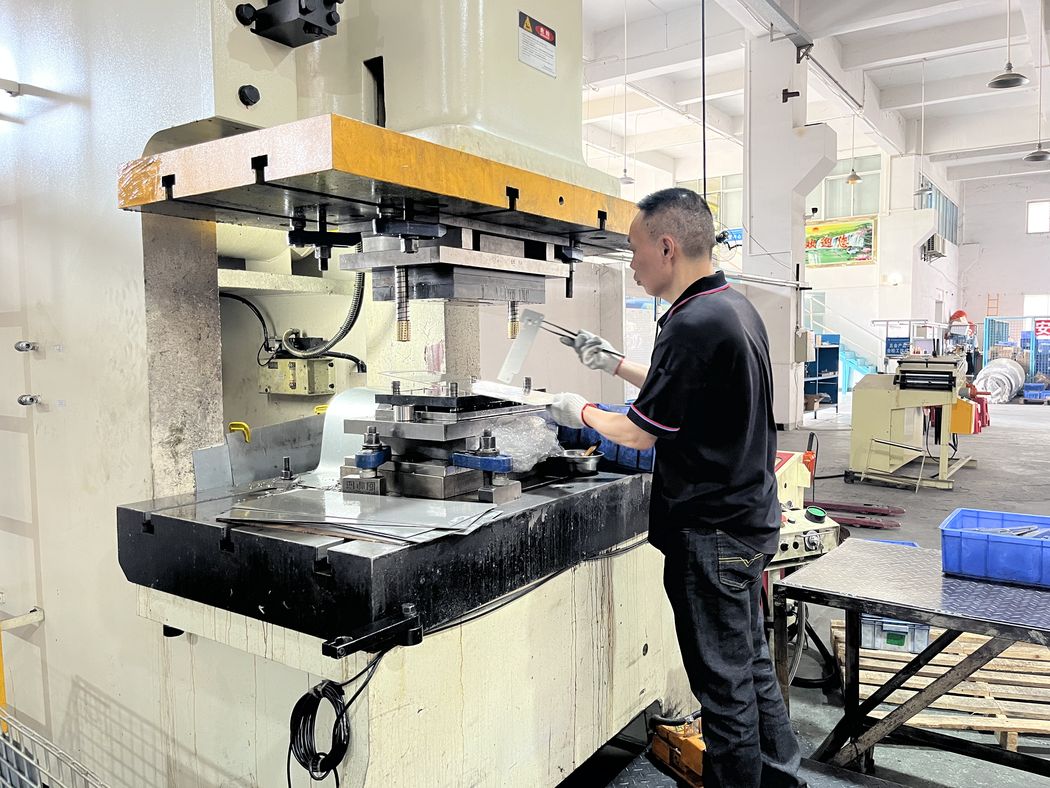
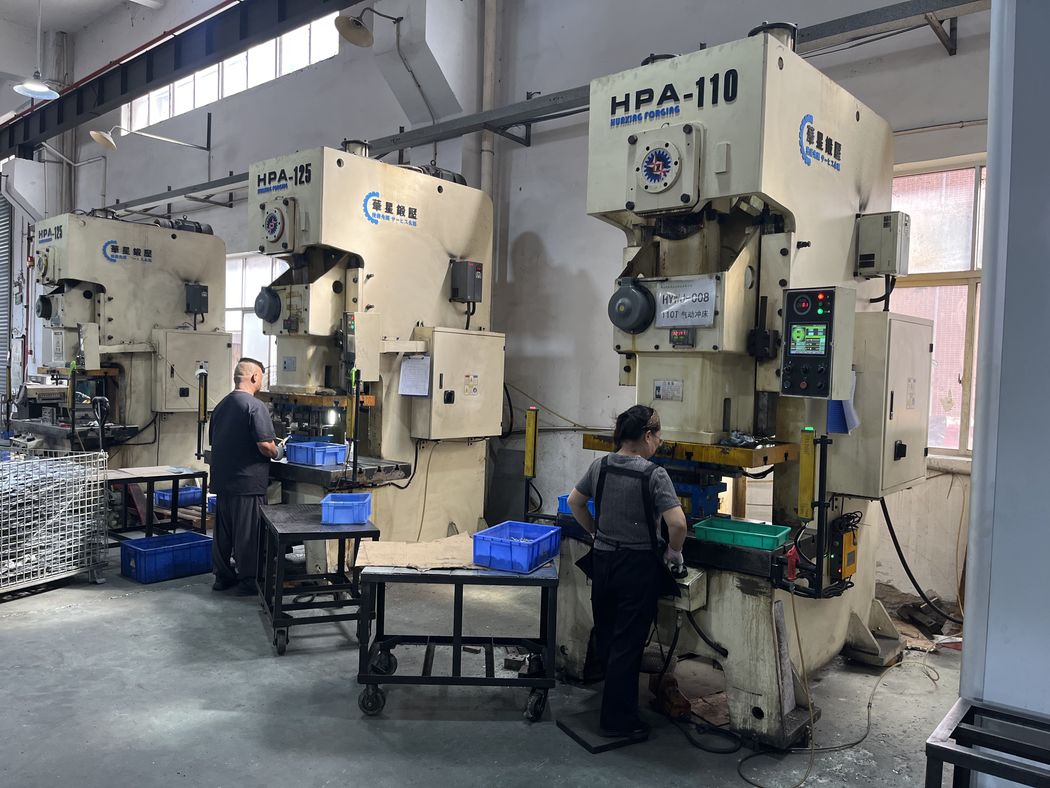
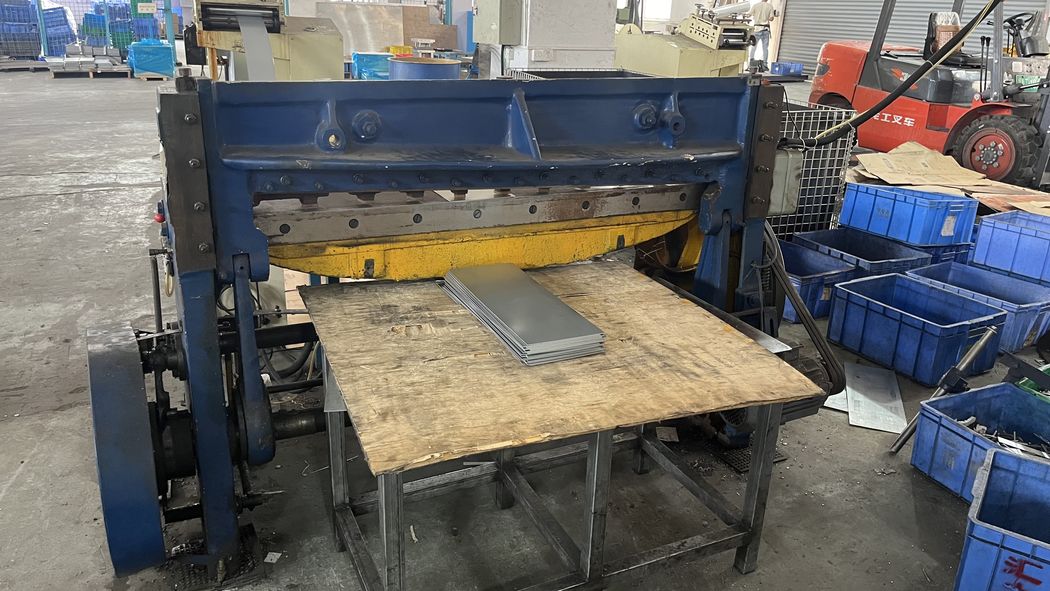
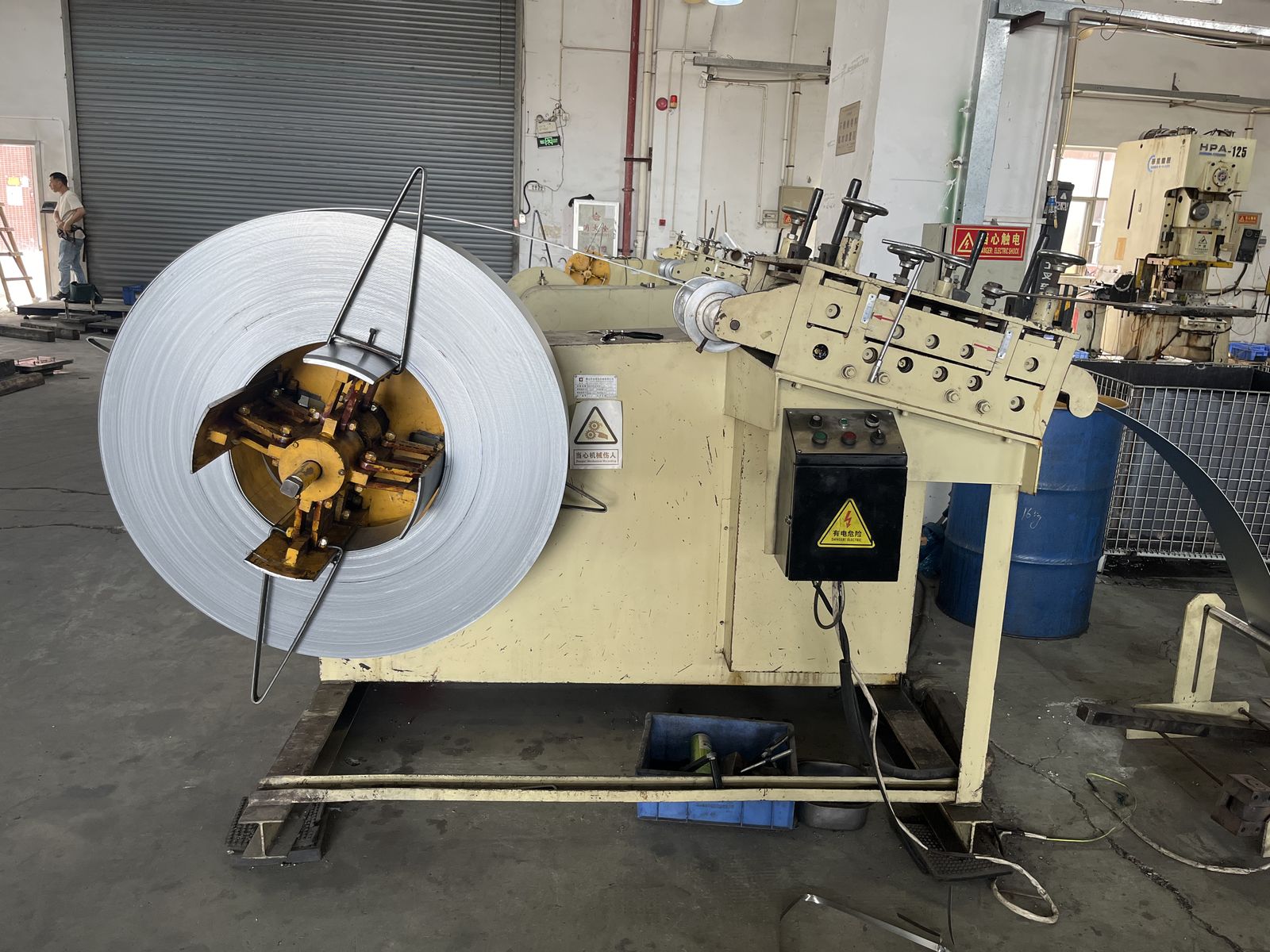
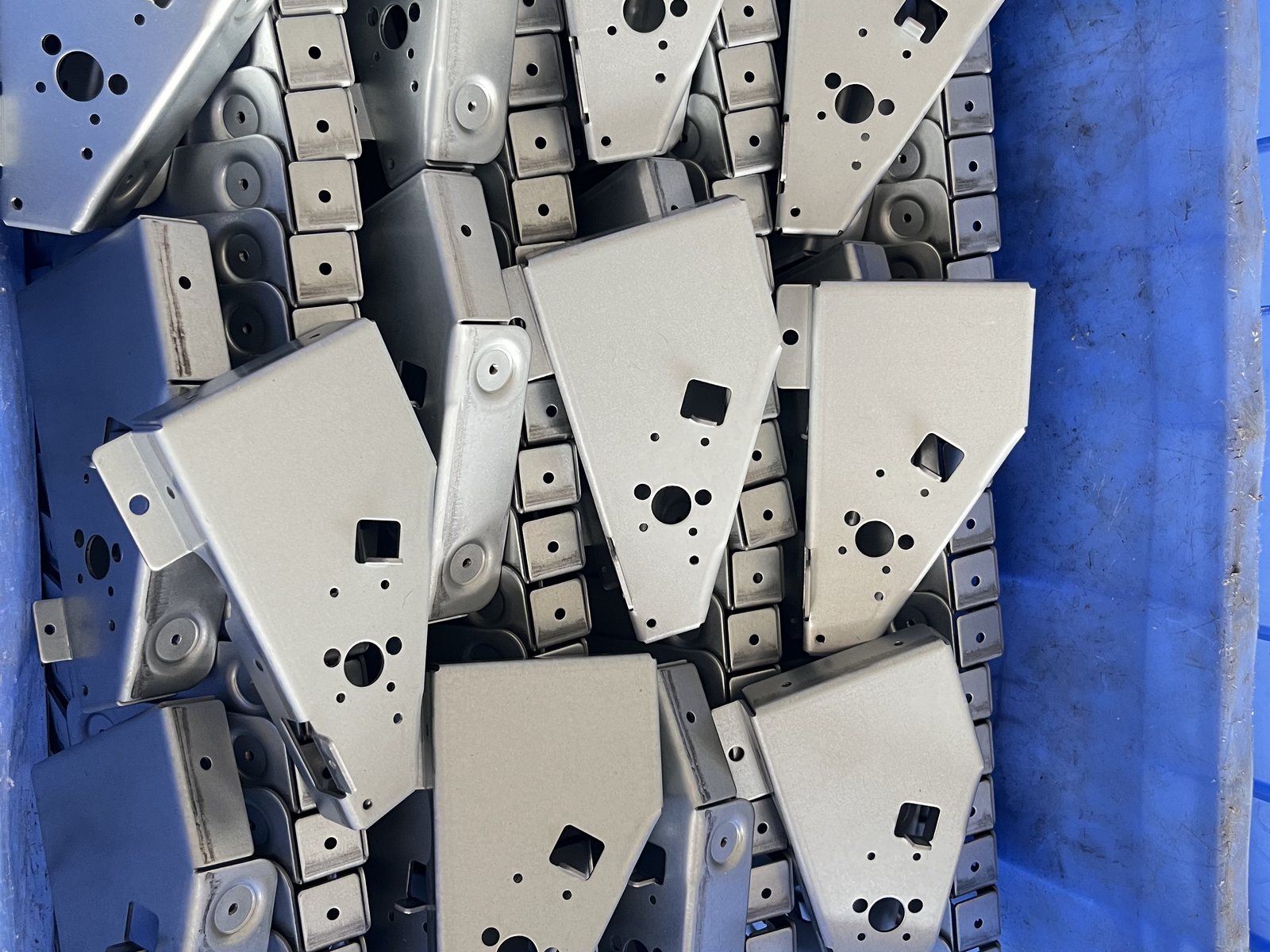
Steel strip is sheared and fed to our presses — blanking, forming and piercing on multi-station dies, from pilot run to mass production.
Stamped parts are degreased and cleaned to take off stamping oil, metal dust and handling marks before any finishing operation. It looks like a small step and it decides a large result: oil left on the surface is exactly what turns into patchy plating, oil seepage and blotching on a cheap hinge a few months later — the finish has to key onto clean metal, not onto oil. Cleaned parts are dried straight away and moved into finishing, and the cleaning line and the parts are checked between batches rather than once a day.
The line sits in workshop 3, on the fourth floor, in a shop of its own.
The line runs five stages, in this order: vibratory grinding (deburring), media separation, multi-stage rinse, brightener dip, and dewatering and drying.


Polishing and hair-line brushing bring the surface to the finish agreed on the approved sample. Grinding and brushing follow a fixed grit sequence rather than whatever the operator reaches for, edges and burrs are taken off instead of being polished over, and the grain direction is kept consistent so the parts in a carton match each other and do not show a colour band under a shelf light. Parts are pulled during the run and compared side by side with the approved standard under the same light, which is how a drifting finish gets caught in the batch instead of at the customer.


Where the finish calls for it, parts go to electroplating (GP / SC / AB / AC) or electrophoretic coating (EB). This is the one step we do not run inside our own walls: the parts go out to our plating plant and come back to us for acceptance, so the standard travels with the parts — sending it out is ordinary practice for a plant our size, and it changes the site of the work, not the specification. Coating thickness, colour and gloss are checked against the approved colour standard rather than judged by eye, finish adhesion is checked on a sample, and the coating is salt-spray tested to the specification — typically 72 hours — before a batch is accepted. Colour consistency is checked across the whole batch, not only on the first piece, because that is where a mix of light and dark pieces in one carton comes from.
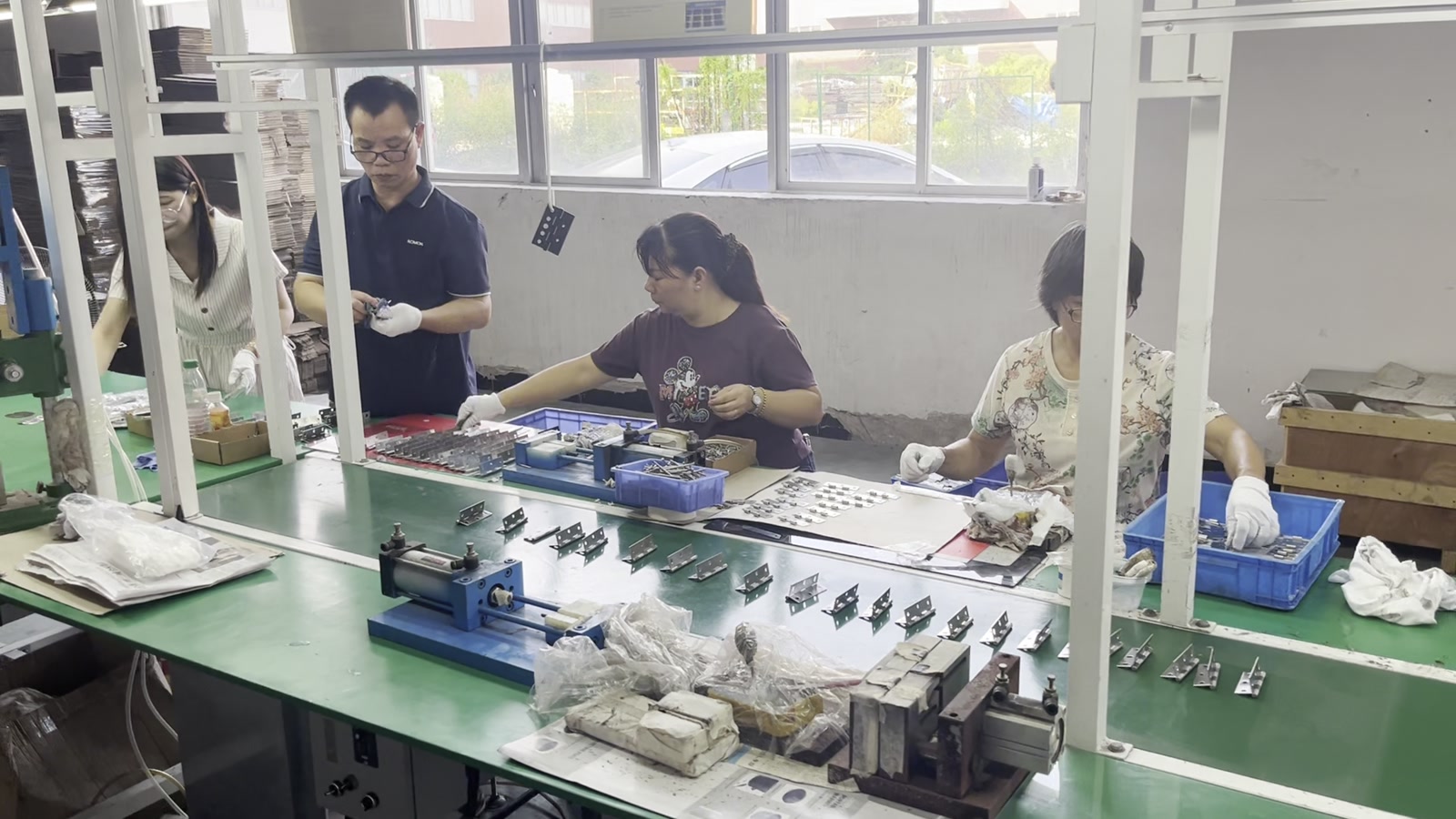
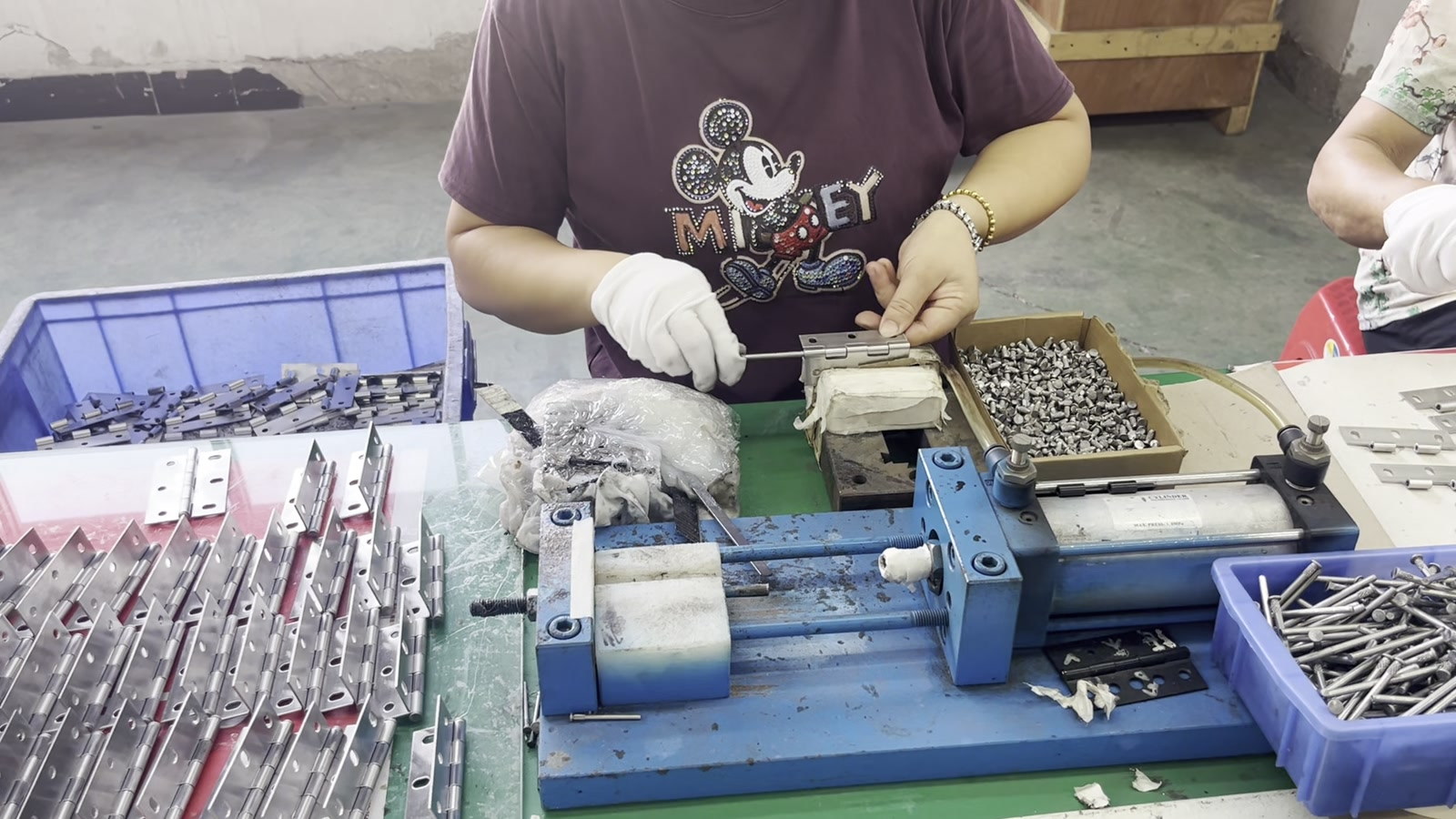
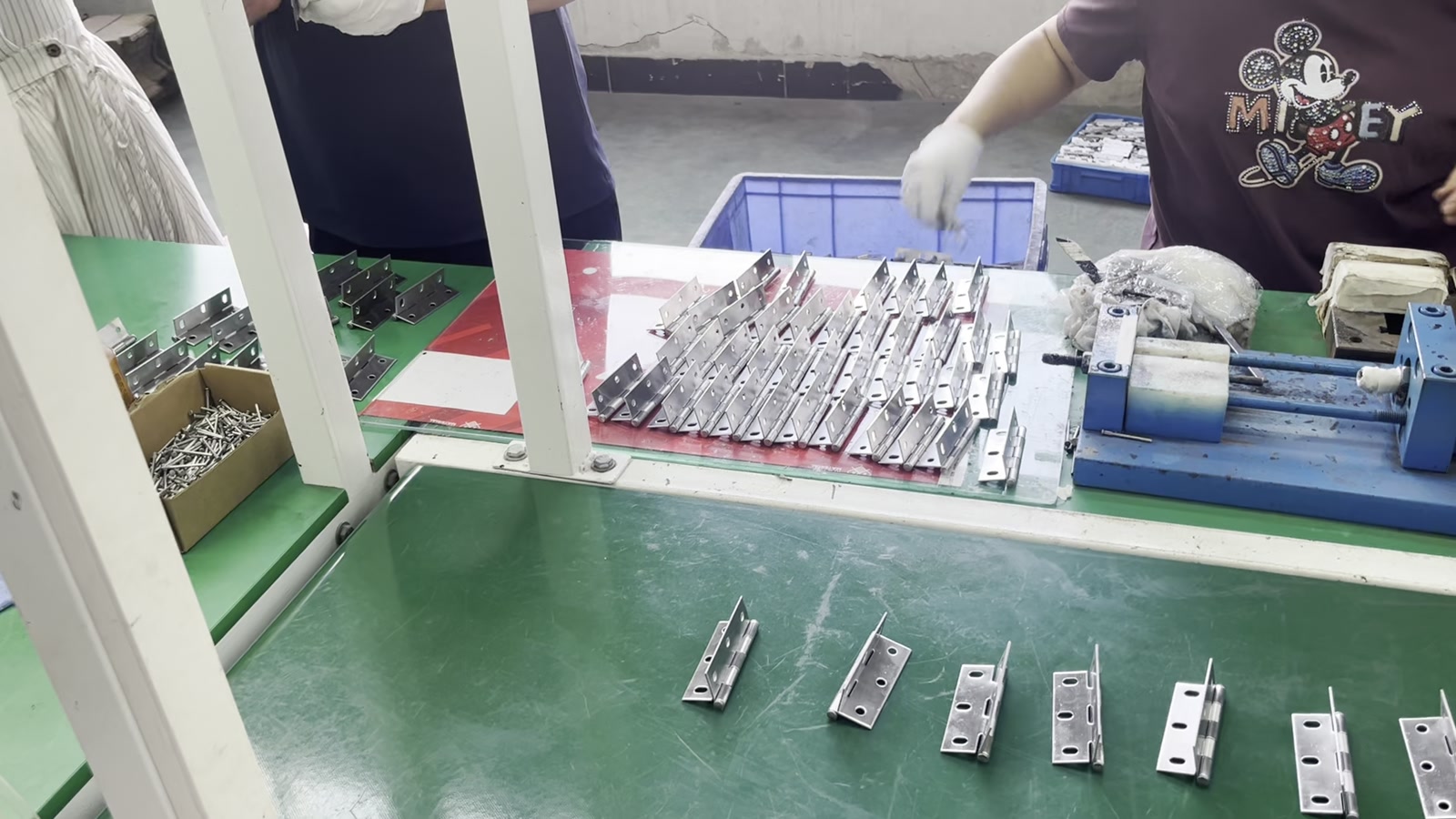
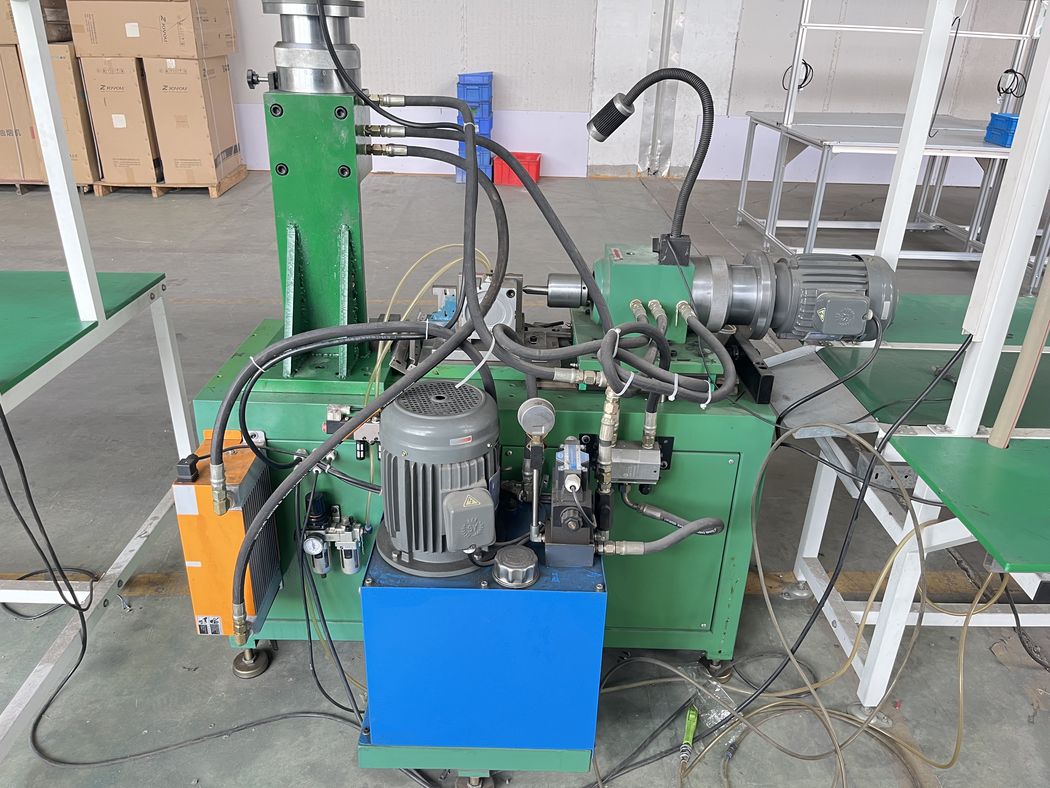
Barrel, pin, cams, springs and damping units are put together on our automatic assembly line: the stations sit along one conveyor, and the work that decides how a hinge feels — setting the pin, closing the barrel, fitting the damping unit — is done on pneumatic presses under a fixed setting rather than struck home by hand. That is what keeps the barrel round and the movement quiet, and it is the difference between a hinge that still closes smoothly after a long run of cycles and one that starts to drag. Assembled pieces are checked on the line as they come off, then move straight into testing.
Passed hinges are counted, bagged, cartoned and labelled to your specification — carton size and print, barcode, and shipping marks. Every carton carries its batch label, which is what keeps a shipment traceable back to the strip lot, the die and the inspection record, so the paperwork still works when the goods are already on a shelf in your warehouse. Count and marking are checked before cartons are sealed, cartons are stacked to hold their shape in a container, and mixed orders are packed against an agreed loading plan so the right references arrive together.


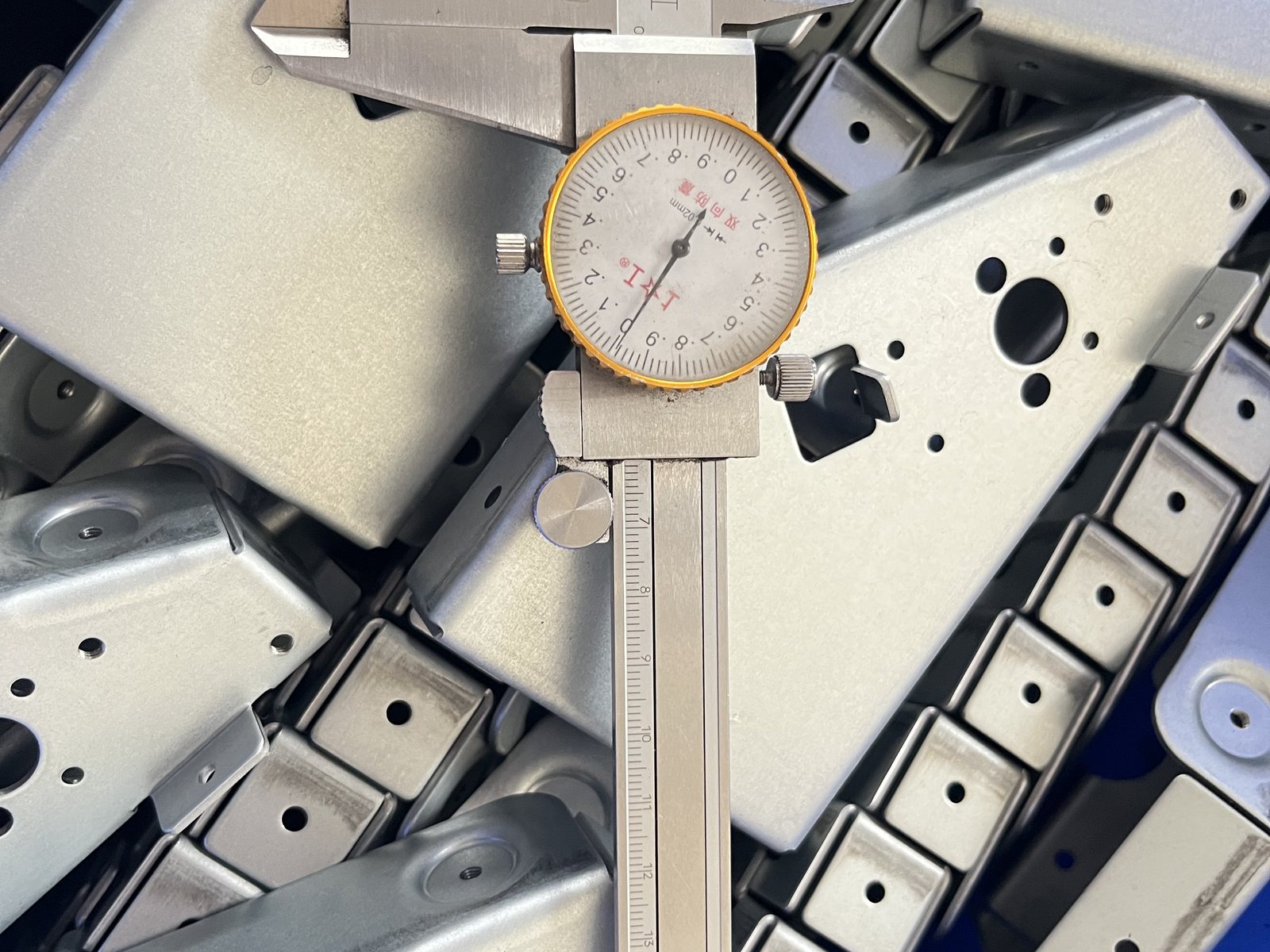
Dimensional checks with calipers and gauges, function and load testing, then the batch is released to the warehouse.
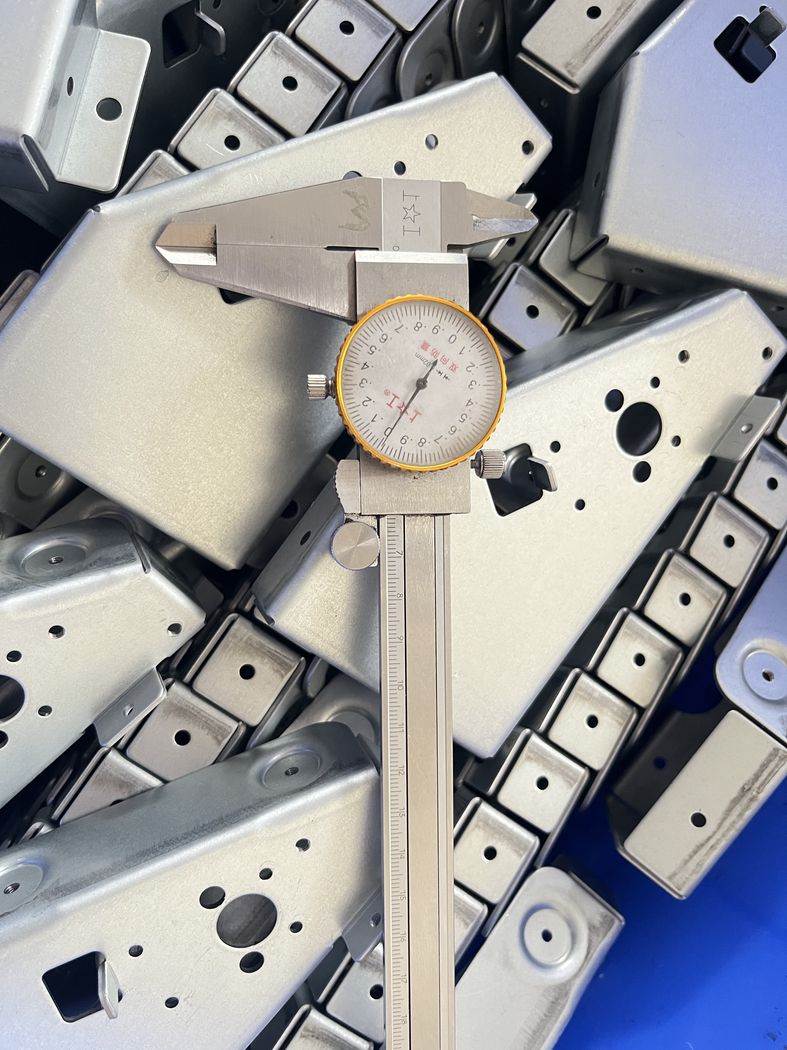
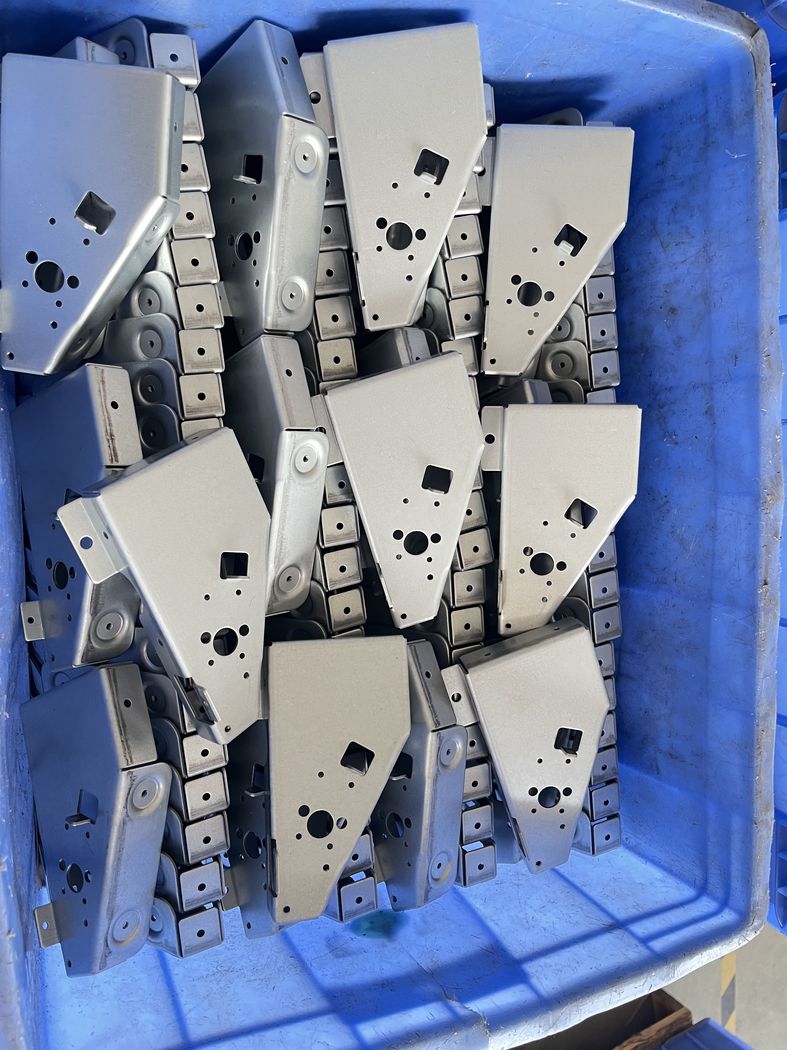
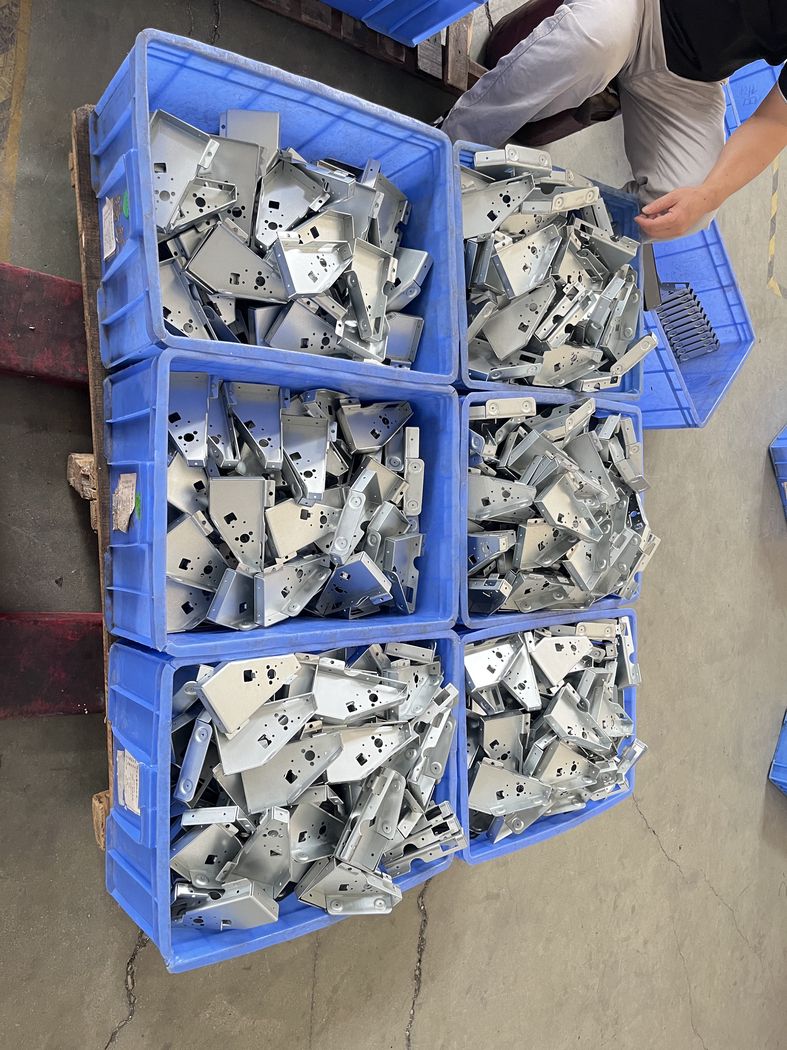
Export packing, documentation and container loading are handled by our own export team — commercial invoice, packing list, and certificates such as CO or Form D where the destination calls for them. Loading is supervised rather than left to the driver, the container and seal numbers are recorded, and we send you photographs of the loaded container so you can see the goods leave the plant. Shipping documents are issued against the same batch records kept through production, so the batch you receive is the batch we tested.
Where it happens
Every step above has a named owner in Fusha Town: three workshops under our own roof, and one process we send out — which is normal for this trade. You still know exactly who handles what when something has to change.
Workshop 1 — presses, die repair, polishing, assembly
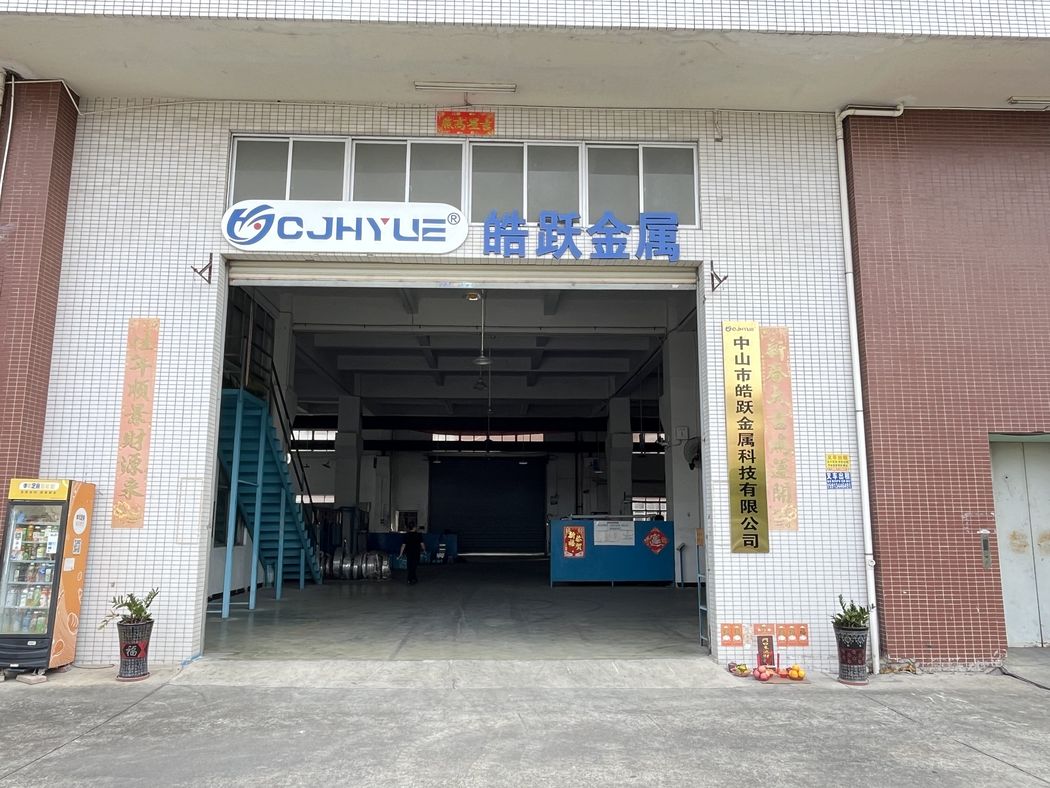
Ground floor, and the largest of the four. Stamping, die repair and modification, die setting, polishing and brushing, assembly and packing all run here, together with the warehouse and the QC bench. Shipment loads at the gate.
Workshop 2 — die making
Ground floor, smaller than the press shop, with a retail counter on the street side of the plant. CNC, wire-cut EDM, EDM sinker, surface grinding and hand fitting: every die we run is cut here.
Workshop 3 — surface cleaning
Fourth floor, a shop of its own. Cleaning only: vibratory grinding, media separation, multi-stage rinse, brightener dip, and dewatering and drying.
Workshop 4 — plating and electrophoresis
Plating and electrophoresis are finishes we supply as normal, not a gap in the range. The parts are sent out to our plating plant and accepted back here against the approved colour standard, with thickness, adhesion and salt spray checked to specification. Workshop 4 is the bay held for the day volume makes it worth running in-house. Outsourcing changes where the work happens, not what you receive.
Factory in photos
Raw material, presses, tooling, testing and the site itself — walk through our workshop in Fusha Town. 18 photos, all as shot.
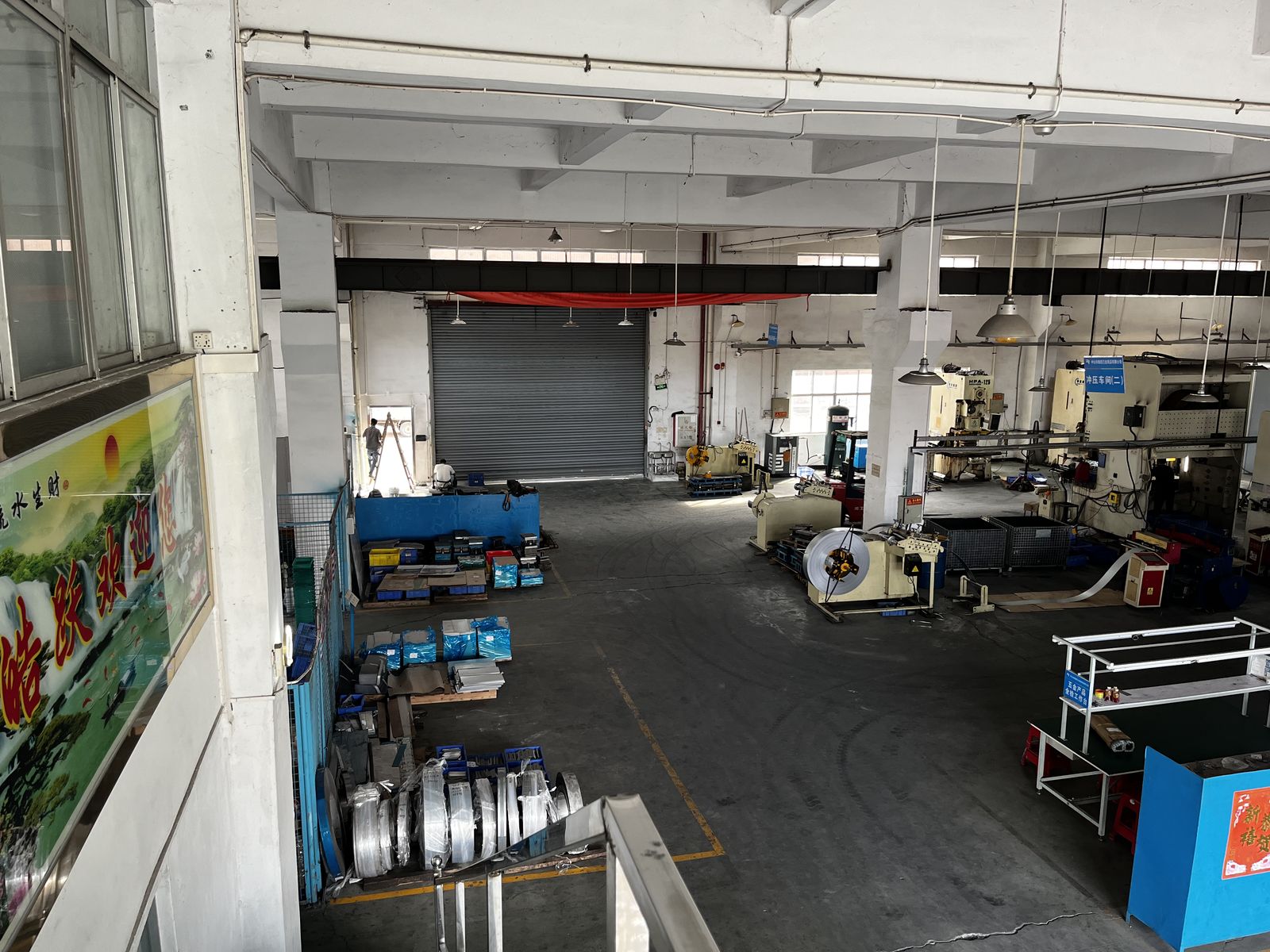
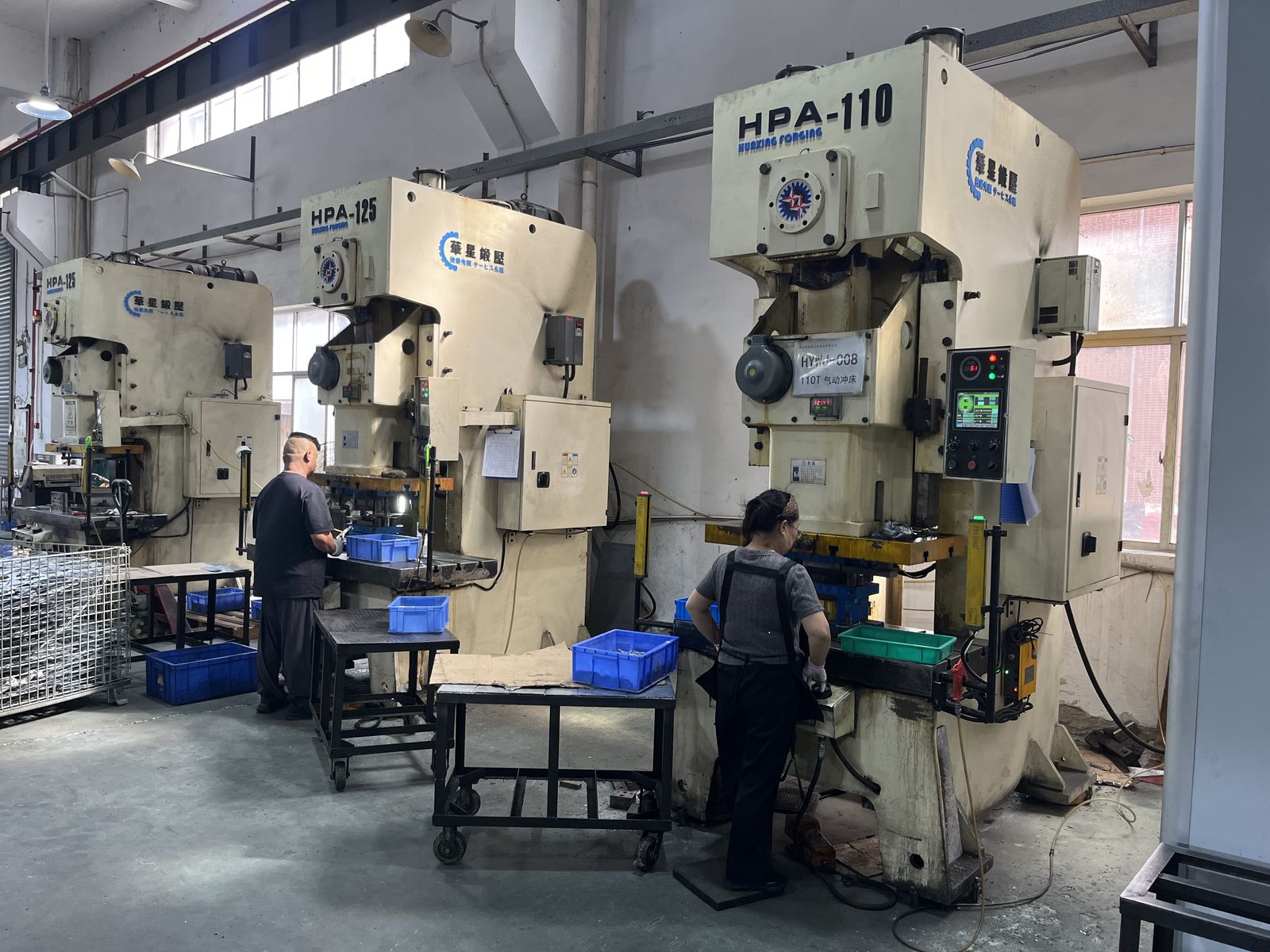
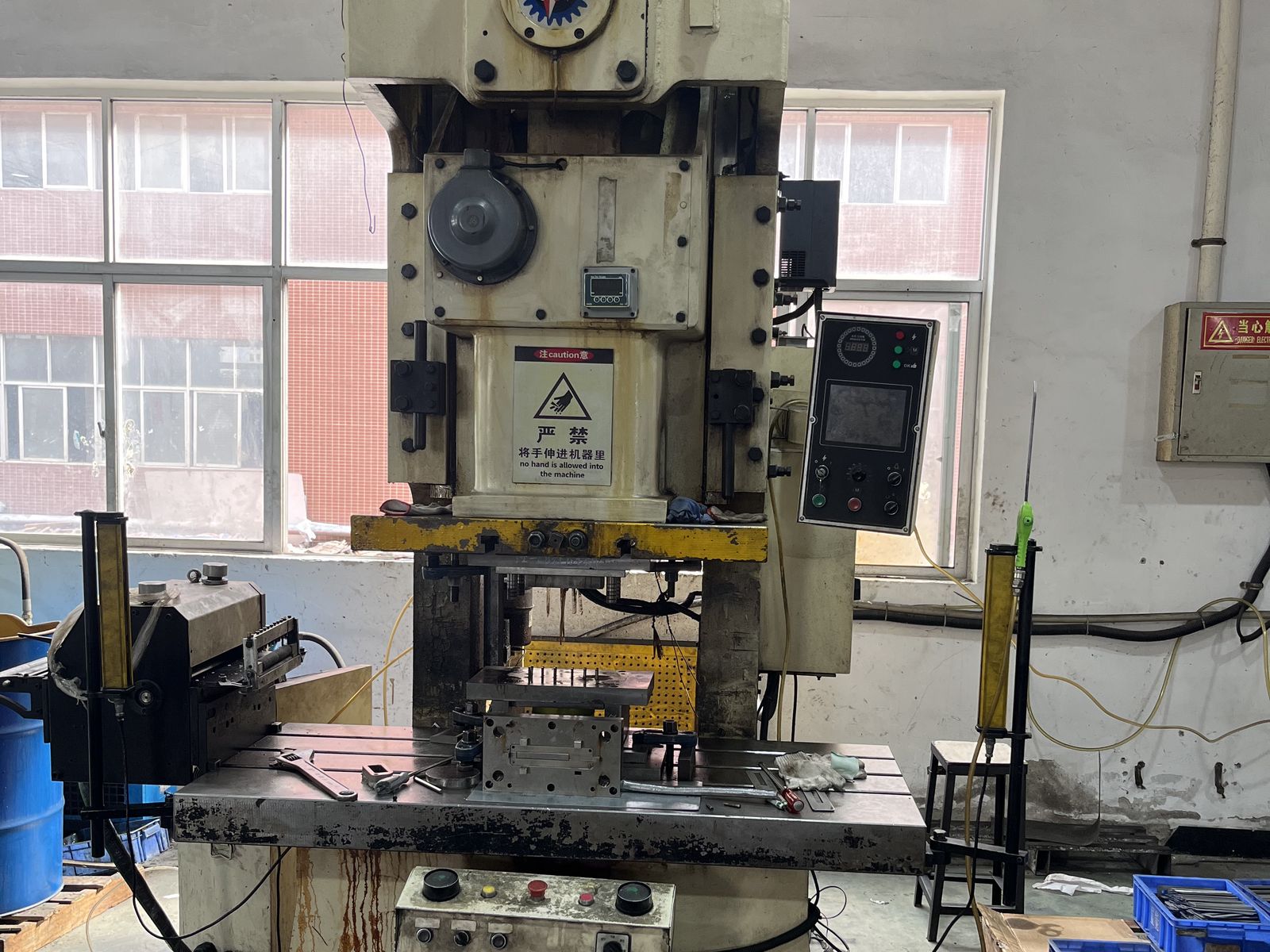
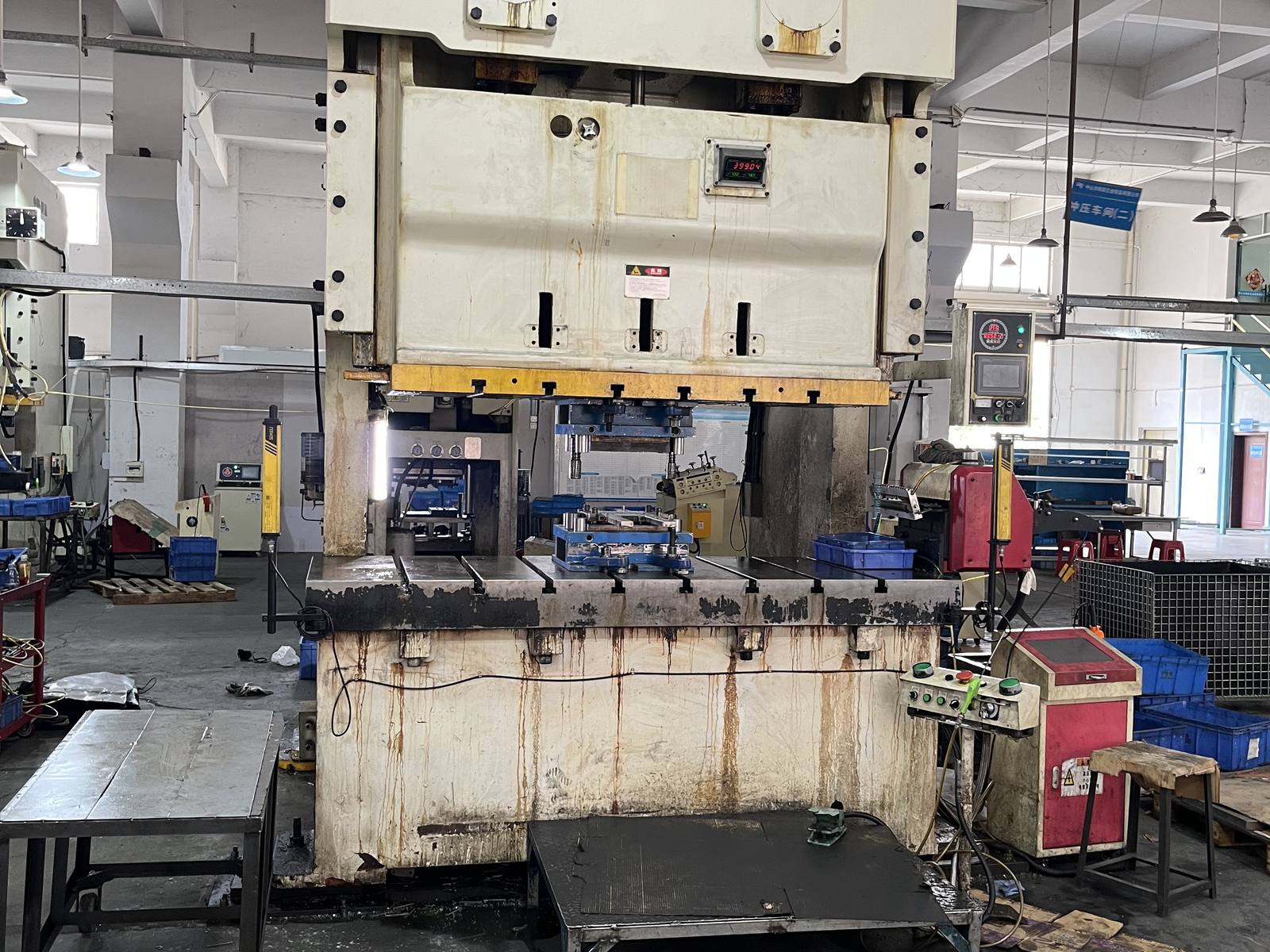
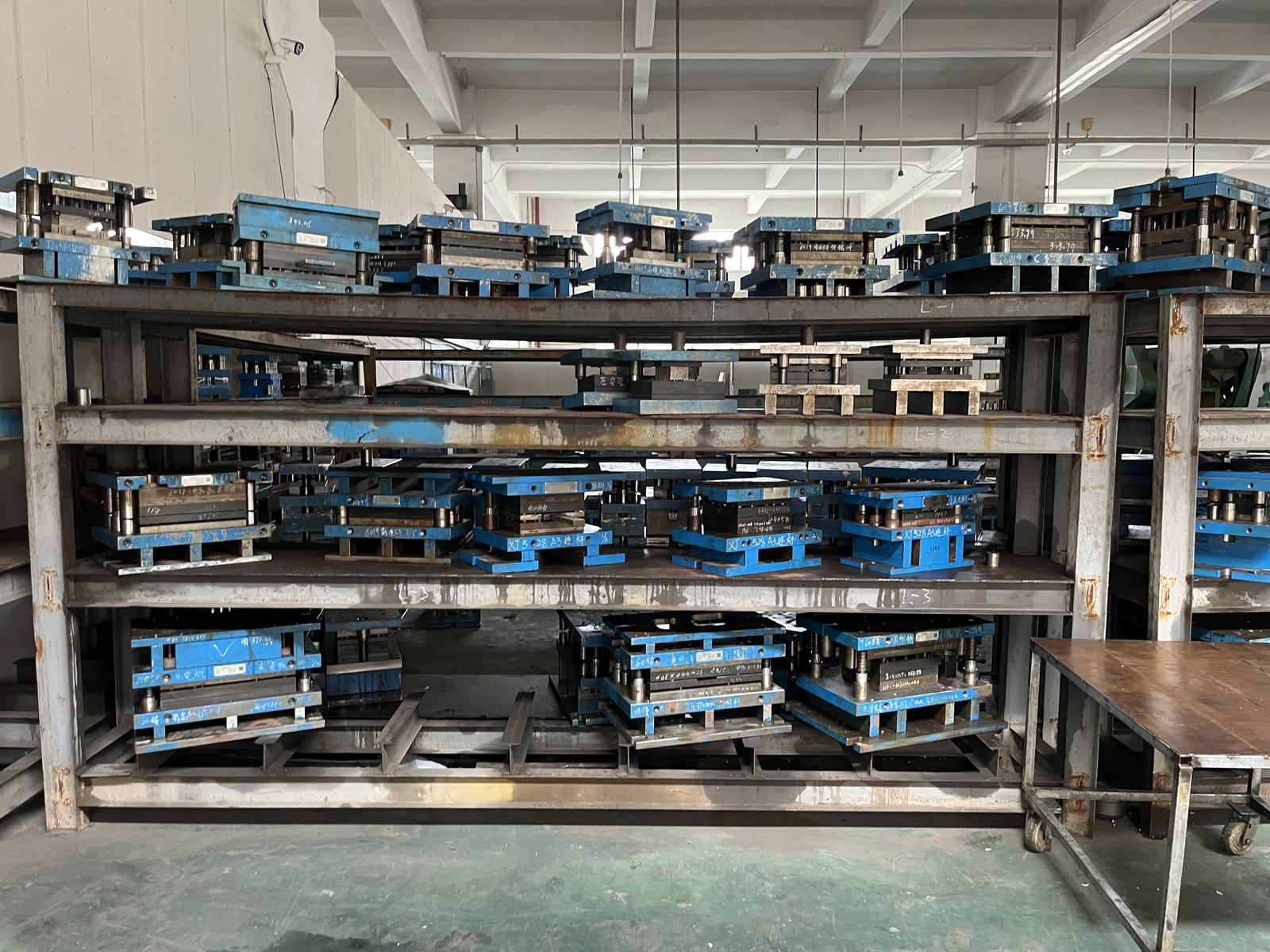
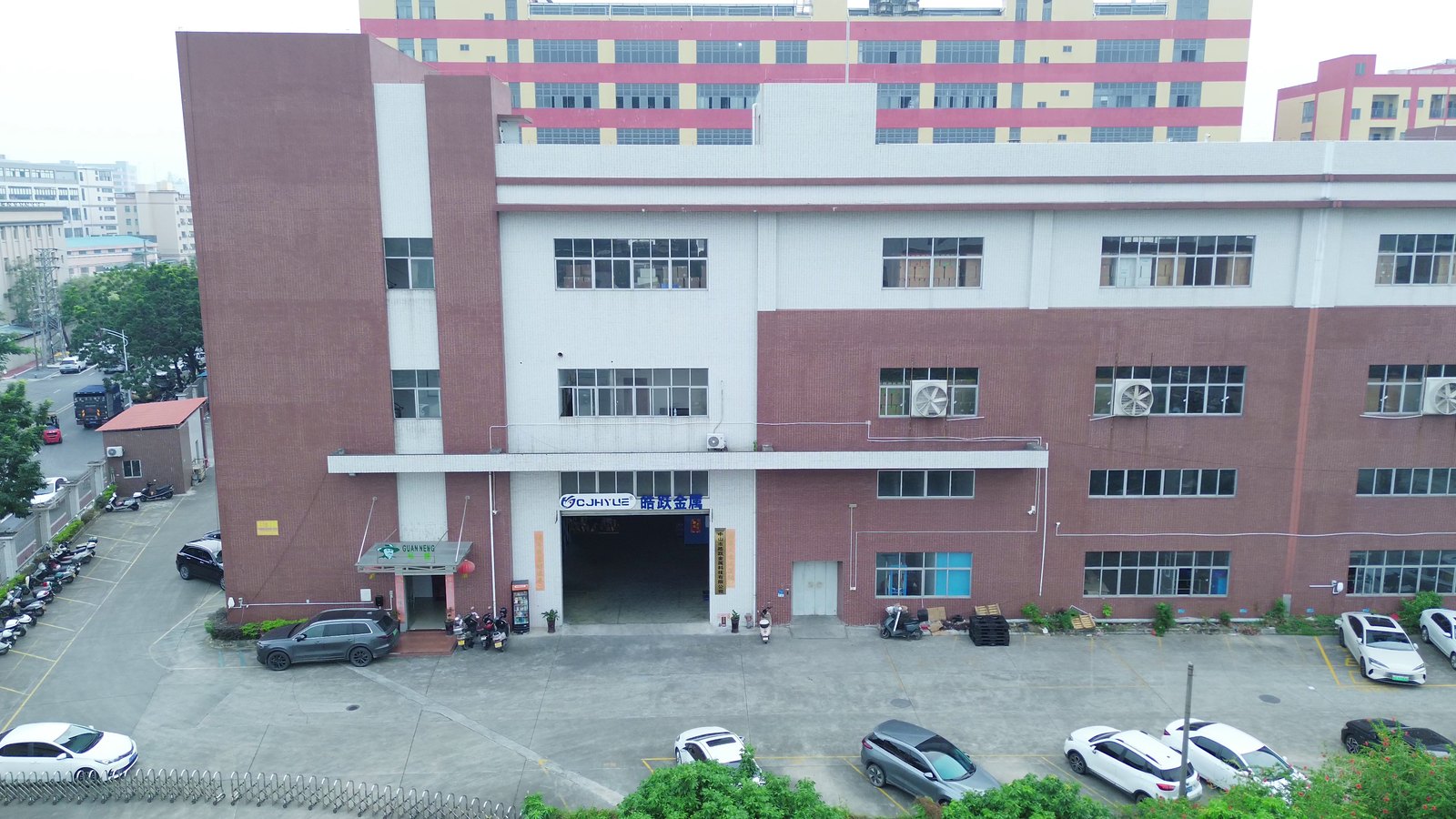
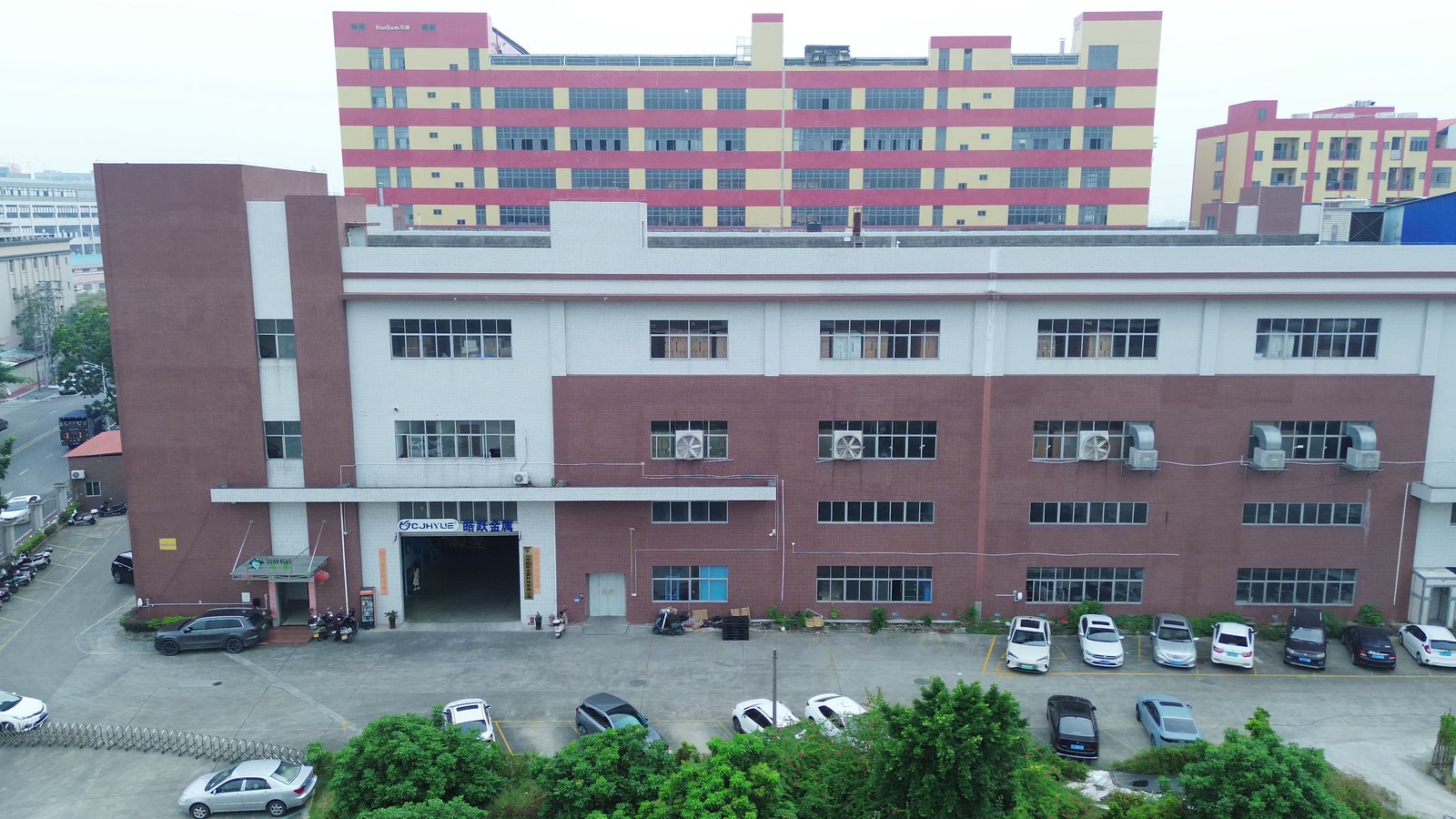
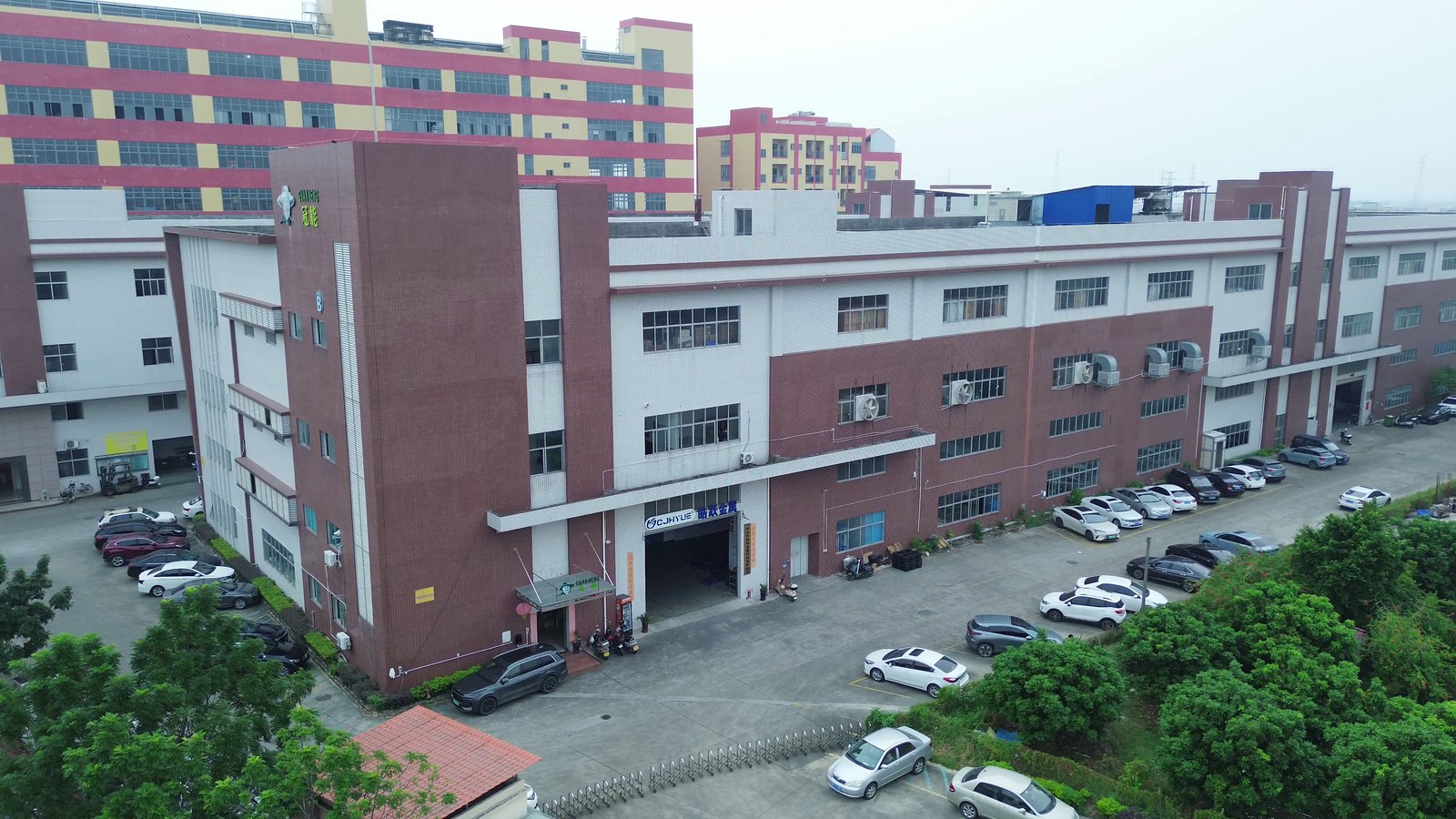
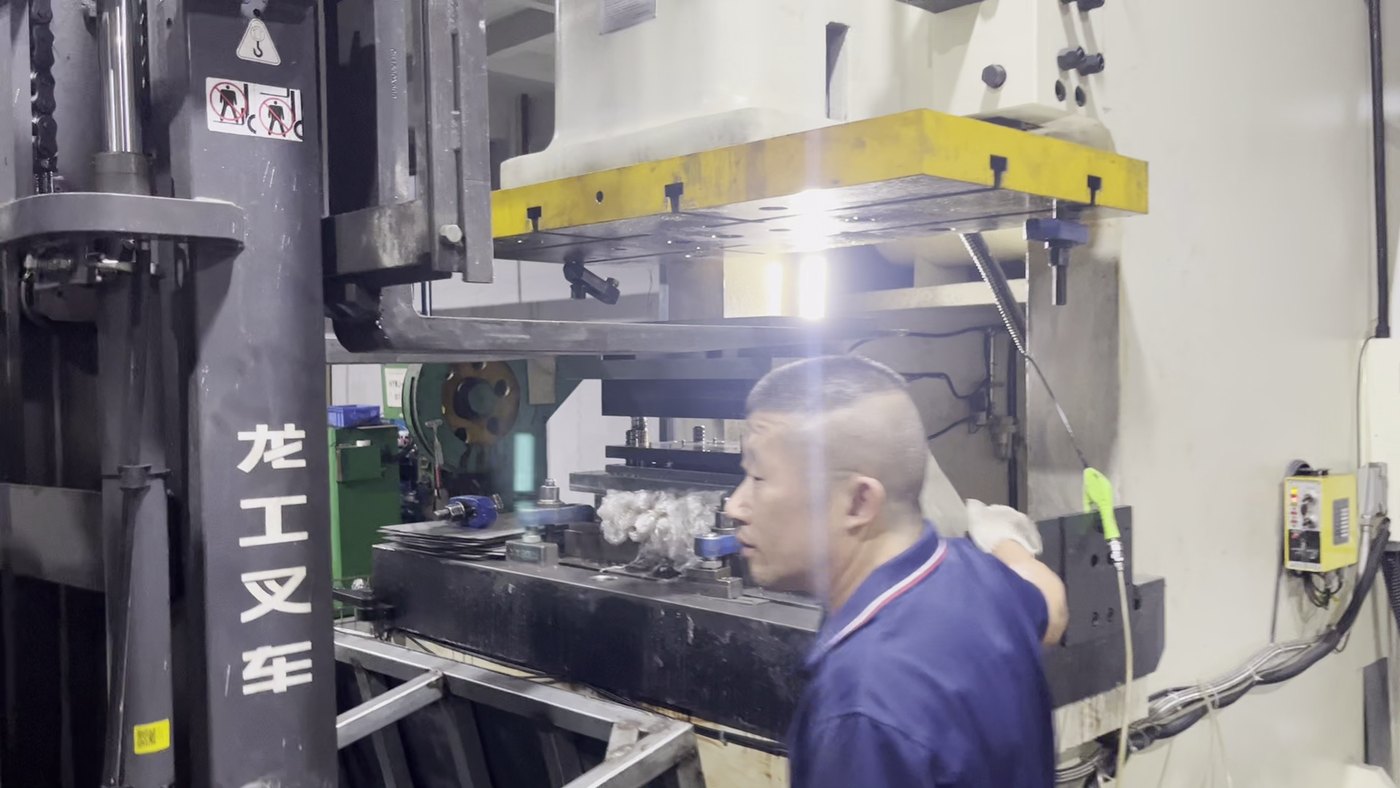
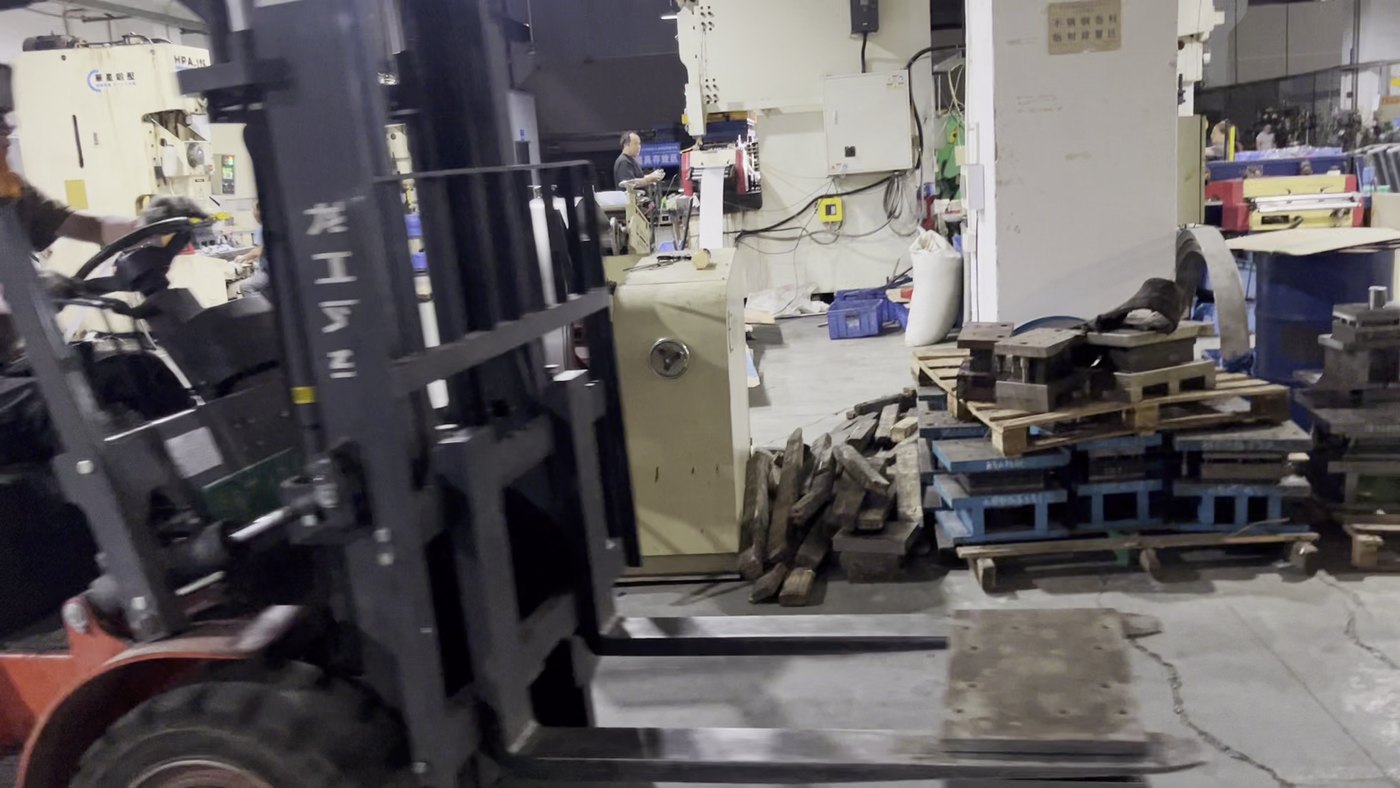
The two loops below are cut from our 13-minute factory walk-through on YouTube — tooling shop, press line, testing laboratory and warehouse. Watch the full 13-minute factory tour on YouTube · More videos on our YouTube channel.