Home / Products / Silent hydraulic hinges
Three mounting types — butterfly, flag and butt — each with a hydraulic cylinder inside the knuckle. The door closes itself, quietly, without a separate door closer on the face.
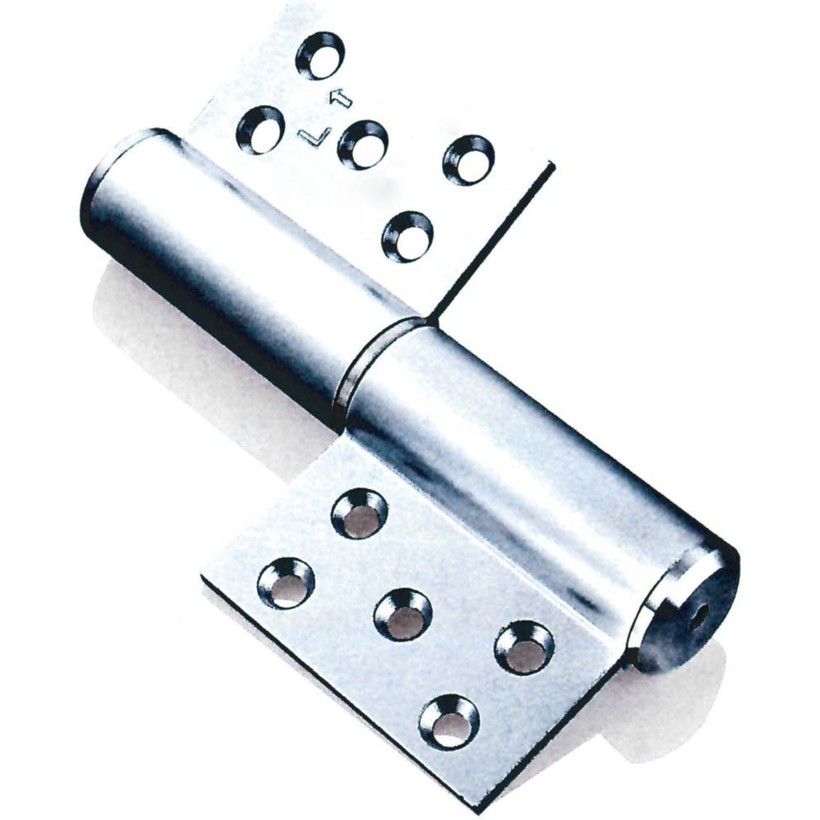
The middle option of the three, and the one most projects end up with. One narrow leaf fixes to the frame and one wide leaf to the door, and the frame does not need a long groove routed into it — only a shallow recess. Choose it when the door has to sit flush against the frame when closed, and when the frame is too thin to take a deep pocket.
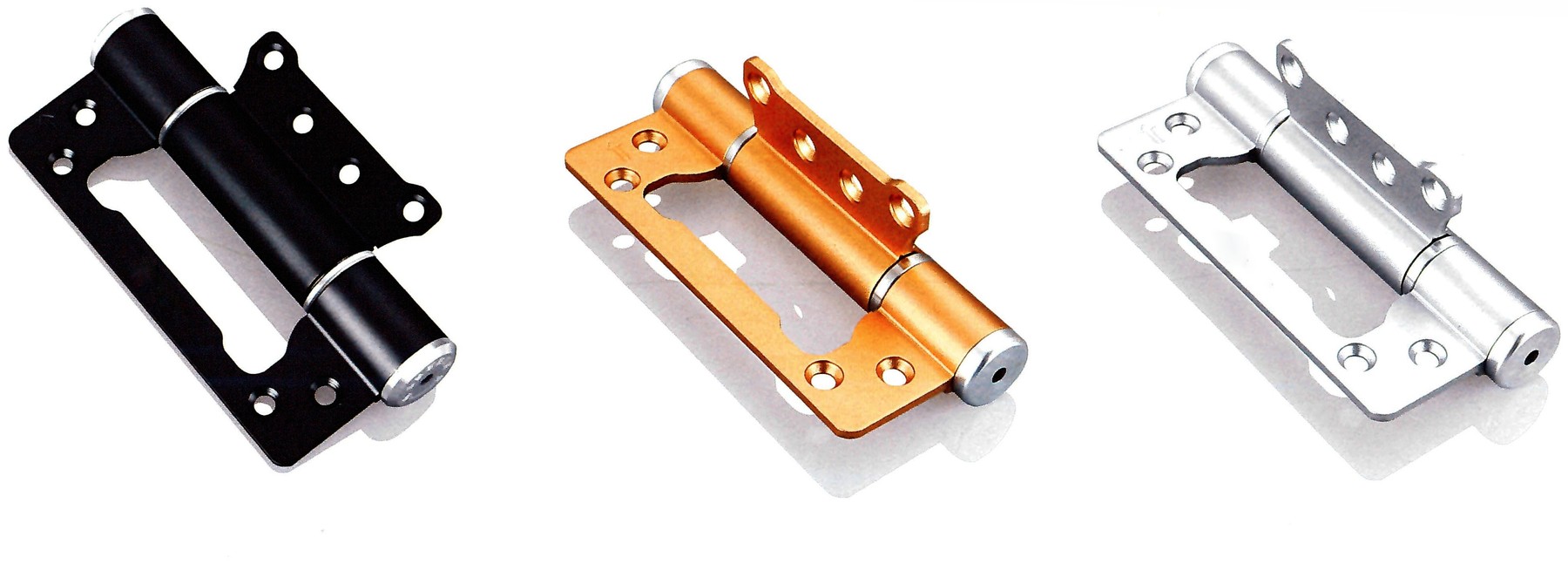
| Parameter | 4 inch | 5 inch |
|---|---|---|
| Model | HY-Z-435 | HY-Z-535 |
| Max load capacity | ≤20 kg / pc | ≤30 kg / pc |
| Service life | 300,000+ cycles | 500,000+ cycles |
| Overall dimensions | 141 × 94 × Φ22.5 mm | 148 × 100 × Φ26 mm |
| Leaf dimensions | 130 × 35 × 3.5 mm | 138 × 36 × 3.5 mm |
| Grooving method | Groove free — no long mortise in the frame | |
| Opening | Single direction, max 170°, left and right hand available | |
| Operating temperature | −30 °C to 60 °C | |
| Closing force | Infinitely adjustable | |
| Material | Space aluminium body, stainless steel leaf | |
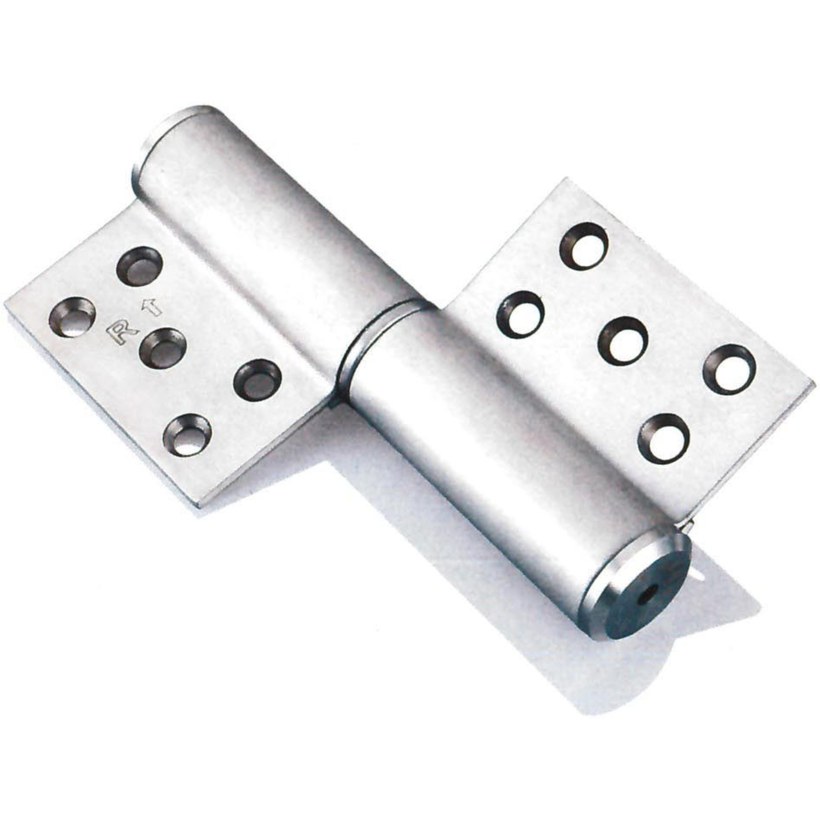
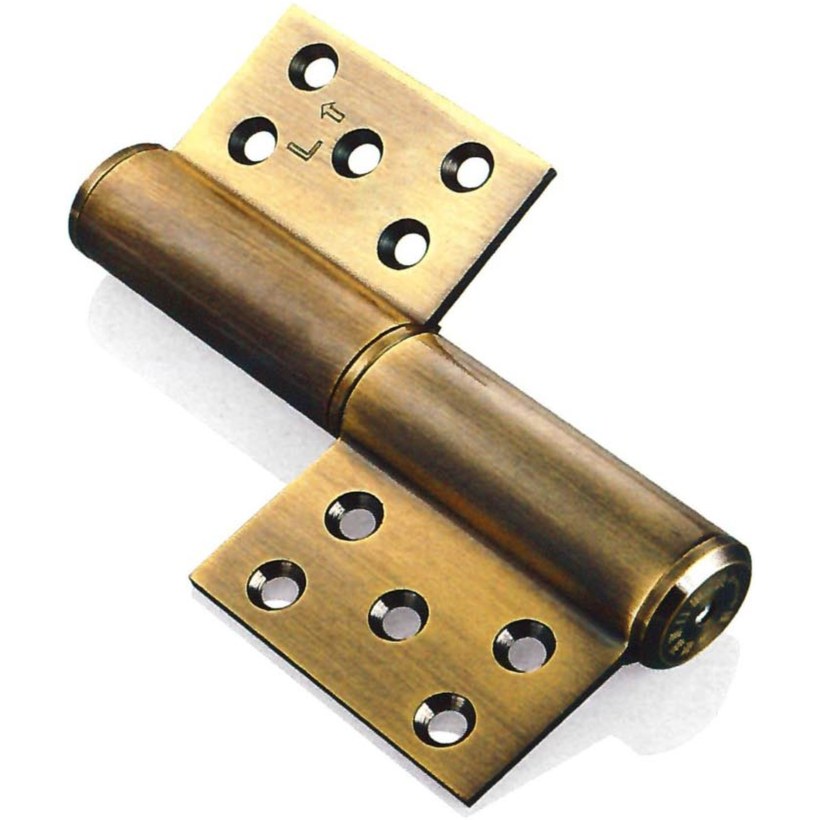
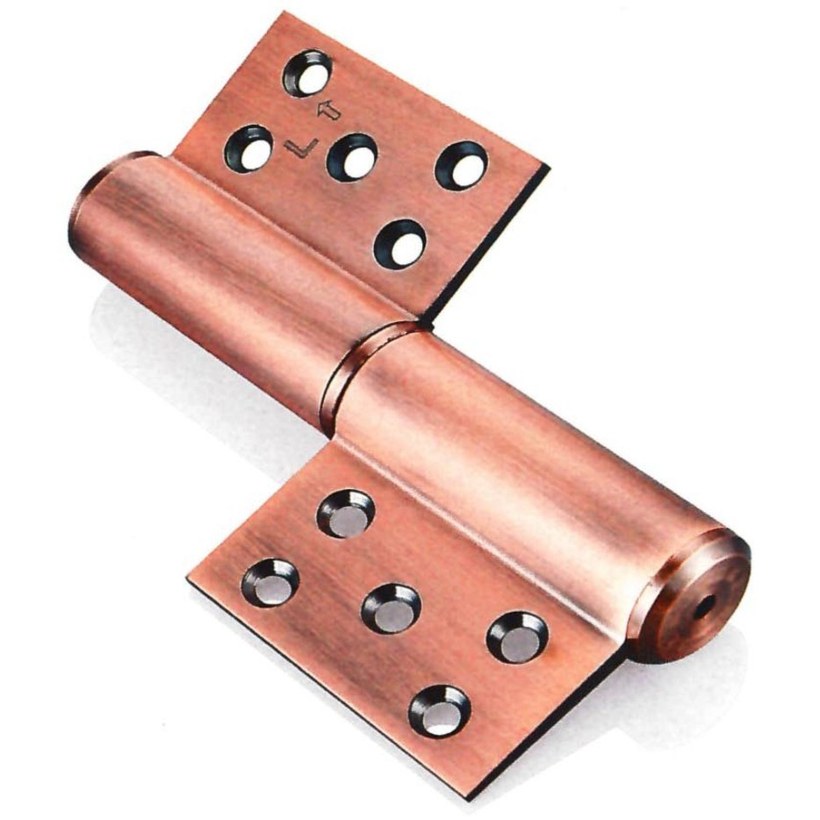
One narrow leaf screws flat onto the face of the frame, one wide leaf onto the door. Nothing is cut into either — no pocket, no groove, the hinge simply sits on the surface. That makes it the type to use where the door is already hung and finished, where the frame is steel or aluminium rather than timber, or where nobody on site can cut a pocket accurately.
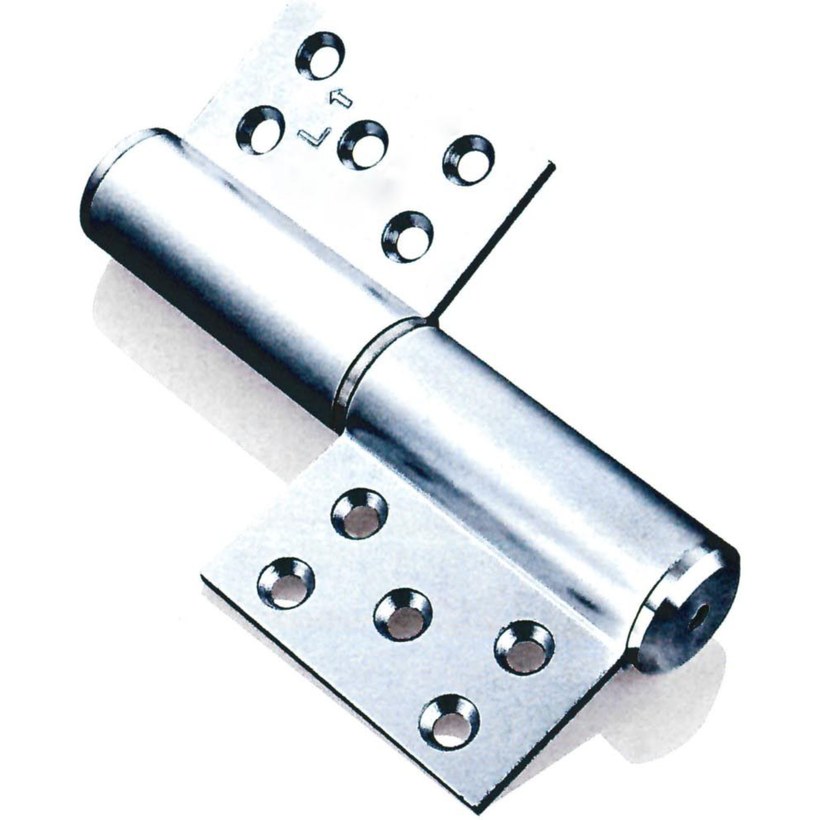
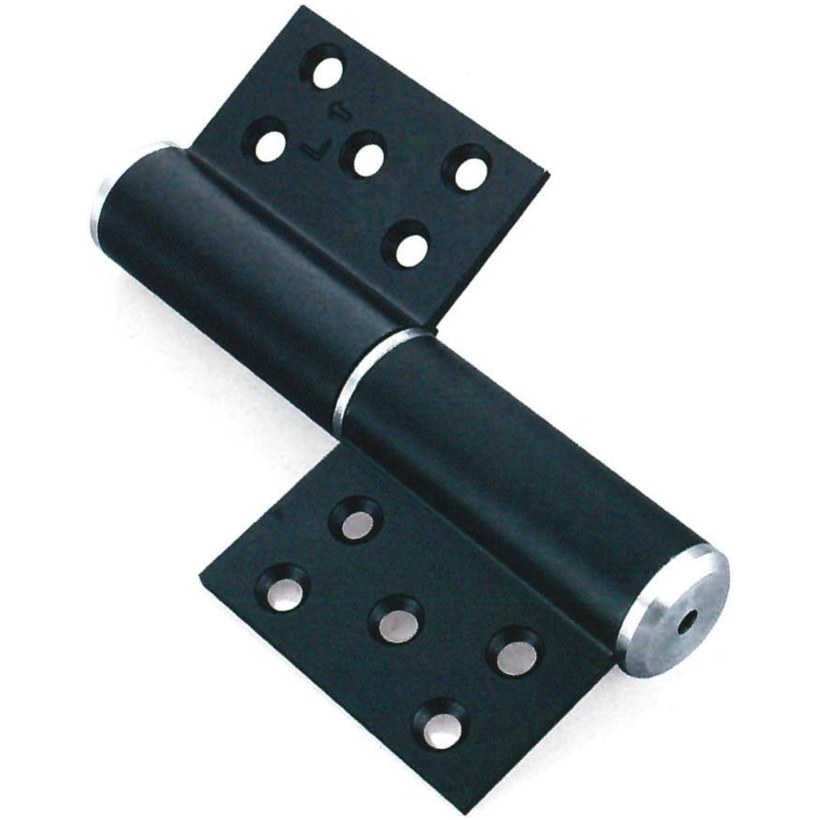
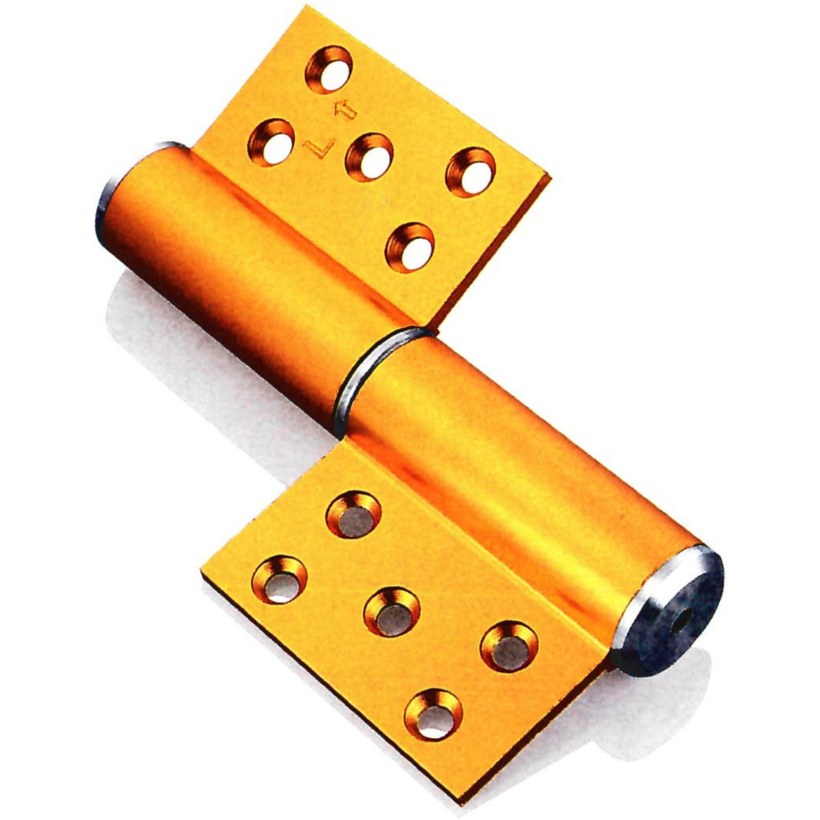
| Parameter | 5 inch | 6 inch |
|---|---|---|
| Model | HY-Q-535 | HY-Q-635 |
| Max load capacity | ≤30 kg / pc | ≤40 kg / pc |
| Max door width | ≤1050 mm | ≤1200 mm |
| Service life | 500,000+ cycles | 500,000+ cycles |
| Overall dimensions | 148 × 100 × Φ26 mm | 170 × 101 × Φ28 mm |
| Leaf dimensions | 67.5 × 36 × 3.5 mm | 78 × 36 × 3.5 mm |
| Fixing | Surface mounted, no mortise | |
| Closing force | Infinitely adjustable | |
| Material | Space aluminium body, stainless steel leaf | |
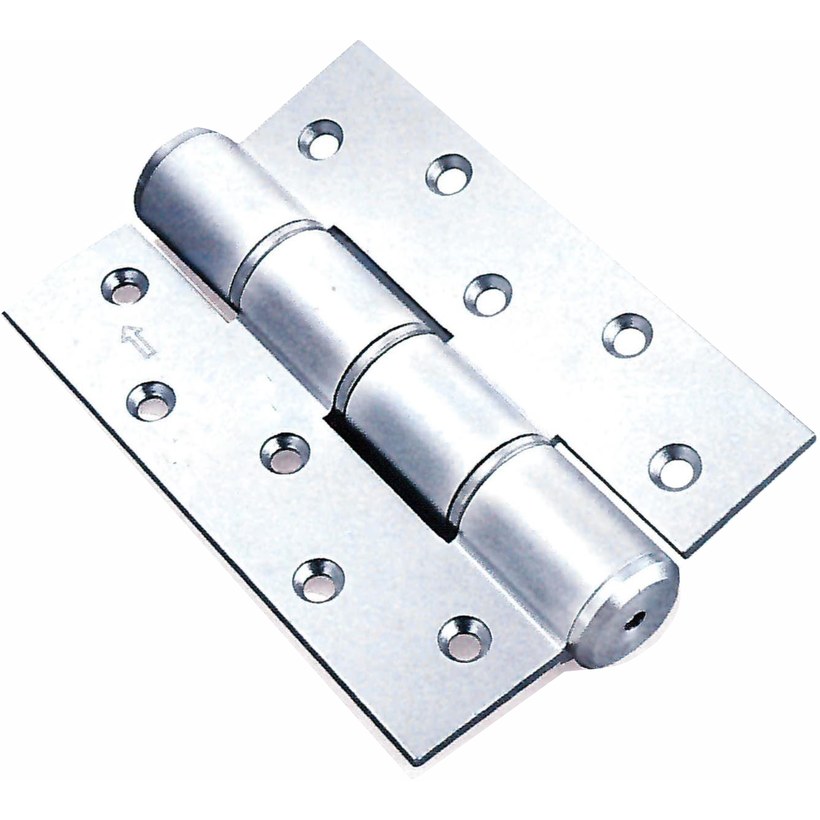
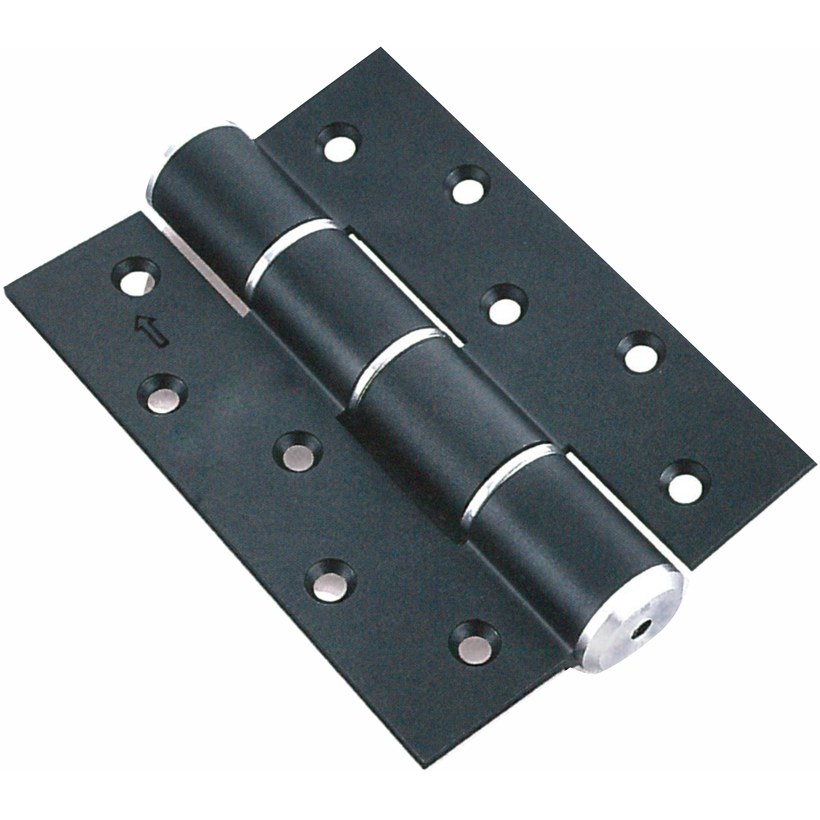
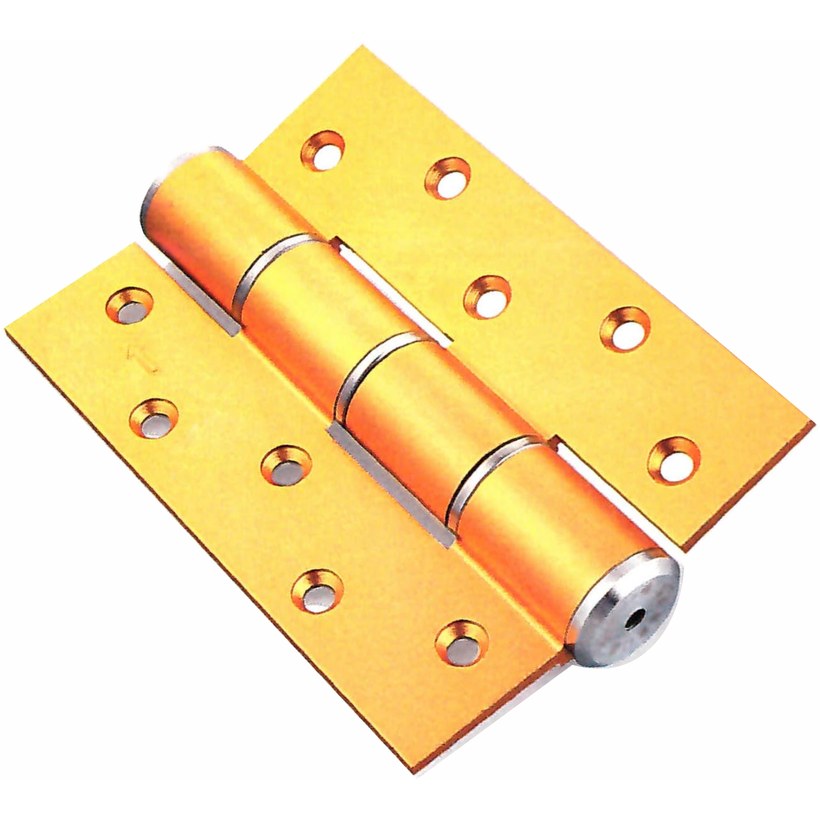
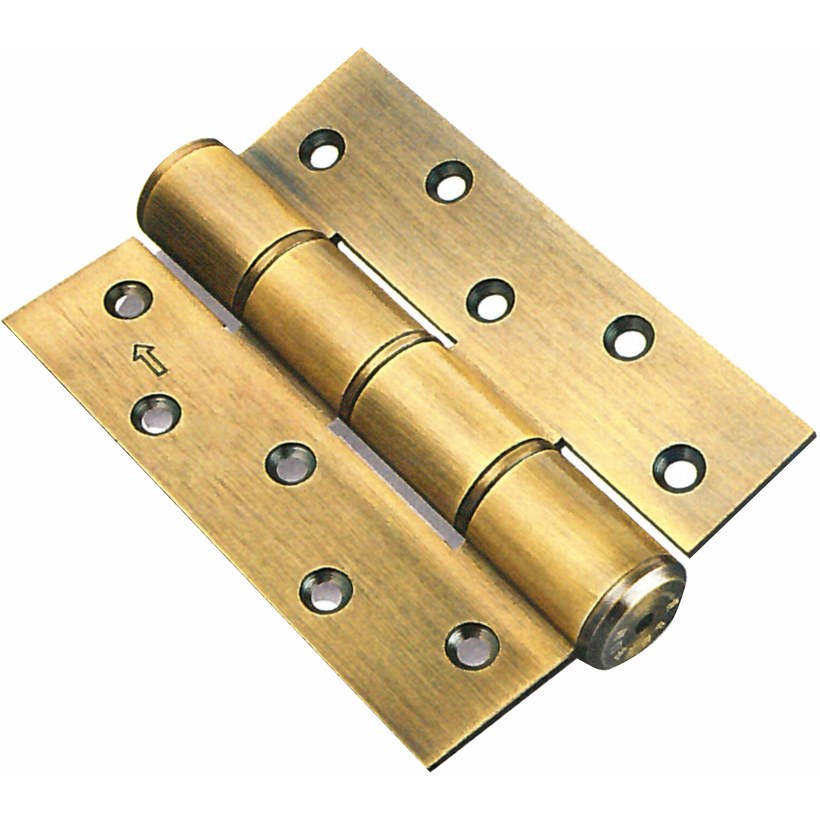
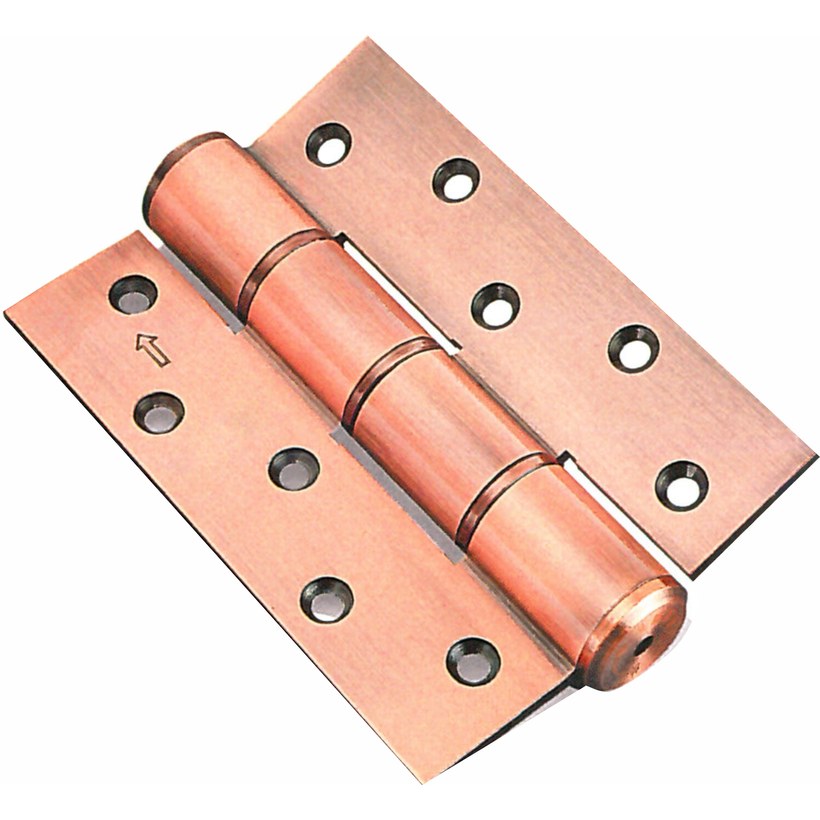
Two equal leaves, each sitting in a pocket cut into the timber — fitted exactly the way an ordinary butt hinge is, which is why a carpenter needs no new instruction to hang it. The only difference from a plain hinge is hidden inside the knuckle. Use this one on a standard timber door where the carpenter is already set up to cut pockets.
| Parameter | 4 inch | 5 inch | 6 inch |
|---|---|---|---|
| Model | HY-E-435 | HY-E-525 | HY-E-635 |
| Max load capacity | ≤20 kg / pc | ≤30 kg / pc | ≤40 kg / pc |
| Max door width | ≤900 mm | ≤1050 mm | ≤1200 mm |
| Service life | 300,000+ cycles | 300,000+ cycles | 500,000+ cycles |
| Overall dimensions | 141 × 84 × Φ22.5 mm | 148 × 100 × Φ26 mm | 170 × 101 × Φ28 mm |
| Leaf dimensions | 110 × 30 × 3.5 mm | 118 × 36 × 3.5 mm | 160 × 36 × 3.5 mm |
| Fixing | Mortised both sides, standard butt pattern | ||
| Closing force | Infinitely adjustable | ||
| Material | Space aluminium body, stainless steel leaf | ||
Read down the columns to pick the type, then go back to the section above for the full data. All three share the same hydraulic cylinder, the same adjustable closing force and the same operating temperature range.
| Item | HY-Z butterfly | HY-Q flag | HY-E butt |
|---|---|---|---|
| Sizes | 4, 5 inch | 5, 6 inch | 4, 5, 6 inch |
| Load per hinge | ≤20 / 30 kg | ≤30 / 40 kg | ≤20 / 30 / 40 kg |
| Max door width | — | ≤1050 / 1200 mm | ≤900 / 1050 / 1200 mm |
| Cycles | 300k / 500k | 500k | 300k / 300k / 500k |
| Groove in frame | None | None | Two pockets |
| Fixing | Concealed | Surface | Mortised |
| Best for | Flush door, thin frame | Retrofit, steel frame | Standard timber door |
Load is rated per hinge in this series — ≤20 kg means one hinge, not a pair. Our general (non-hydraulic) range is rated per pair, so the two pages are not directly comparable.
Inside the knuckle there is a small oil chamber and a piston. Opening the door pushes oil through a narrow channel; releasing it lets the oil return slowly. The result is a door that swings freely for most of its travel and then slows in the last part of the arc, so it lands against the frame instead of hitting it.
The practical effect is that the door closer comes off the schedule. A door closer — the arm-and-box device screwed to the face of the door that most commercial buildings have — is visible, needs setting up on site, gets knocked out of adjustment, and on a good timber door it is the first thing an architect asks to be removed. All of that goes away when the damping sits inside the hinge instead.
The trade-off is honest: a hydraulic hinge costs more than a plain ball-bearing hinge, the oil has a temperature limit, and a failed seal cannot be repaired — the unit is replaced. On a project with fifty doors, the closer you do not buy usually covers the difference.
All three types are set up the same way at the end: hang the door, adjust the closing force on the installed leaf, then check the latch. What differs is what has to happen to the frame first, and that is where projects go wrong.
| Stage | HY-Z butterfly | HY-Q flag | HY-E butt |
|---|---|---|---|
| Frame preparation | Shallow recess only — no long groove | None. Screws flat onto the frame face | Two hinge pockets, cut to leaf thickness |
| Door preparation | Pocket on the leaf for the wide leaf | No pocket — screws onto the face | Pocket on the leaf, matching the frame |
| Setting out | Hinge position set from the door head, both hinges on the same datum | Mark through the hinge body itself — the fixing holes are the template | Pockets must line up across frame and leaf before either is cut |
| Handing | Left or right — check the stamp before fixing | Left or right — check the stamp before fixing | Left or right — check the stamp before fixing |
| Final adjustment | Closing force set on the hung door | Closing force set on the hung door | Closing force set on the hung door |
Two things are worth saying twice. First, the hinge must be the right hand before anything is screwed down; a hydraulic hinge on the wrong side will not close the door and reads as a defect. Second, the closing force is set on the installed door, not on a bench — the correct setting depends on the weight of the leaf and on how much the seal compresses, neither of which you can judge with the door off its hinges.
On a retrofit, HY-Q is the only one of the three that does not need the door taken down. That is the reason it exists, and it is why we keep the widest finish stock on it.
| Benefit | What it means on site |
|---|---|
| No separate door closer | One item off the schedule. On fifty doors that is fifty closers not bought, not installed and not maintained. |
| Closes itself, quietly | Released doors return to the frame and land damped. The difference between a hotel corridor at night and a building where every door bangs. |
| Stays properly shut | Latching mode pulls the last few degrees so the latch engages. A door that springs back open is usually a hinge problem, not a lock problem. |
| One part, many doors | Closing force is infinitely adjustable, so a light bedroom door and a heavy corridor door take the same model. |
| Left and right hand | Both mounting options available, so one size does not mean two SKUs in stock. |
| Nothing to tamper with | The mechanism is inside the knuckle — no arm on the face, nothing for a cleaner or a guest to knock out of adjustment. |
All six are available on all three types. The body is space aluminium with a stainless leaf, so the plating behaves differently from our general stainless range — and note that BN and SC are both silver: BN is matte brushed, SC is brighter with a finer grain. Quote the code, not the colour name.
The arrow and the letter on the leaf mark the closing direction and the handing — R for right, L for left. Check both before the door goes on: a hydraulic hinge fitted the wrong way round behaves exactly like a faulty one.
The same question comes up in every enquiry: which of the three suits this project. It is almost always decided by what happens to the door, not by the hinge.
| Where the door is | Type | Why |
|---|---|---|
| Hotel guest room | HY-E or HY-Z | Door has to close quietly on its own, night and day, and the corridor side must look clean. Three hinges on a full-height leaf. |
| Serviced apartment, residential tower | HY-Z | Flush appearance matters in a sale unit, and the frame is often too thin for a deep pocket. |
| Retrofit into an existing building | HY-Q | No pocket to cut, no door to take down. This is the only type that works when the door is already hung and finished. |
| Steel or aluminium frame | HY-Q | Screws flat onto the face; cutting a hydraulic pocket into a hollow metal frame is not a site job. |
| Hospital and clinic | HY-E | Doors are wide, frequently opened and must not slam. Check the door width against the table above before choosing the size. |
| School and office corridor | HY-E 6 inch | Heavy traffic, wide leaves, and a door that bangs all day damages its own frame. |
| Accessible or elderly housing | HY-E or HY-Z | Low opening force and no slamming. Where the door must also stay open for a wheelchair, specify the position-hold option. |
| Storage, plant room, back of house | General range | Nobody is listening. A plain ball-bearing hinge is cheaper and there is no hydraulic unit to fail. |
If a project mixes several of these, send the door schedule and we will mark each door against a type and a size. That is faster than quoting type by type, and it stops the same door being ordered two ways.
The honest comparison, because a closer is cheaper per unit and buyers ask why they should not just fit one.
| Item | Hydraulic hinge | Plain hinge + closer |
|---|---|---|
| Visible hardware | None when closed | Arm and body on the door face or the frame head |
| Items on the schedule | One | Two, from two suppliers, with two lead times |
| Setting up on site | Closing force, on the hinge | Sweep, latch speed, backcheck and force, on the closer |
| Damage in use | Inside the knuckle, out of reach | Arm gets knocked, body gets painted over, setting drifts |
| Fire rating | Assembly-dependent | Closers are commonly certified as part of a rated assembly |
| Holding a door open | Position-hold option, or nothing | Most closers offer a hold-open arm |
| Failure | Unit replaced | Closer serviced or replaced, hinge unaffected |
The pattern is that a closer is better at forcing a door shut and at holding it open, and worse at everything a guest or an architect notices. On a project where the doors are fire-rated and certified as an assembly, the closer is usually the right answer and we will say so. On a hotel or a residential tower where the door faces have to stay clean, the hydraulic hinge wins.
2,000 pcs per item for a trial order, 20,000 pcs for a bulk run. The unit price is tiered by quantity, so the price at 2,000 and at 20,000 are not the same figure.
Models, sizes and finishes can be combined in one container — the 2,000 applies per item, not to the order as a whole. 20,000 is the point at which a mixed container works on weight, volume and freight cost rather than shipping air.
Free of charge; you pay the freight. Send your courier account, or we quote the freight and add it to the invoice. There is nothing to credit against the bulk order, because the sample itself was never charged.
30 to 35 days after the deposit and the approved sample, for stock finishes. A non-standard finish or an optional function set adds a few days, because the parts are finished and assembled to the order rather than pulled from stock.
EXW, FOB and FCA. Our usual loading port is Nansha, Guangzhou. Tell us the destination port and we quote the freight separately rather than burying it in the unit price.
T/T, 30 % deposit and 70 % against the copy of the bill of lading. For a first-time customer the deposit is 40 % for the first three orders and drops to 30 % from the fourth order onwards. Nothing is paid in full before shipment.
Two hinges to a white box, each hinge in its own plastic bag. The box can be printed with your logo and your own part numbers — send the artwork and the barcode and we print to it.
Raw material is bought in a single lot per order, so one run starts from one batch of steel and one batch of plating chemicals. Colour is checked in process, and units outside tolerance are scrapped rather than shipped. Because we are the factory, we adjust or re-cut the tooling between runs instead of waiting for a supplier to accept there is a problem. A repeat order will not match the previous batch to the last shade — no plated finish does — but it stays inside a tolerance you can put in front of an architect.
Three years against manufacturing defects. A hydraulic unit that stops damping is replaced, not repaired; send the batch code and the failure rate and we replace from the next production run.
Position hold, self-closing and latching are specified per model at the time of order. They change the internal assembly, so they cannot be added after the hinges are built.
Stated plainly, because it is cheaper to read it here than to find out on site.
| Item | Position |
|---|---|
| Third-party certification | We hold no EN 1935, no CE and no UL certificate. Test data from our own rig is available on request. |
| Fire doors | The hinge is built for fire-compartment doors, but a fire rating belongs to the complete door assembly tested as a set. If your project needs a rated assembly, the rating has to come from the door manufacturer's test — confirm with them that this hinge is acceptable in it. |
| Exterior doors | Not recommended. Wind load and constant UV are outside what the aluminium body and the oil seal are designed for. |
| Below −30 °C | The oil thickens and the door closes more slowly, then stops closing. For cold-store or unheated exterior use, ask before you specify. |
| Repair | A failed hydraulic unit is replaced, not repaired. There is no field service for the seal. |
Buyers ask for the container count before they ask for the price, because it decides the landed cost. The table below is a real load plan, worked out for a Middle East order of the general range — it is the shape of the answer you will get, not a catalogue capacity.
| Item | Figure |
|---|---|
| Cartons per 20GP | 1,008 cartons |
| Per carton | 60 colour boxes = 120 hinges, plus the screw pack |
| Total pieces | 120,960 hinges |
| Carton size | 40.5 × 30.5 × 12.7 cm, 26.59 kg gross |
| Pallet layout | 10 pallets of 1.1 × 1.1 m — 5 rows of 2, filling the floor |
| Stacking | 6 cartons per layer, 17 layers for the 8 pallets inside, 16 layers for the 2 by the door — the door opening is lower than the roof |
| Gross weight with pallets | 26,982 kg, inside the 28,200 kg limit |
Two reasons not to treat 1,008 as a fixed number. First, the silent hydraulic range: a hydraulic hinge is heavier per piece and packs in a different carton, so the count is lower and the pallet height changes with the model mix. Second, pallets are not universal — some destinations take the cartons loose and get a higher count out of the same container, others require heat-treated timber under ISPM 15, and some customers want no timber at all in the box. The number that matters is the one on the proforma invoice: tell us the destination port, whether your customer wants pallets, and the model, size, finish and quantity, and your account manager will work the load plan, the carton count and the gross weight out for that case.
Three things we will always tell you before you book freight: whether the batch you are ordering actually fits the container you have booked; how much of the pallet wastage you are paying for, if a mix of models leaves half a pallet empty; and whether the destination market is better served without pallets at all. A carton-only container usually carries more pieces for the same freight, so on some routes it is the cheaper way to ship and we will say so even though it means the pallet count on this page does not apply.
A hydraulic hinge is not a part you can re-badge after the fact — the body is cast, machined and assembled, so anything that changes the outside has to be settled before production starts. These are the items we routinely change, and what each one costs you in time.
| Item | What we can change | Effect on lead time |
|---|---|---|
| Leaf stamping | Your model code instead of ours, or your logo, laser-marked on the leaf | No effect on the run; needs a marking file before the first batch |
| Colour | Any of the six standard finishes; a seventh colour needs a plating trial before it can be quoted | Standard finishes no change; a new colour adds a trial and a plating lot |
| Box printing | Full artwork, barcode and your own part numbering on a white box, two hinges per box | Artwork approval adds a few days on the first order only |
| Inner packing | Bag per hinge as standard; individual bagging with desiccant for sea freight in humid climates | No effect |
| Function set | Position hold, self-closing or latching, per model | Changes the internal assembly — must be fixed at order, not after |
| Leaf size | Sizes outside 4, 5 and 6 inch, against a drawing | Tooling and a sample run before production |
The one thing we will not do is print a certification mark we do not hold. If your market needs EN 1935 or a CE mark on the product, this is not the range for that project, and saying so at the quotation stage is cheaper for both of us than finding out at customs.
Nine out of ten complaints about a hydraulic hinge are not the hinge. Work down this list before you ask for a replacement — it is the same list we use when a customer sends us a video of a door that will not shut.
| Symptom | Check this first | Then this |
|---|---|---|
| Door will not close at all | Is the hinge the right hand? Compare the R or L stamp with the hanging side | Closing force wound all the way down; frame out of square |
| Door closes but does not latch | Strike plate position — the latch is meeting the frame, not the plate | Latching mode not selected; seal too tight for the leaf weight |
| Slams in the last few degrees | Closing force too high for the leaf | Low oil temperature in an unheated building — see the limits below |
| Closes too slowly, or stops halfway | Closing force too low | Door binding on the seal or the floor; hinges not on the same datum |
| Door hangs and rubs at the bottom | Hinge pockets cut at different depths | Leaf too heavy for the size — check the load figure against the door weight |
| Clicking or groaning | Debris in the knuckle from site | If it persists after cleaning, the unit is failing — send the batch code |
| Door drifts open on its own | Frame not plumb | Position-hold not specified where it was needed |
When you do need to claim, send three things: a photograph of the door as installed showing the whole leaf, a close-up of the stamp on the hinge, and the label from the carton. Those three identify the batch, the handing and the model in one go, and it usually settles the question in a single reply instead of a week of messages.
Half the confusion in hinge enquiries is vocabulary. These are the terms as we use them in a quotation, so that what you specify and what we build mean the same thing.
| Term | Meaning here |
|---|---|
| Leaf | The flat plate that screws to the frame or the door. A hinge has two. On a butterfly hinge one is narrow and one is wide; on a butt hinge they are equal. |
| Knuckle | The cylindrical body between the leaves. On this range the hydraulic cylinder lives inside it, which is why the hinge is thicker than a plain one. |
| Handing | Which side the door is hung on, marked L or R on the leaf. A hydraulic hinge of the wrong hand will not close the door. |
| Groove-free | A fixing method that does not need a long mortise routed into the frame face. Used on HY-Z. |
| Mortise | The pocket cut into timber to receive a hinge leaf. HY-E needs two per hinge, one in the frame and one in the leaf. |
| Closing force | How hard the hinge pulls the door shut, adjustable on every model here. Set on the installed door. |
| Sweep | The main travel of the door as it closes, from fully open to just short of the frame. Damped hydraulically on this range, not adjustable separately from the closing force. |
| Latching | The final few degrees where the door is pulled onto the latch. A switchable mode on this range, separate from sweep. |
| Position hold | An optional function that lets the door stay where it is put instead of closing. Specified at order, not added later. |
| Cycle | One open-and-shut. The service figures on this page are cycle counts from our own test rig, not a certification. |
No. The closing function is inside the knuckle, so a separate surface-mounted closer is redundant and should come off the schedule. Two things it will not do that a closer does: it will not hold a door open against a spring or a draught (that needs the position-hold option), and it has no adjustable sweep speed separate from the closing speed.
The frame does not need a long mortise routed into its face. The hinge fixes into a shallow recess instead, which saves a routing operation on site and works on frames too thin to take a deep pocket. It is the main reason buyers pick Z over E.
By what the frame allows and who is doing the work. Frame thin or door already hung — Z or Q, neither needs a deep pocket. Steel or aluminium frame — Q, because it screws flat onto the face. Standard timber door with a carpenter set up to cut pockets — E. The comparison table above puts the numbers side by side.
The closing force is infinitely adjustable on every model, which changes both how hard the door pulls itself shut and how firmly it lands. Set it on the installed door rather than on the bench: the right setting depends on the leaf weight and how the door sits in the frame.
It will not close the door, and it will look like a faulty unit. Check the arrow and the R or L stamp against the hanging side before the door goes on. This is the single most common false warranty claim on hydraulic hinges.
300,000 cycles on the 4 inch models and 500,000 on the 5 and 6 inch models, tested on our own rig. For a door that opens forty times a day, 300,000 cycles is roughly twenty years of use. The figure is our test rating, not a third-party certification.
We can run salt spray, cycle and load tests on request and send the data with the batch. What we do not have is EN 1935, CE or UL certification, and we will not describe the products as certified.
The hinge is built for that kind of door, but the fire rating belongs to the complete door assembly that was tested, not to the hinge. If the project needs a rated assembly, ask the door manufacturer whether this hinge is acceptable in their tested set. We will supply whatever data they need from us.
Two for a standard leaf, three for a heavy or tall door. Because the load figure is per hinge, a 40 kg door needs two hinges rated 30 kg each, not two rated 20 kg. When you send the door schedule we will mark the quantity against each door type.
2,000 pcs per item for a trial order and 20,000 pcs for bulk production, the same as the rest of our range. Price is tiered by quantity. Mixing several models, sizes and finishes into one trial order is normal — the 2,000 applies per item and we quote the whole basket together.
Yes. Two hinges to a white box as standard, each in its own bag. Send artwork, barcode and any part-numbering scheme and we print to it. Film and plate changes for a printed box are quoted with the order, not added afterwards.
HY-E, because it drops into a standard butt-hinge pocket and needs no explanation to a carpenter. HY-Q is the one that grows afterwards, because it solves the retrofit jobs nobody else wants to quote.
Tell us the door types, leaf sizes and how many of each, and we will mark every door against a type, a model and a quantity, then quote the whole basket with one lead time. If you are not sure which type suits a door, send a photograph of the frame and we will say.