Home / Products / Non-standard custom
Most of our volume is the catalogue. The margin is here: a hinge that fits the frame you already have, in the material the project needs, with your part number stamped on it. Send a drawing, a sample, or a photograph of a door — we cut the tool to your fixing pattern and send a first article before anything runs.
A custom hinge is not a special favour and it is not a design service. It is a production order that happens to start from your dimensions instead of ours — and the whole thing turns on one question: can the fixing pattern be cut to match what is already on site, so nobody has to re-drill a frame that was finished six months ago.
Three families, and they are quoted differently because they fail differently. Most enquiries arrive knowing which one they need; the rest become obvious in one exchange.
| Family | What it is | What decides the price |
|---|---|---|
| 1. Solid brass | The same hinge in brass instead of stainless — the colour is the metal, not a coating. Polished or antique, with or without lacquer. | Brass content and the finishing time; the tooling is usually already there |
| 2. Irregular shapes | A plate that is not a plain rectangle: cut away to clear a reveal, one leaf offset, a shaped end, extra or missing holes, a pattern that has to match a frame already on site. | Whether a new die is needed, and how many inspection points the shape adds |
| 3. Spring hinges | Auto-closing hinges made to your plate size and finish — the spring is sized to the leaf, and the tension is adjustable on site. | Spring rate matched to leaf weight, plus the plate tooling |
The order in that table is also the order of difficulty. Brass is a material substitution on tooling that already exists. Irregular shapes are a new die, but the hinge inside it is a known quantity. Spring hinges combine a new plate with a mechanism that has to be set to the door — which is why they take the longest to quote and the most care to approve.
Worth being precise about, because it is the difference between a quote in two days and three weeks of drawings going back and forth.
On a custom order you control five variables. The rest — the knuckle geometry, the pin fit, the clearance that keeps a hinge from clicking — stays with us, because that is the part that took years to get right and the part that fails first if it is redrawn.
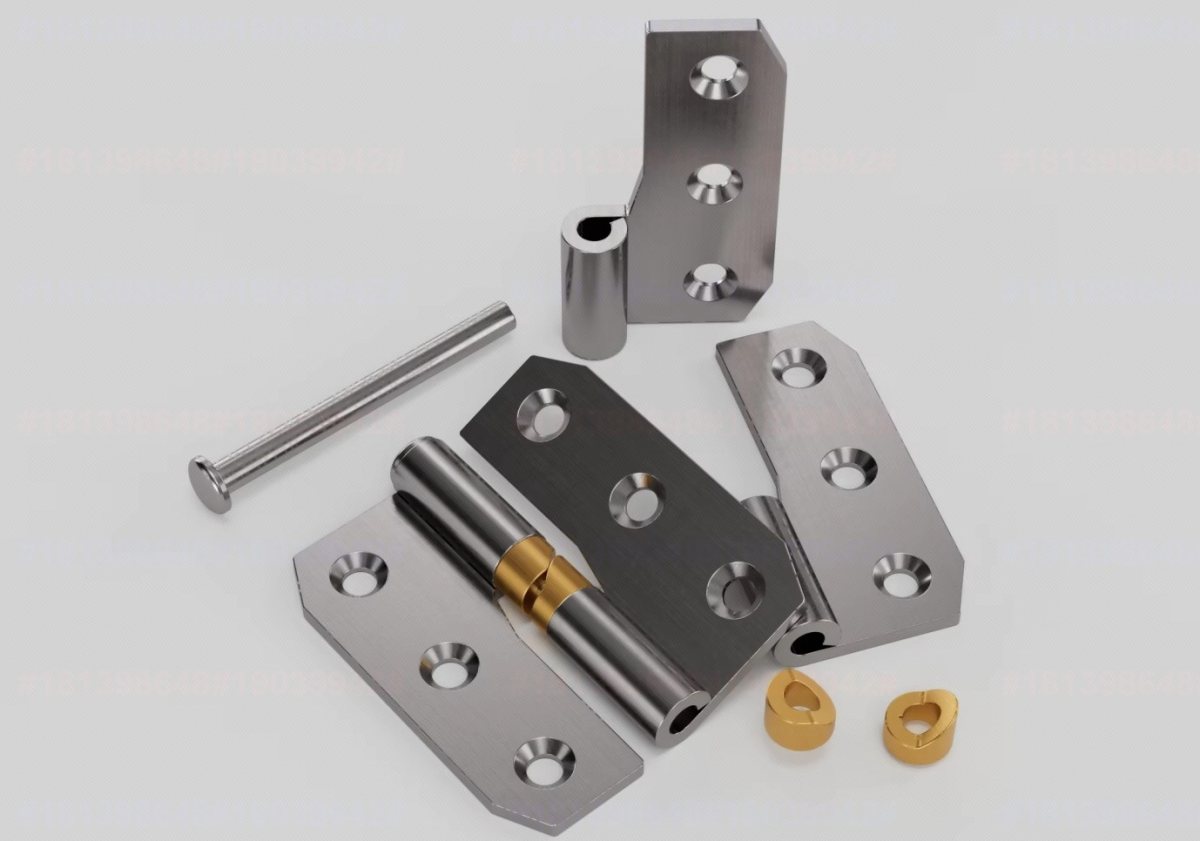
Why the fixing pattern is the whole conversation: a frame that has already been installed, painted or tiled cannot be re-drilled without visible damage. If the replacement hinge's holes are two millimetres out, the fitter fills the old holes and drills new ones — and the client sees it. Matching an existing pattern is the single most common reason a custom order is worth the tooling.
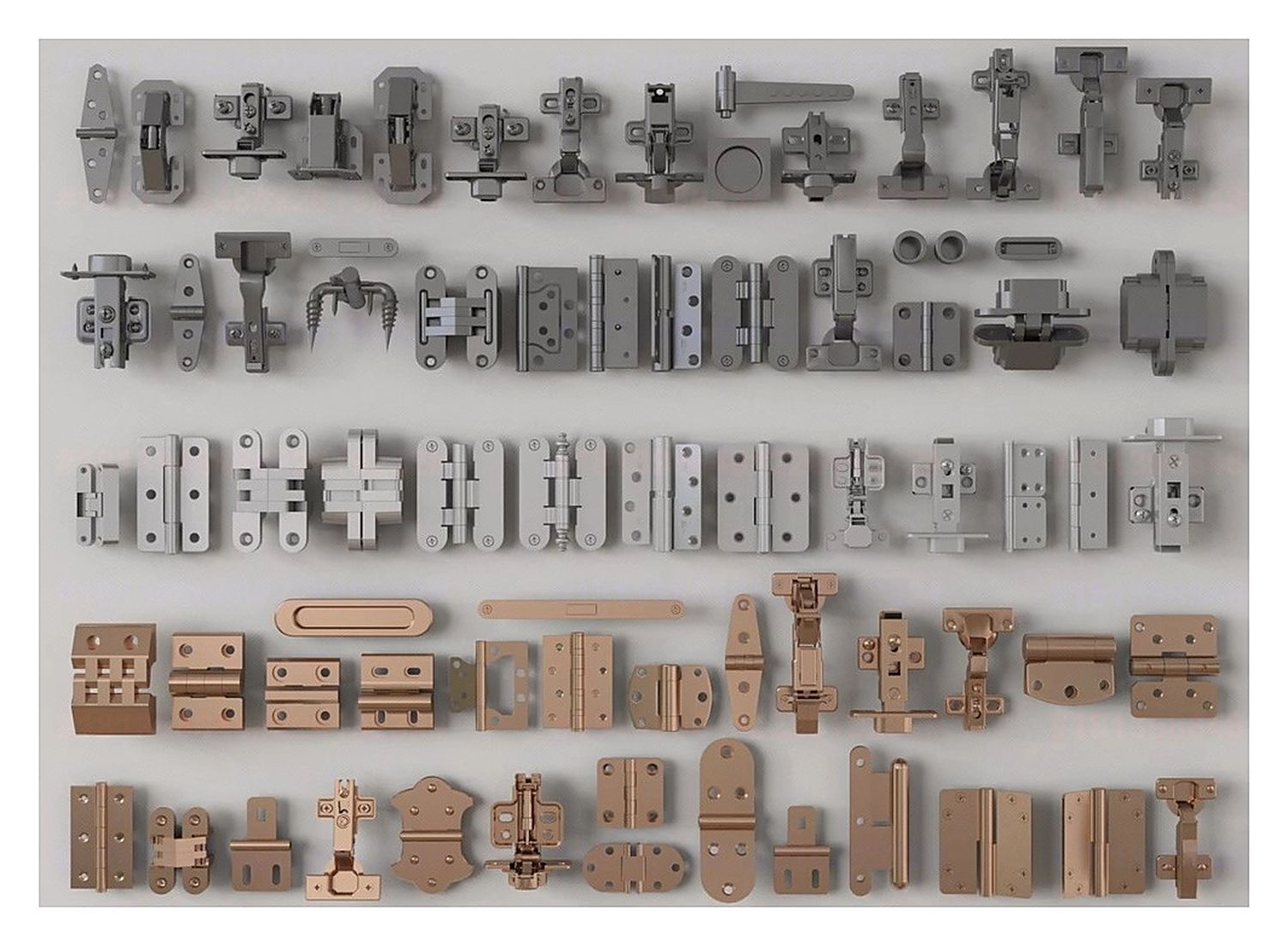
This is the family that needs a drawing: a corner cut away to clear a reveal, one leaf offset so the door sits proud of the frame, a shaped or radiused end where a hand passes every day, an extra pair of holes for a third screw pattern, or a fixing layout that has to land on holes already drilled in a finished frame.
All of it is die work on the leaf only. The knuckle, the pin and the clearances between them stay as they are, because those are set by the material thickness and the load — redrawing them to suit a sketch is the usual way to end up with a hinge that binds at 90°.
A drawing, a sample, or a photograph with a steel rule against the old hinge is enough to start. We cut the die to your shape and pattern, and send a first-article sample for approval before anything runs.
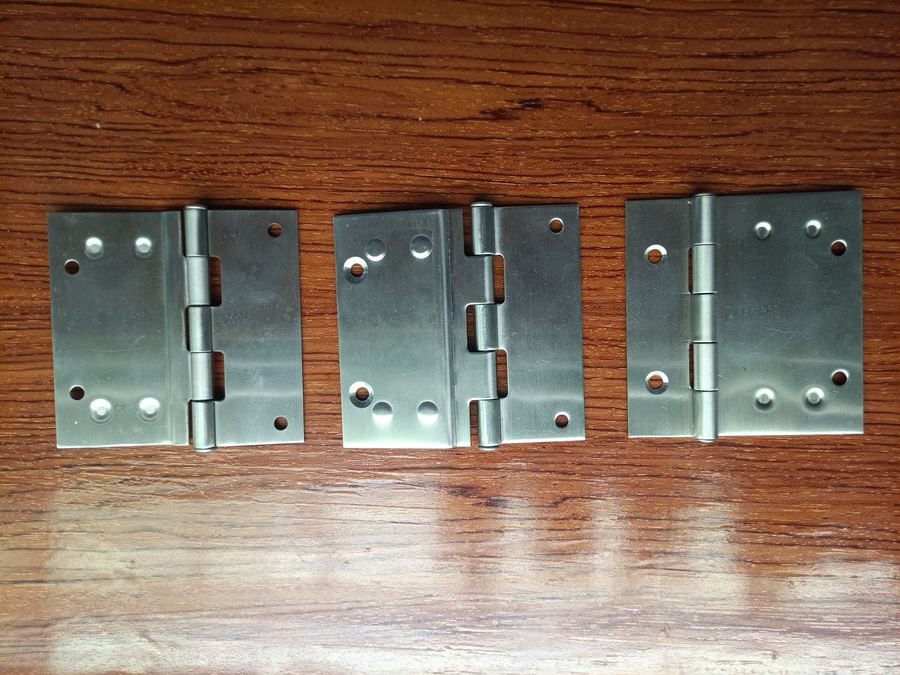
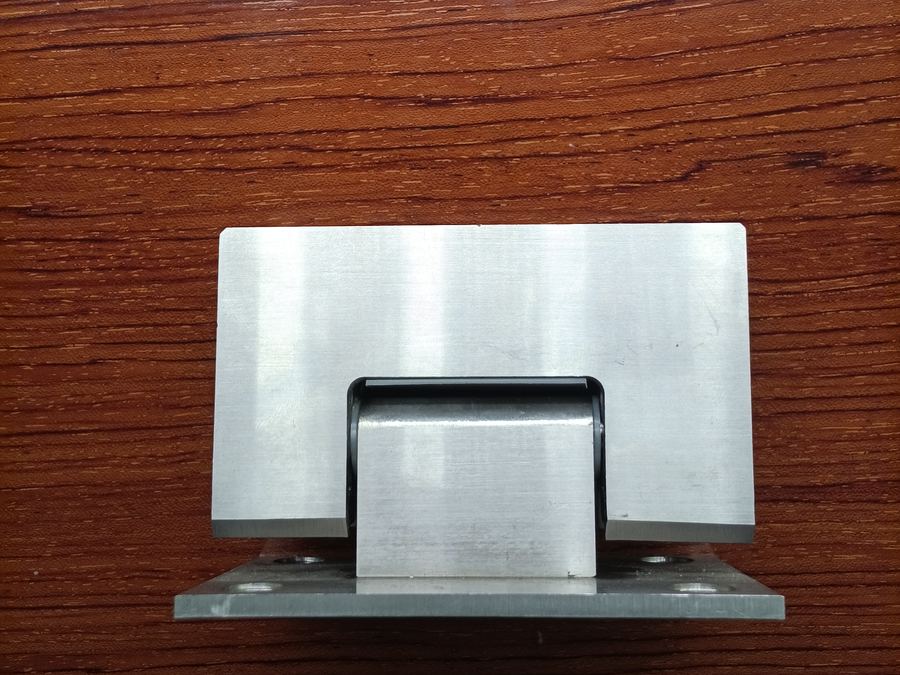
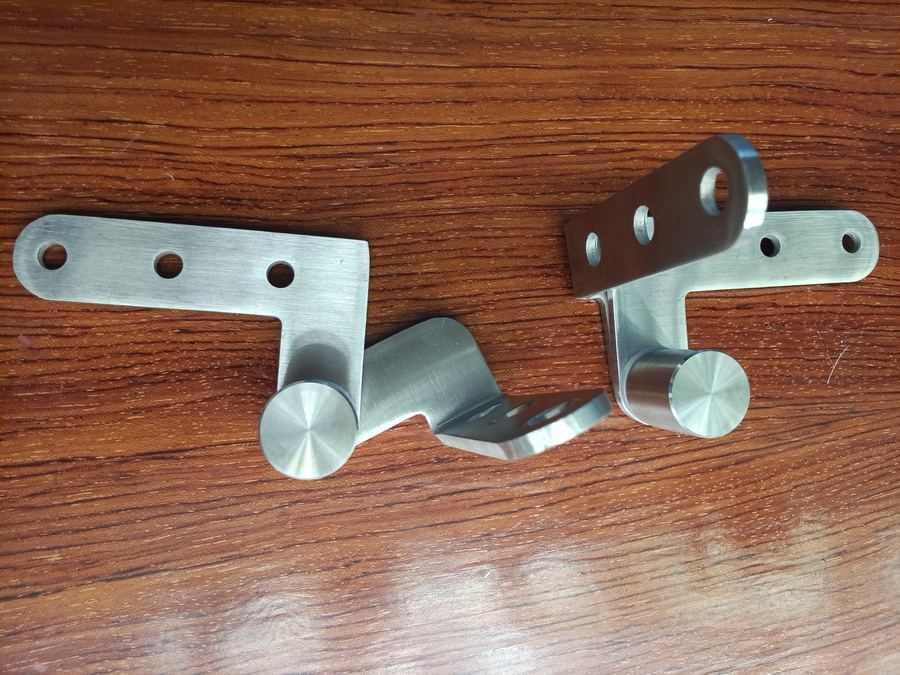
Those three came off the line and were photographed on the bench they were checked on. They are the closest thing to a catalogue of our own non-standard work, because shapes like these do not go into one — each was drawn for one customer and one frame.
Why the fixing pattern is the whole conversation on a refurbishment: a frame that has already been installed, painted or tiled cannot be re-drilled without visible damage. If the replacement hinge's holes are two millimetres out, the fitter fills the old holes and drills new ones — and the client sees it.
| Send | Why it decides the price |
|---|---|
| Door leaf weight and size, and the opening angle | Sets the leaf thickness and the knuckle; an opening angle past 180° changes the plate layout entirely |
| The outline, at least roughly | A dimensioned sketch, or a photo with a rule — the shape is what the die is cut from |
| Material and leaf thickness | SUS304, SUS201 or SPCC — the material moves the unit price more than the size does |
| Fixing pattern | Hole centres, count and screw size — or the old hinge itself |
| Finish and quantity | GP, SC, EB, BN, AB or AC; quantity decides how the tooling amortises |
What we do not need: a 3D model. A dimensioned sketch on paper, a photograph with a steel rule laid against the old hinge, or the old hinge itself in an envelope will all produce a better result than a model exported from software that has rounded something important.

Solid brass hinges, not plated steel — for projects that want the warm antique look and the weight that goes with it. Polished or antique, in the leaf sizes you specify.
The difference is not only cosmetic. On a plated hinge, wear opens a different base material underneath: a brass-coloured hinge that has been knocked at the edge shows a grey line, and there is no repair for it. On solid brass the colour goes all the way through, so a scuff is a scuff in brass and can be polished back.
It is also heavier in the hand, which matters more than it should on high-end interior work — a fitter and a client both judge a hinge by how it feels before they judge it by how it swings.
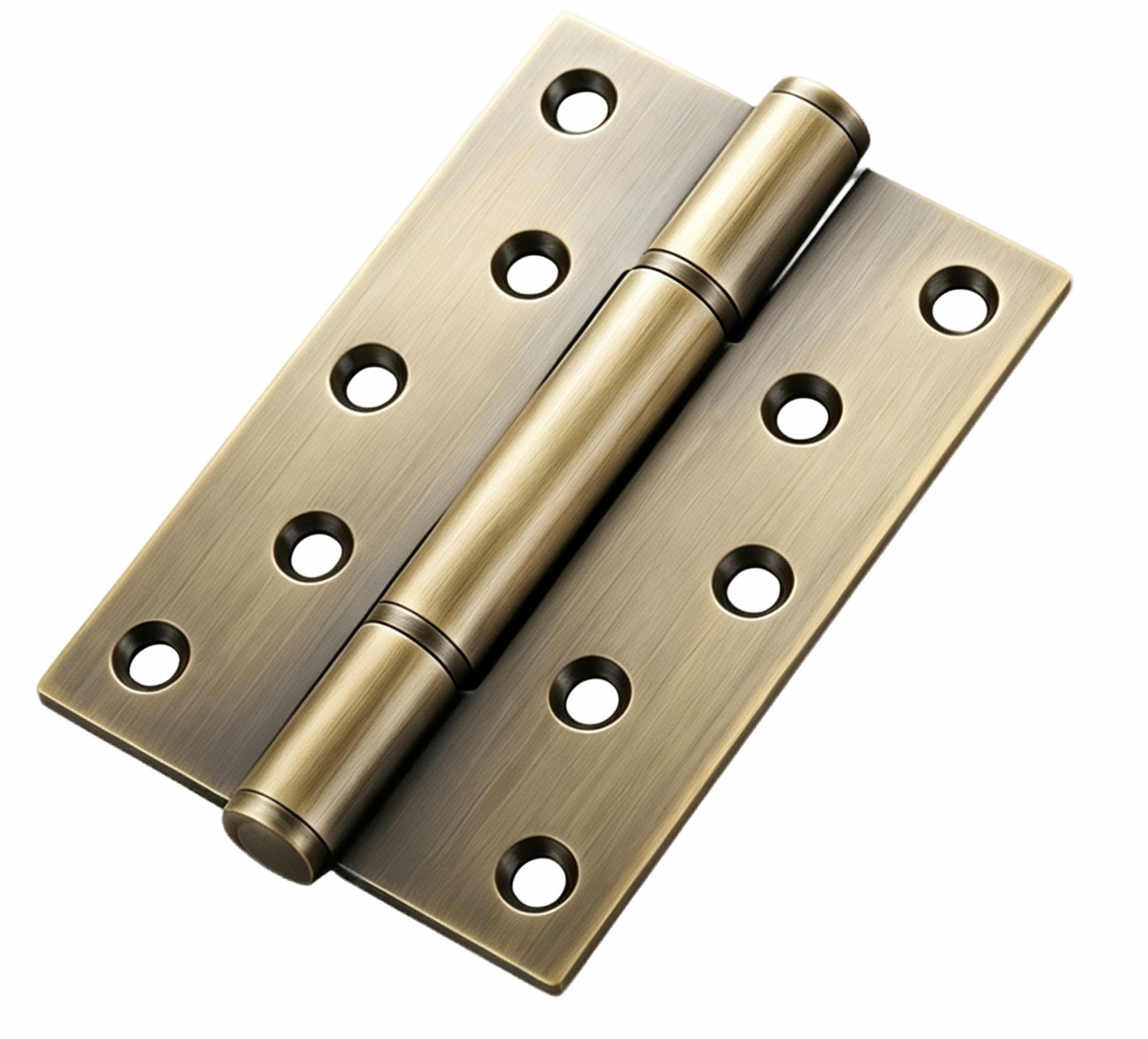
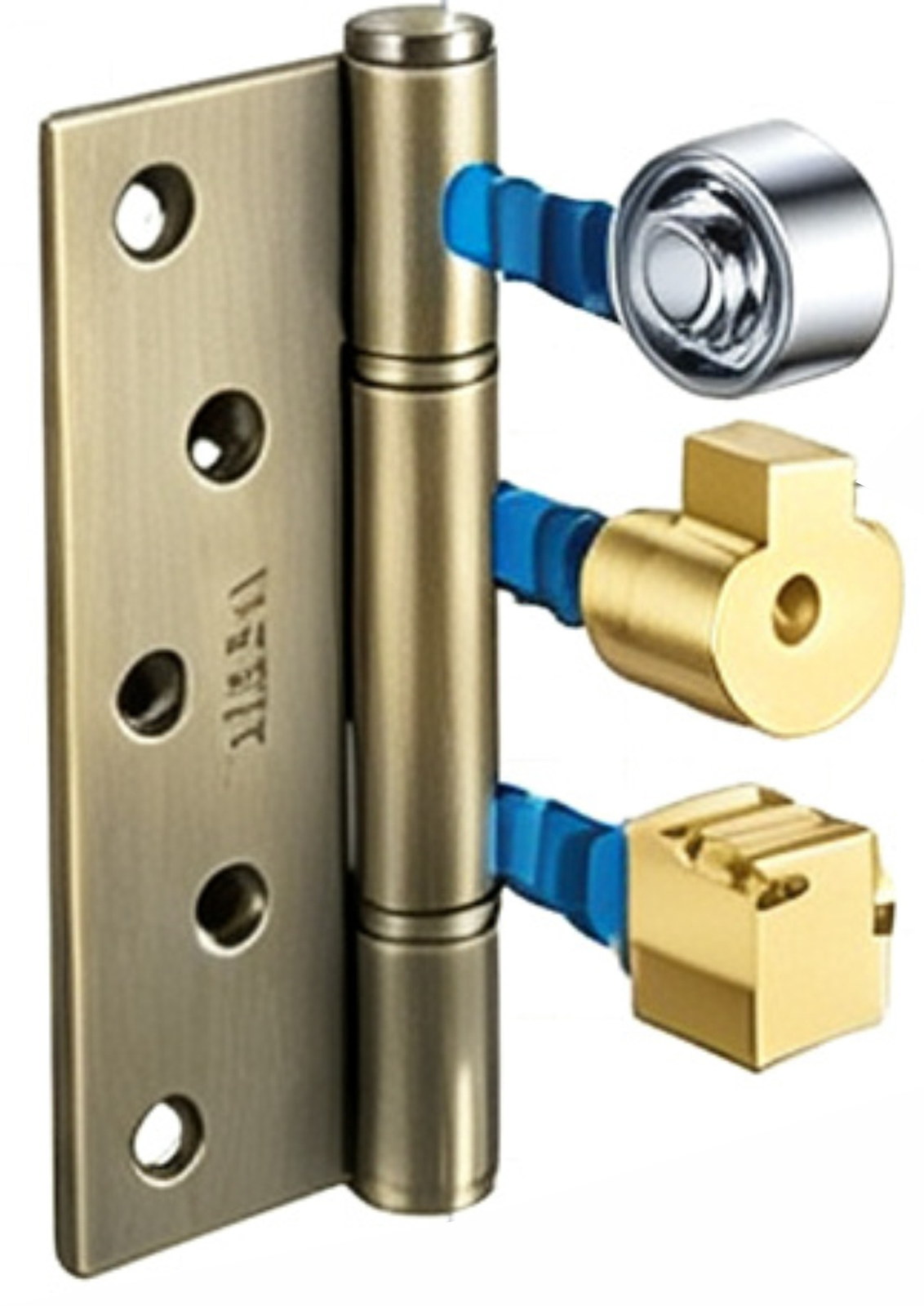
Brass all the way through, including the inside. The leaf is the part a buyer can check with a file or a scratch, so it is the part everyone makes in brass. The part nobody checks is the inside: the barrel, the knuckle, the bush, the washer and the pin. On this range they are brass as well. There is no steel core under a brass skin, because there is no skin — the section you see at the end of the barrel is brass the whole way through.
Why it is worth asking. A brass-plated hinge looks identical for the first year. Then the pin corrodes inside the knuckle, the plating wears through at the barrel ends, the door drops and the hinge starts to creak — and none of it is visible until the door is hanging. Brass has no iron in it to corrode, so the cheapest check on any brass quotation, ours included, is to ask for the pin to be pulled and photographed. If it comes out steel-coloured, the brass was the leaf only.
Brass with a mechanism in it. Brass is normally asked for on interior doors, and interior doors are exactly where a self-closing hinge gets specified: a store room, a plant room, a corridor door off a lobby. Because the spring unit sits on tooling that already exists, the brass version of a spring hinge is a material change rather than a new design, and it is quoted as one.
What does change is the sizing. Brass is softer than 304, so the plate and the pin are worked out from the leaf weight instead of being copied across from the stainless version — which is why we ask for the weight even when the only change is the metal.
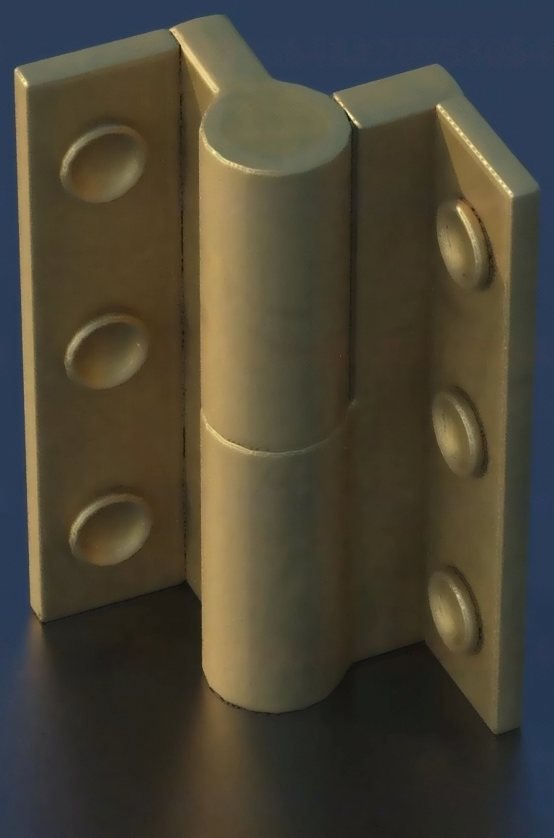
Finish and size. Polished brass and antique tones, with or without a protective lacquer. Leaf length, leaf width, thickness and the fixing pattern are made to your specification — brass is cut and formed on the same tooling family as stainless, so a pattern that already exists in 304 can usually be produced in brass without a new die.
Why this is the easiest of the three to start. It is a material substitution on a shape that has already been tooled. No new outline, no new hole pattern, and on a spring version the mechanism is already designed — so the quotation is quick and the first article is usually right first time.
Where brass is the wrong answer: exterior doors, bathrooms and anything washed regularly. Unlacquered brass tarnishes in humid air and the tarnish is uneven; lacquer protects it until the lacquer is scratched, and then the wear is visible. For those doors, 304 with a gold finish gives the look without the maintenance.
Not in the stamping. Almost every failed custom order fails in one of six places, and five of them are decided before the press starts.
Measured from a photograph without a scale, or from an old hinge that was itself worn. The fix is cheap and boring: put a steel rule in the photograph, or post the old hinge. We measure off the part, not off a picture of the part.
201 supplied against a 304 order because the coil was short. It looks identical and passes a visual check; it fails two summers later at the coast. The grade is written on the drawing you sign and checked against the coil before the die runs, and changing it is not a decision a workshop gets to make on its own.
Two orders six months apart, from different plating lots, will not match exactly — and on antiques the difference shows. Buy the whole project quantity in one run if the doors are going into one building, even if it means storing some of it.
A 3.0 mm plate on a 90 kg leaf will bend before it breaks, and a bent plate shows as a door that catches at the lock side. The drawing gets a thickness from the load, not from what the last order used.
A spring sized for a 40 kg leaf slams a 25 kg one and leaves a 60 kg one ajar. Give us the weight, and the adjuster covers the rest — but somebody has to set it on site after the door is hung, not before.
The most expensive of the five, because it turns every other item into an argument. The dimensioned drawing we send back is the contract: read it once, properly, before it is frozen.
Stamp a grade we are not using. If the order says 304 and the coil is 201, the order is late — not mislabelled. This is the one instruction that cannot be negotiated, because the buyer's own customer will be the one who finds out.
Ship seconds as firsts. Units outside tolerance are scrapped, not packed into the bottom of the carton. A container of nearly-right hinges is worth less than a short shipment, because the short shipment is a conversation and the mixed one is a claim.
Cut a pattern that will bind. If a drawing puts the pivot where the leaf cannot clear the frame, we will say so and propose the change rather than make it exactly as drawn and let you find out at installation. That conversation is unpopular roughly once a year and it is still the right one.
A spring-loaded hinge that closes the door behind you and holds it shut — tension adjustable, in black or stainless, made to the plate size your frame needs.
It is specified where a door must not be left standing open: entrance, corridor and stairwell doors, store rooms, plant rooms, service doors. On any of those, a door standing open is a draught problem, a hygiene problem or a fire-door problem, and a closer on the head is either in the way or has already been removed by someone.
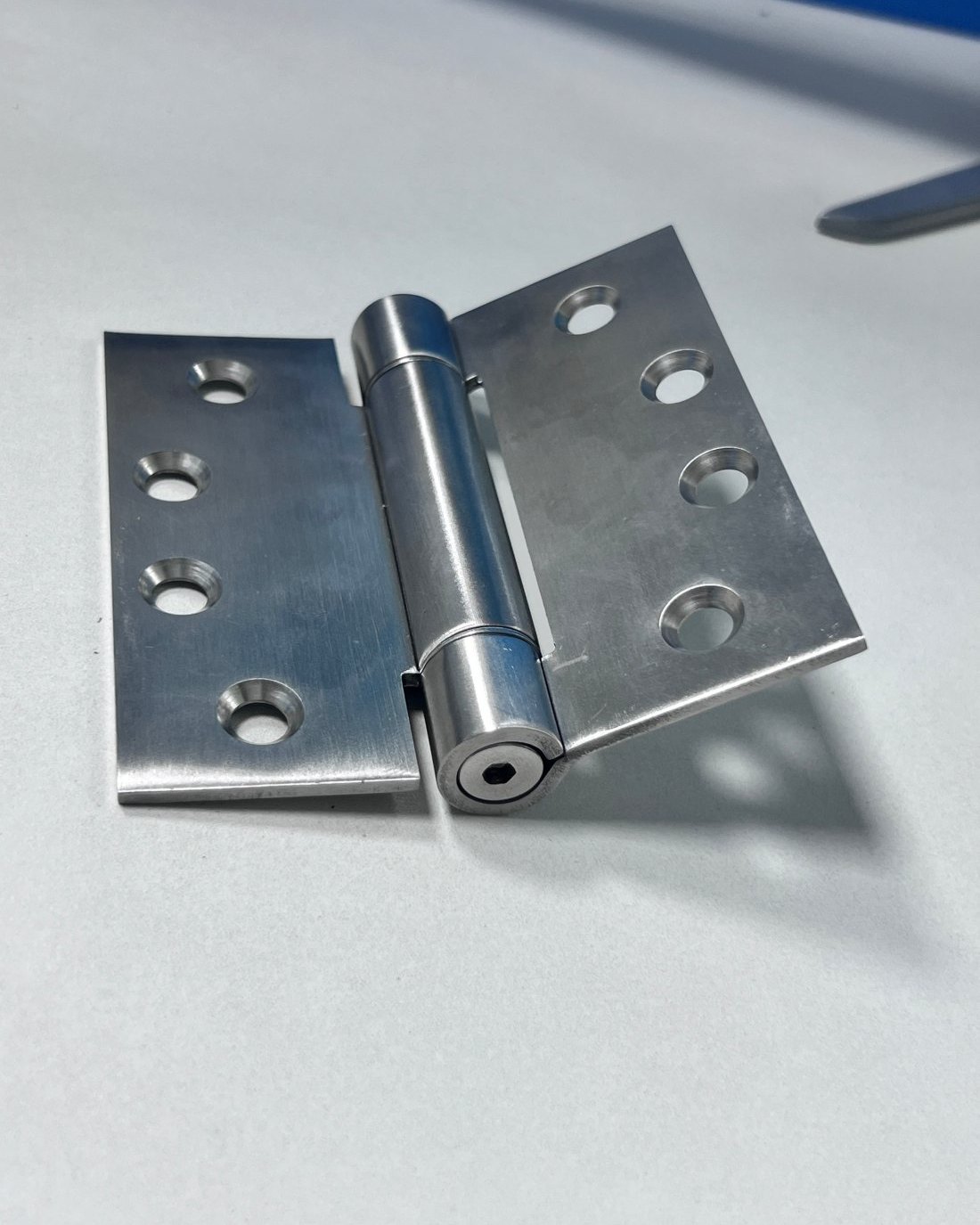
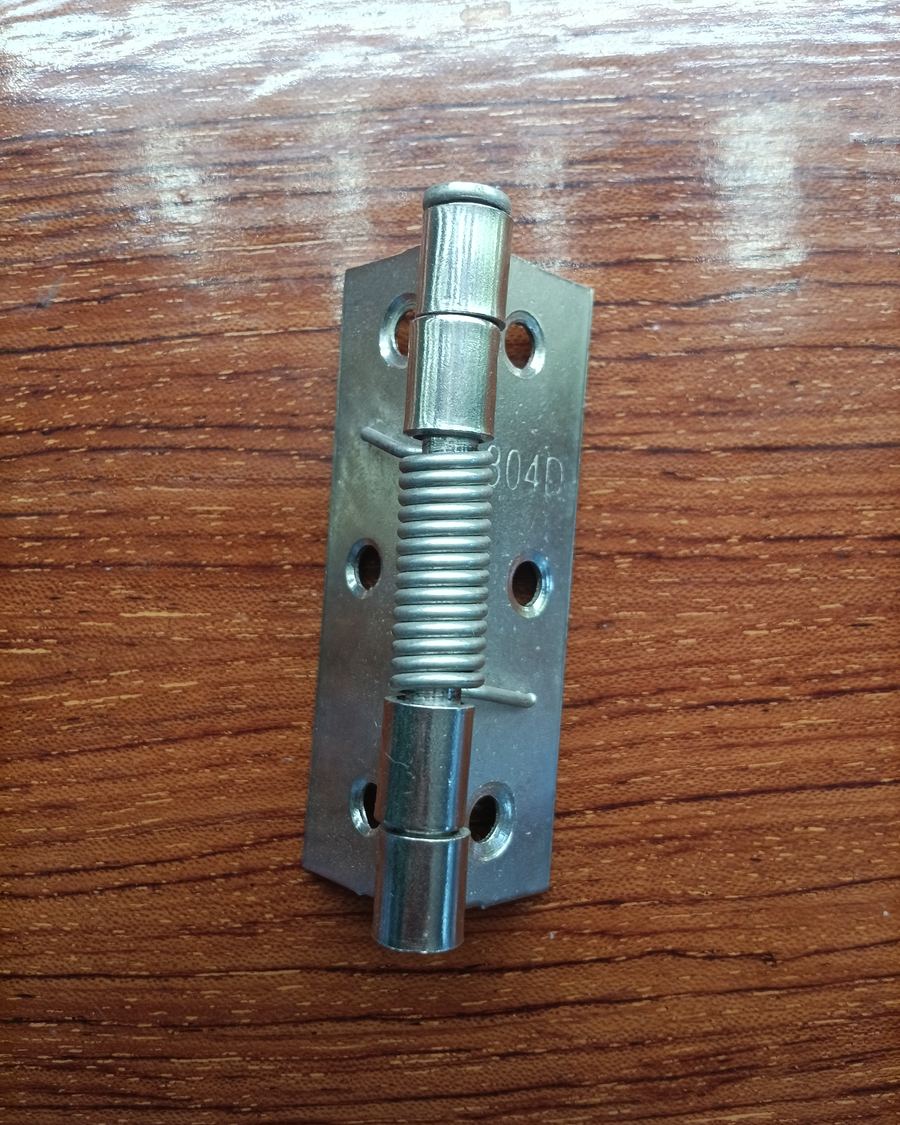
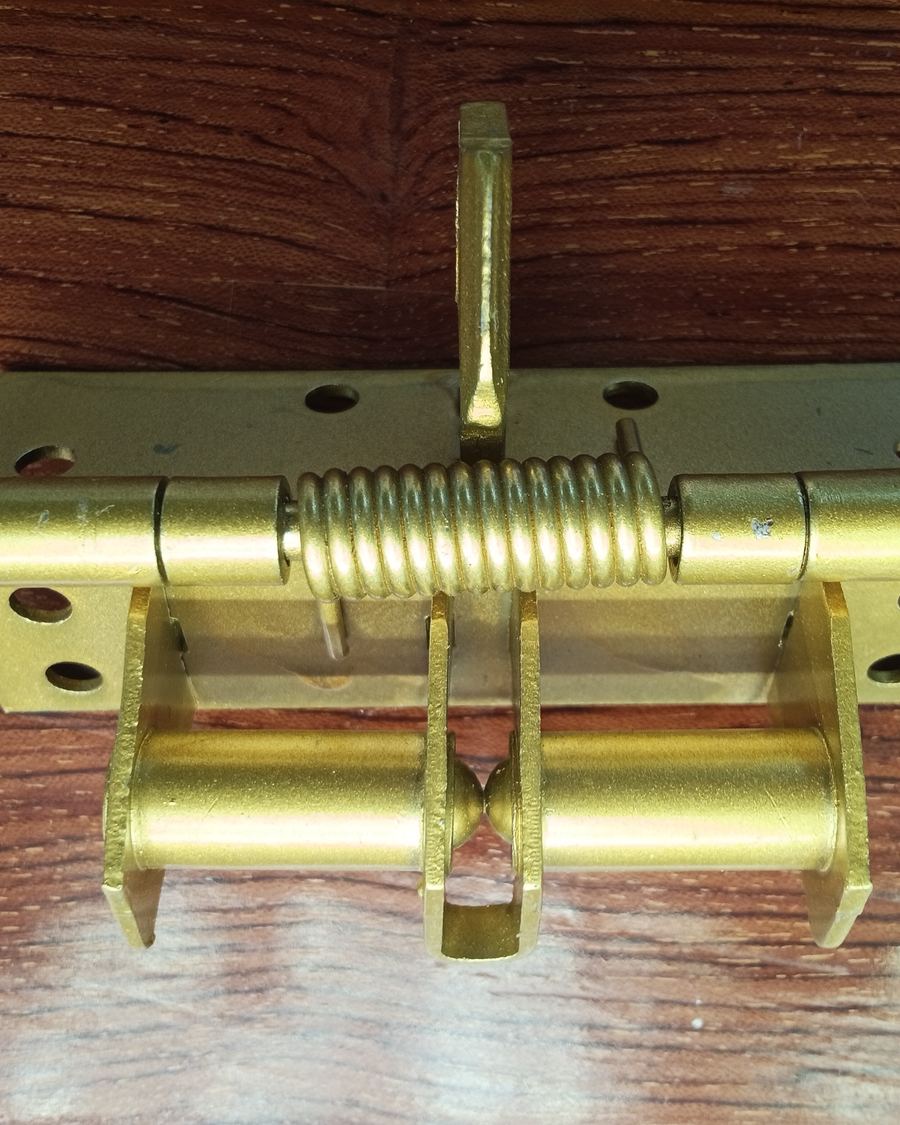
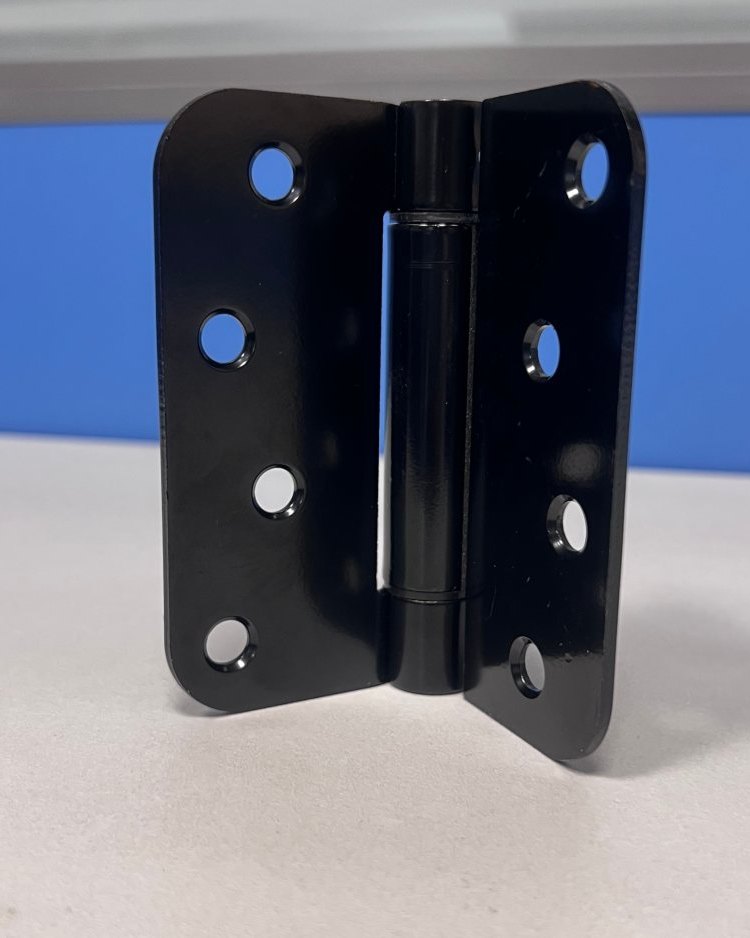
The adjuster is the part that makes it practical. A spring set for a 40 kg leaf slams a 25 kg one and fails to close a 60 kg one; being able to set it on site means one part number covers a band of doors, which is what a distributor actually needs to stock.
| Send | What it decides |
|---|---|
| Leaf weight and thickness | The spring rate — and the plate thickness, which has to hold the spring without flexing |
| Opening direction | Left or right hand, inward or outward — the spring barrel is handed |
| Finish | Electrophoretic black and stainless are the two we run most; others on request |
| Plate size and fixing pattern | Whether it drops into an existing preparation |
One thing to be clear about: a spring hinge returns the leaf, it does not damp it. If the door has to close slowly and quietly — a hotel room, a ward — that is a closer or a floor spring, not this. The HY-T pattern is the same mechanism in a catalogued size if you do not need a custom plate.
| Material | Use it for | Do not use it for |
|---|---|---|
| SUS304 | Coastal, humid, exterior-facing, wash-down, clinical | — it is the safe default where salt or cleaning chemicals are present |
| SUS201 | Dry interior doors, volume work where the budget is the constraint | Anything that sees salt, regular wet cleaning or a coastal climate — it fails two summers later and looks like our fault |
| SPCC | Painted and coated hinges where the coating is the corrosion barrier | Anywhere the coating can be chipped at an edge — rust starts in the chip, not on the face |
| Solid brass | Interior work where the metal itself has to be the finish | Exterior, bathrooms, high-cleaning areas |
Quote the code, not the colour name. "Bronze" and "copper" describe four different things depending on who is asking, and a container of the wrong one is not a small mistake. The two-letter codes are what our line recognises; put them on the purchase order and on the box artwork.
Colour is checked during production, and units outside tolerance are scrapped rather than shipped. Raw material is bought in a single lot per order, so a container matches itself — that is the honest limit of the promise. Matching an installation from two years ago needs a sample in hand, and we will tell you plainly whether the current batch will sit next to it.
Nothing is cut until a sample has been approved. That is the whole risk control on a custom order, and it is also why the first step takes longer than the rest.
A drawing, a sample or a photographed door with a rule against it. We come back with the pattern we can hold, the material recommendation and a unit price — and if the drawing cannot be made at your price point, we say so at this stage rather than after tooling.
You get a dimensioned drawing back to sign: hole centres, leaf size, material, finish code, marking position. This document is what the batch is inspected against later, so it is worth reading properly once.
The die is cut and a sample is made from it — not from a CNC one-off, because a one-off will fit while the production die will not. The sample ships to you for approval against the drawing.
You sign it off, or you mark it up and we cut again. This is the only point in the process where a change is cheap. After approval, the drawing is frozen for the run.
Stamping, assembly, finishing, then inspection against the signed drawing: hole centres, leaf thickness, finish colour, marking position, swing. Units outside tolerance are scrapped, not shipped as seconds.
Two hinges per box, bagged, box printed to your artwork and part number. Palletised or loose cartons depending on the destination — some markets do not accept pallets and load more without them, so tell us which at quotation.
A new die is a fixed cost. Spread over 20,000 pieces it disappears into the unit price; spread over 2,000 it does not, which is why custom work starts at 20,000 pcs per item and the catalogue range does not. Where an existing die can be reused — a finish change, a material change, a marking change — the minimum drops back towards the standard range, because there is nothing new to amortise.
That distinction is worth raising at enquiry rather than assuming: "can this be done on an existing tool" is often the difference between a 2,000-piece trial and a 20,000-piece commitment.
| Term | Custom order |
|---|---|
| MOQ | 20,000 pcs per item for new tooling; lower where an existing die is reused |
| Lead time | 30–35 days after order confirmation and sample approval |
| Sample | First article free; you cover the freight |
| Payment | T/T 30 % deposit and 70 % against the B/L copy — 40 % deposit on the first three orders |
| Warranty | 3 years against manufacturing defect |
| Shipping terms | EXW, FOB Nansha or FCA |
A custom hinge can be perfect and still lose the account in the warehouse, because the box is the only part of the order the distributor's own staff ever sees.
Two hinges per box, each hinge bagged, screws included and bagged separately so they do not mark the finish in transit. Box printed to your artwork, your part number and your barcode — not ours.
That last point is not a courtesy. A box carrying the factory's name cannot go onto a distributor's shelf; it goes into a bin with the label cut off, and the part number is lost. Printing your artwork means the hinge arrives as your product, which is what you are paying a custom order for.
Cartons are marked with the item, quantity, finish code and lot, so a mixed container can be broken down in a warehouse without opening every box. On a first order that feels like administration; on a repeat order it is the reason the second shipment does not get the colours mixed.
Palletising protects the cartons and speeds up unloading, and it costs floor space in the container. Some markets will not accept pallets at all; others charge for disposal at the far end. Tell us which at quotation and the load plan is built around it, rather than discovering at destination that a pallet has to be broken up on the dock.
On a custom order with several finishes or sizes, we will mix within a carton only if you ask. The default is one item per carton, because a mixed carton is the fastest way to a picking error at the distributor's end. If you need mixed cartons for a specific customer, say so with the order and we will build the packing list around it.
Worth sending with the enquiry: your artwork file, the barcode and part number, whether the cartons are palletised, and whether the screws ship in the box or separately. Four answers that cost you ten minutes and remove most of the reasons a first container arrives late.
20,000 pcs per item where a new die has to be cut. Where an existing die can be reused — a finish change, a material change, a marking change — the minimum drops back towards the catalogue range. Ask at enquiry: "can this run on an existing tool" changes the number by an order of magnitude.
No. A dimensioned sketch, a photograph with a steel rule against the old hinge, or the old hinge itself will produce a better result than a model exported from software that has rounded something important. We will draw it up and send it back for you to sign.
That is the most common reason a custom order is worth doing. Send the old hinge, or measure centre-to-centre with a rule and photograph it. Matching the existing holes means the door goes back on without filling and re-drilling a finished frame.
It depends on whether a die has to be cut, and the drawing has to be agreed first. We will give you a date with the quotation rather than a general answer — and we would rather quote a realistic date than a fast one we miss.
You mark it up and we cut again. Sample approval is the one point where a change is cheap; after approval the drawing is frozen for the run, and a change after that means stopping production.
304 where there is salt, humidity, wash-down or clinical cleaning. 201 for dry interior volume work. SPCC where the coating is the corrosion barrier and the budget is tight — but remember rust starts in a chipped edge, not on the face. Solid brass where the metal itself has to be the finish, and only indoors.
The whole hinge. On our solid-brass range the leaf, the barrel, the knuckle, the bush, the washer and the pin are all brass — there is no steel core under a brass skin. It is the first thing to check on a brass quotation from anyone: ask the supplier to pull the pin and photograph it. If the pin comes out steel-coloured, the brass was the leaf only, and the part that corrodes is the part nobody can see once the door is hung.
Yes. The spring rate is set from the leaf weight and thickness, and the adjuster in the barrel end lets the installer fine-tune on site. Handing matters — the spring barrel is handed, so state left or right and inward or outward.
Yes, stamped or laser-marked, in the position you specify on the drawing. It is cut into the same tooling, so on a new die it adds no separate production step. On an existing die, the marking position has to fit the space the plate already has.
Usually. Six codes are standard — GP, SC, EB, BN, AB, AC — and a match outside those is quoted separately, with a colour sample sent for approval before the run. Send the sample early; colour matching is the step that most often delays a first order.
Three years against manufacturing defect — material, finish adhesion, assembly. It does not cover a hinge that was undersized for the leaf, or one installed into a frame that is out of square; those are specification and installation issues, and we would rather advise on them before the order than argue after.
Not in our own name. Where a customer holds a CE assessment, we produce to that specification and stamp the marking as instructed — that is how the oil-free range runs for a European customer, described on the oil-free page. A custom drawing does not create a certification; if your project needs one, tell us at quotation stage.
T/T 30 % deposit and 70 % against the B/L copy, with a 40 % deposit on the first three orders. EXW, FOB Nansha or FCA. Lead time 30–35 days after order confirmation and sample approval.
An old hinge in an envelope, a photograph with a rule against the frame, or a sketch with four measurements. That is enough for us to come back with a drawing, a material recommendation and a price — and to tell you honestly whether it needs a new die or can run on one we already have.
The same commercial terms apply across our hinges. Full detail, including the sample and inspection steps, is on how ordering works.
2,000 pcs trial, 20,000 pcs bulk. Counted per item — models, sizes and finishes can be mixed in one order.
T/T 30 % deposit and 70 % against the B/L copy. 40 % deposit for your first three orders, 30 % from the fourth.
Free of charge; you pay the freight. Send your courier account or we quote it.
30–35 days after the deposit and sample approval.
EXW, FOB and FCA — FOB Nansha Port, Guangzhou.
White box, two hinges, each in its own bag. The box prints to your artwork and part numbers.
Raw material bought in one lot per order, colour checked in process, out-of-tolerance units scrapped rather than shipped.
Load plan, carton count and gross weight are calculated per order — palletised or loose, depending on the destination.
Carton counts and weights are not fixed figures. Some destinations take cartons loose and carry more pieces in the same container; others require heat-treated timber under ISPM 15, and some customers want no timber at all. Send the model, size, finish, quantity and destination port, and your account manager will work the load plan out for that case before you commit.