Home / Buying guides / Cycle life & load testing
A new cabinet door sags, sticks or squeaks within months. Usually it is not the installer — it is a hinge whose durability was never properly specified. Here is how to read test claims, and how to write them into a contract so they mean something.
13 min read · By Alwin Pan, Overseas Business Director, Haoyue Metal
We manufacture hinges and sliding hardware, and we sit on both sides of this question. Buyers send us test reports that look impressive but say nothing; factories quote cycle numbers measured under conditions nobody states. This guide is about turning a claim into something you can verify — the standard, the conditions, the sample, and the acceptance rule.
Cycle life is the number of open-close movements a hinge survives under stated conditions before it fails — by loosening, noise, sagging or structural damage. Load testing asks whether the hinge can carry the door, both sitting still and while moving.
The hinge is cycled at a defined angle, speed and load. Failure is judged by looseness, noise, sagging or breakage. Furniture standards such as QB/T 2189 Cup-shaped concealed hinges for furniture grade durability from tens of thousands to over 100,000 cycles[1].
Static load: the door held open or closed, carrying its weight over time without deformation. Dynamic load: the same weight during repeated movement. A hinge can pass one and fail the other, which is why both matter.
| Variable | Typical range | Why it changes the result |
|---|---|---|
| Opening angle | 90°, 110°, 180° | A full-open cycle stresses the hinge far more than a short swing. |
| Cycle speed | Defined by the standard | Faster cycling generates heat and wear; the figure is not comparable without it. |
| Applied load | Rated door weight | An unloaded hinge can last many times longer than one carrying a real door. |
| Failure criterion | Sag, noise, looseness, break | A loose criterion inflates the count. Ask what counted as failure. |
| Torque retention | Before / after comparison | After cycling, the door must still stay where placed — not drift open or shut. |
Match the grade to the application. A domestic cabinet door is a different case from an appliance door, a tall pantry, or a commercial door opened hundreds of times a day. State the scene, door weight, daily cycles and expected service life in the enquiry, and the factory can specify a test grade that fits.
This is the complaint we hear most from purchasing managers: the samples tested perfectly, the production order arrived with dimension drift, different feel, or early failures. The causes are predictable.
| Cause | What goes wrong | Ask for |
|---|---|---|
| Tooling drift | First articles are cut on high-precision tooling or hand-adjusted; production runs on a worn or lower-precision die, so cup depth and feel vary. | Recent batch inspection records and dimensional spread, not one perfect sample. |
| Out-sourced processes | Plating and heat treatment are subcontracted without control; rust appears during sea freight, or a spring loses temper. | How the factory controls outside processes, plus salt spray data on the finished part. |
| Undefined conditions | Two labs test at different angles, loads and failure criteria, so the reports cannot be compared. | The standard number, conditions and pass/fail rule written into the agreement. |
| Material substitution | A cheaper grade or thinner strip is used in production while the certificate on file describes the sample. | Mill certificates with lot numbers tied to the delivered batch. |
A cup-depth deviation is a good early warning: if it is large enough to break a customer's automatic assembly line, the die or the process is not under control. Measure several pieces from different cartons on arrival, not just the first one out of the box.
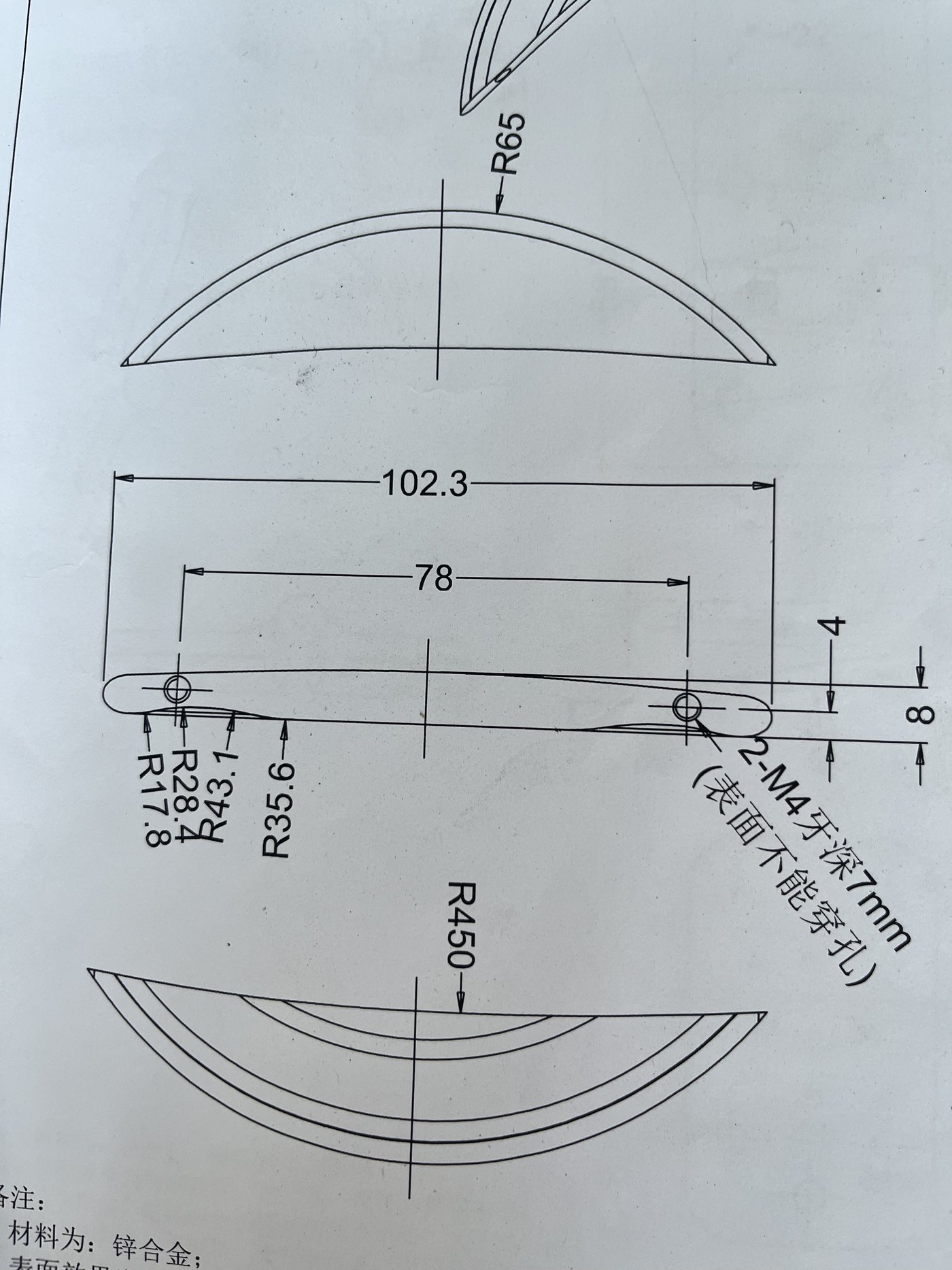
When a project needs an unusual hole pattern, an odd angle or a longer travel, the factory's tooling capability decides whether production will match the sample. A supplier with in-house die development can adjust and re-cut quickly; a trader has to go elsewhere, adding rounds of revisions and trial moulds.
Ask to see a comparable structure the factory has actually made, and ask how quickly it can produce a drawing and a first sample. That answer tells you more than a catalogue of standard parts. Then confirm that critical outside processes — plating, heat treatment, spring wire — are controlled, or you will be relying on a subcontractor you never agreed to.
Incoming material inspection, stamping process checks, load and life testing, and dimensional sampling — recorded per batch so a delivered hinge can be traced back to its strip.
When a dispute arises, batch records settle it with data. When there is no record, both sides argue from memory — and the buyer usually pays.
The whole point of a test is to have something to hold against. A general "quality must be good" clause settles nothing. These lines do.
The more specific the clause, the fewer the disputes. It also separates serious factories from those quoting a number they cannot reproduce.
A cycle test opens and closes the hinge repeatedly under a defined angle, speed and load, counting cycles until it fails by looseness, noise, sagging or breakage. Standards such as QB/T 2189 grade durability from tens of thousands to over 100,000 cycles. Always ask for the conditions.
Static load checks that the hinge holds the door's weight over time without deforming. Dynamic load tests it under that weight during repeated movement. A hinge can pass one and fail the other.
Usually first articles are hand-adjusted or made on precise tooling while production drifts; outside plating or heat treatment is uncontrolled; or the test conditions were never defined. Ask for batch inspection records, not one sample report.
The standard and grade, load/angle/speed, sampling method, maximum permitted sag or torque loss after testing, the salt spray criterion, and who is responsible when life falls short.
For domestic cabinet doors look for at least tens of thousands of cycles; our soft-close hinges are tested to 300,000–500,000. Appliance and high-traffic commercial doors need a higher grade.