Home / Buying guides / Soft-close vs standard
The damper adds a little to a hinge and changes how a whole room feels. Here is what it actually does, how long it lasts, why it fails, and when the cheaper undamped version is the right call.
11 min read · By Alwin Pan, Overseas Business Director, Haoyue Metal
We supply both damped and undamped cabinet hinges, so we have no reason to push one over the other. What we can offer is what we see in the workshop and in customer complaints: most soft-close failures trace back to three installation mistakes, not to a bad hinge. This guide covers the mechanism, the realistic life, the failure modes and how to check quality before a bulk order.
A soft-close hinge contains a small hydraulic cylinder. As the door reaches the last 30–40 degrees, the damper takes over and slows the movement, so the door settles against the frame instead of hitting it. The spring still does the work of pulling the door shut; the damper only controls the final travel. It does not make the door close by itself from a wide-open position.
A spring closes the door; the speed is decided by whoever pushes it, so a door can slam. Fewer parts, simpler mechanism, lower cost — and perfectly adequate where a door is opened rarely.
The same spring plus a damper that controls the last part of the travel. The door closes at a steady, quiet speed whether it was pushed gently or hard.
| Stage | Angle | What happens |
|---|---|---|
| Open / swing | 90° → 40° | Free movement; the damper is not engaged. |
| Damper picks up | 40° → 20° | The hydraulic cylinder begins to resist, slowing the door. |
| Controlled close | 20° → 5° | Steady, quiet travel — this is the part you hear as a soft hiss. |
| Final seat | 5° → 0° | Spring pulls the door gently against the frame. |
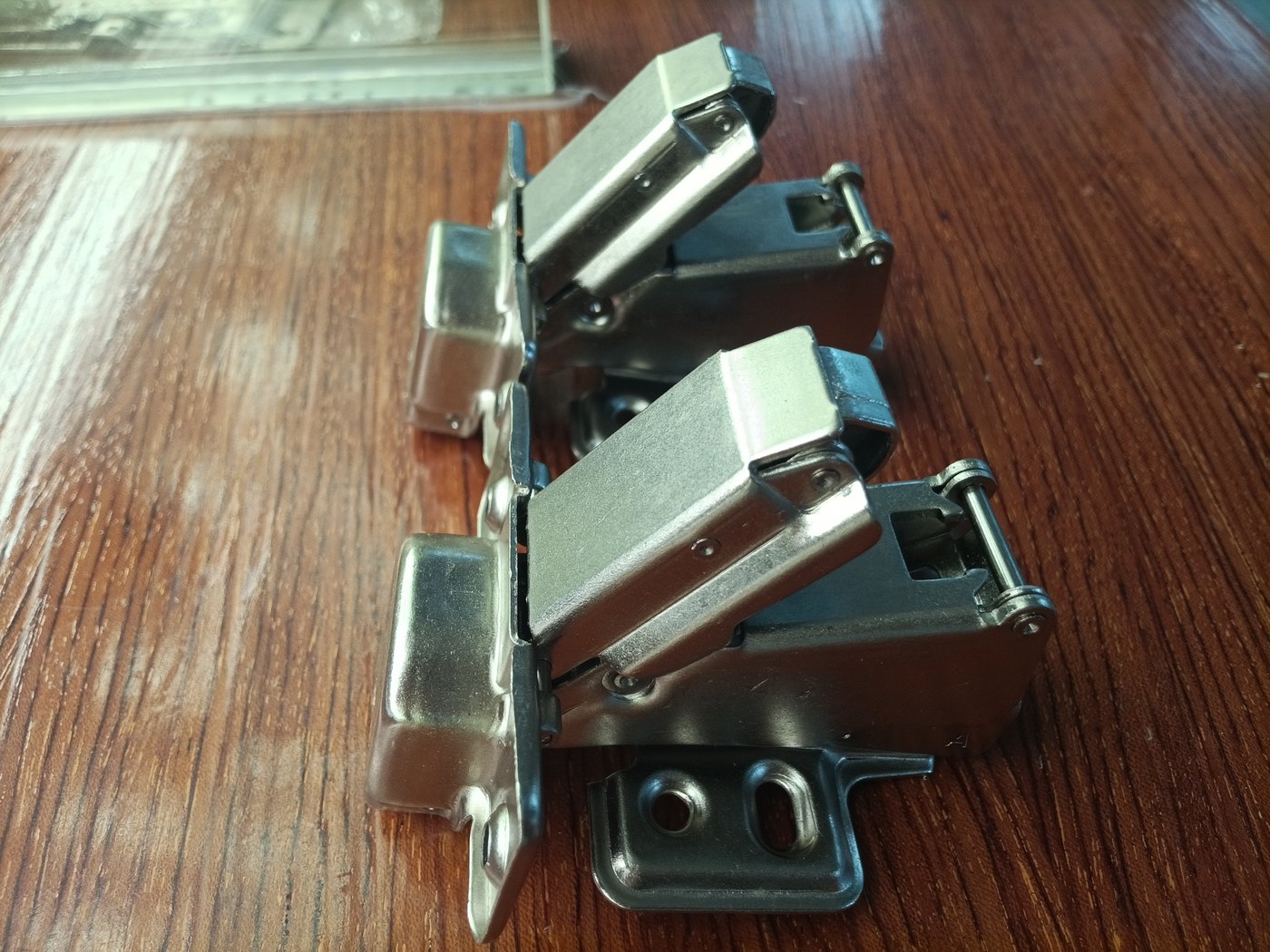
This is the question we are asked most often, and the honest answer depends on the cylinder, the door and the environment. A properly made hydraulic damper is commonly specified for 100,000 cycles or more[1]; our soft-close cabinet hinges are tested to 300,000–500,000 cycles. A kitchen door opened twenty times a day sees about 7,300 cycles a year, so the headline number translates to decades under ideal conditions.
Real life is shorter in humid rooms. Published tests in wet environments have recorded damper failures around 45,000 cycles[1] — well below the dry-room figure. That is why we ask where the door sits before quoting a grade, and why the test conditions matter as much as the number.
A cycle figure without test conditions is a brochure adjective. Ask for the report, the standard used and whether humidity was included.
Some quotations quote a test figure per hinge, others per pair of doors. Clarify before comparing suppliers.
Hydraulic dampers hold a steadier feel across temperature swings and suit humid rooms. Specify the type in the contract.
A cheap damper fails differently: it rarely stops all at once. It gradually loses resistance until the door closes faster and faster. If one quotation is much lower than the others, ask how the damper is tested — the answer usually explains the gap.
In our experience, and in the reports of cabinet makers who service these hinges, most early failures come from installation rather than manufacturing. Three causes dominate.
| Cause | What happens | Fix |
|---|---|---|
| Cup too close to edge | Mounted at 18–20 mm instead of the specified ~22 mm; the damper works harder through the swing and can fail in months. | Re-mount to the drawing. Field reports show the same hinges lasting years once corrected. |
| Too few hinges for the door | A tall, solid or glass door on two hinges overloads the damper and bounces back. | Add a third hinge in the centre. A few dollars of hardware prevents repeated replacement. |
| Slamming from wide open | The damper only works in the last few degrees; a hard push builds more momentum than it can absorb. | Close gently, or fit a restrictor that limits opening where children use the room. |
| Seal leak / broken spring | Oil around the hinge arm, clicking or grinding, and no slowdown at all — the genuine mechanical failure. | Replace the hinge, or just the damper cartridge on models that accept one.[3] |
A quick test before replacing anything: open the door to about 45 degrees and release it. If it slows in the last few centimetres and closes quietly, the damper is fine — look at screws and alignment instead. If it slams with a click or leaves oil marks, the damper has failed.
One caution on maintenance: do not use WD-40 or cooking oils on a hinge. Oil-based lubricants attract dust and can gum up the damper. If lubrication is needed at all, use a small amount of silicone spray on the moving joint only.[3]
Soft-close. A fitted kitchen is judged by how it sounds when it closes, and this is the cheapest upgrade that changes it. It also protects edge banding and carcass joints.
Soft-close. Late arrivals and early departures are exactly when a slamming door is most unwelcome. In humid bathrooms, specify 304 and a damper tested for wet conditions.
Standard is usually fine. The doors are opened rarely, nobody is sleeping nearby, and the lower cost matters more.
Order samples first, then run the same checks on every model, colour and size in the shipment — not just the first carton opened.
Record the result per unit and keep the sample test as the baseline for reorders. If a problem appears after installation, that paperwork is what turns a complaint into a warranty claim.
Usually yes. The damped and undamped versions of the same model share the cup, the arm and the drilling pattern — only the damper differs. A project can start with standard hinges and upgrade later without re-drilling the doors. Some models also take a separate add-on damper, which is a retrofit rather than a first choice: it can be knocked out of position over time.
Confirm compatibility with the supplier before ordering, because it is true within one model range but not across ranges.
A properly made hydraulic damper is commonly specified for 100,000 cycles or more; ours are tested to 300,000–500,000. Humidity and heavy doors shorten real life, so ask for the test conditions, not just the number.
Most often it is installation: the cup mounted too close to the edge, too few hinges for a heavy door, or hard slamming from wide open. Less often the hydraulic seal leaks or the spring breaks — then the hinge needs replacing.
Usually yes within the same model range: cup, arm and drilling are shared, so no re-drilling is needed. Confirm with the supplier, as it does not hold across different ranges.
Check close speed, noise, repeatability, alignment, finish and documentation on samples from each model and colour. Ask for the cycle report with humid-condition data for damp sites.
On doors opened daily, yes — it removes slamming and protects the carcass. On utility or workshop doors opened rarely, standard is usually enough.
For most European concealed hinges the cup centre sits about 22 mm from the door edge[2]. Closer and the damper overworks and fails early; farther out and the door can misalign. Mount to the drawing, not by eye.
Cycle figures and failure observations here come from published trade sources and our own workshop experience. We quote them with attribution, and we would rather state the test conditions than a bare number.